Forecast
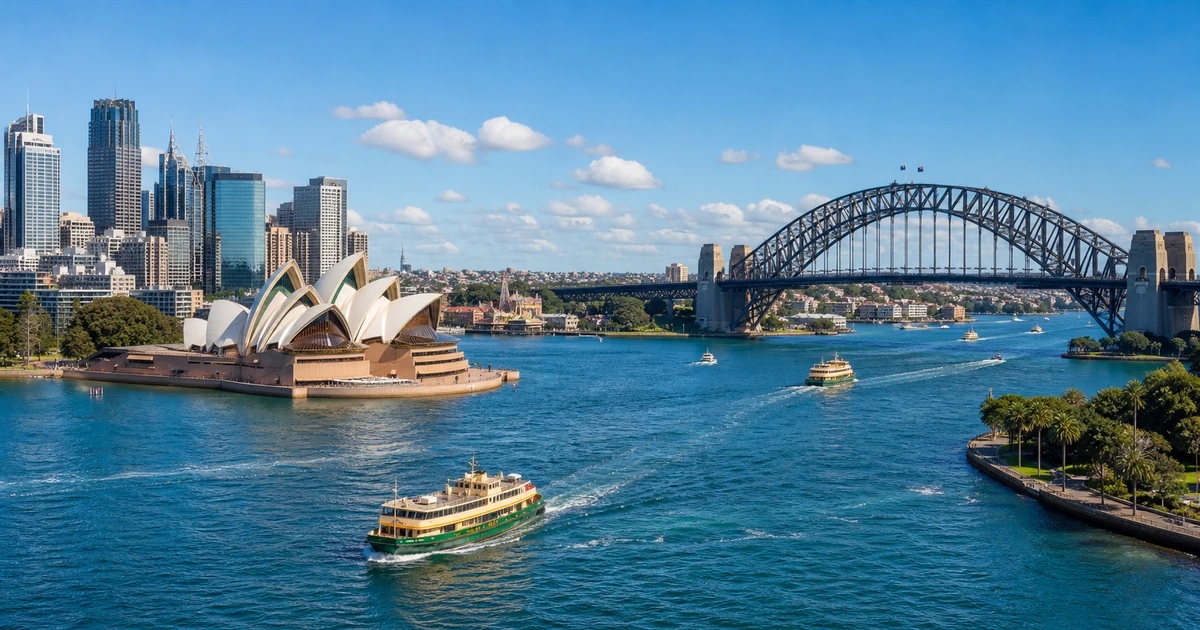
Sydney
Local time--:--
Australia/SydneyWeather Forecast
Sydney, AustraliaOpen-Meteo forecast.
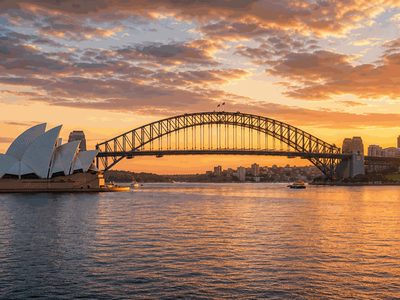
Sydney city overview
Sydney works best as a base in Australia when you anchor days around Sydney Opera House, Sydney Harbour Bridge and Bondi Beach. Use those sights to understand the city's history, street life and visitor rhythm. Sydney Kingsford Smith handles the main arrival flow, so hotel choice should balance the centre, transfer time and day-trip plans.
Worth seeing
Sydney Opera House
Sydney Opera House is a named stop in Sydney worth keeping on the route when it fits the day's transport, timing and neighborhood plan.
View on map
Sydney Harbour Bridge
Sydney Harbour Bridge adds the water-facing side of Sydney, making it a good break from museums, traffic and dense historic streets.
View on map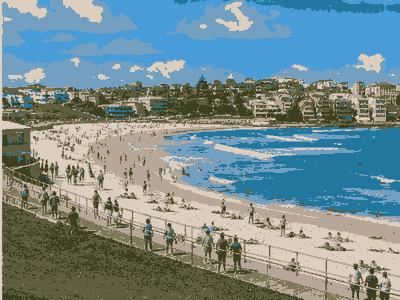
Bondi Beach
Bondi Beach adds outdoor time to a Sydney stay, with open space, views or waterfront breathing room between denser city sights.
View on map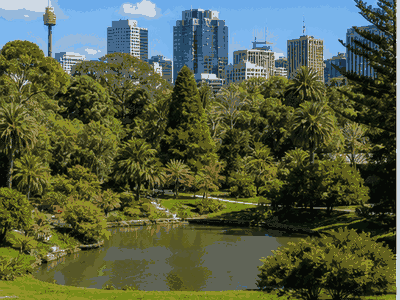
Royal Botanic Garden Sydney
Royal Botanic Garden Sydney adds outdoor time to a Sydney stay, with open space, views or waterfront breathing room between denser city sights.
View on map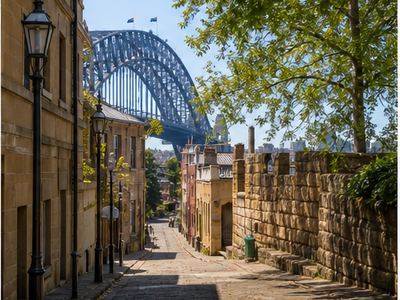
The Rocks
The Rocks gives Sydney a greener or more scenic stop, useful when the route needs views, shade, walking space or a slower hour.
View on map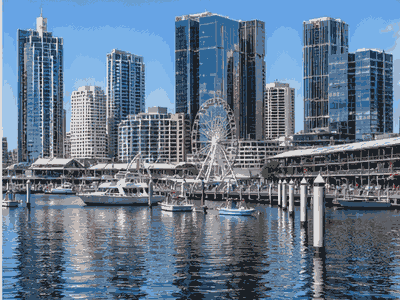
Darling Harbour
Darling Harbour adds the water-facing side of Sydney, making it a good break from museums, traffic and dense historic streets.
View on mapStay overview
Start with City centre for the easiest first Sydney stay, then compare Old Town and Waterfront when price, nightlife, quieter evenings or transfer timing matter more than being beside every major sight.
Hotels & areas
Sydney hotel choice is mostly about repeat journeys: use City centre for sightseeing, Old Town for a different local base, and Waterfront or Airport area when views, parking, airport timing or longer stays matter.
City centre
City centre is the most practical first base in Sydney, keeping main sights, restaurants and short local transfers close.
Best for: first visits, sightseeing, restaurantsSee hotel optionsOld Town
Old Town is the most practical first base in Sydney, keeping main sights, restaurants and short local transfers close.
Best for: first visits, sightseeing, restaurantsSee hotel optionsWaterfront
Waterfront suits travellers who want views, evening walks and a calmer base while still keeping central Sydney reachable.
Best for: views, quieter evenings, walksSee hotel optionsAirport area
Airport area works mainly for early departures, late arrivals or car pickup, not for a first Sydney sightseeing base.
Best for: early flights, late arrivals, car pickupSee hotel optionsFlights & airports
Sydney Kingsford Smith International Airport (SYD) arrival plan
- Sydney Kingsford Smith International Airport (SYD)About 9 km from the centre
To the centre: Airport Link train to the city centre, every ~10 min, about 13 min (Opal card or tap credit card; airport station fee applies).
- Western Sydney International (Nancy-Bird Walton) Airport (WSI)About 46 km from the centre
Compare airport access against hotel location, arrival time, rental car pickup, late flights and onward driving before choosing the first night base.
Public transport
- Trains, buses, ferries and light railOpal card or tap-on bank card on everything, with daily and weekly fare caps
- TaxiTaxi ranks, phone/online booking — Hail on the street, use a rank, or book by phone or online
Rental cars
Sydney day-trip car use
Do not rent a car for central Sydney unless parking and traffic are part of the plan; use one mainly for regional day trips.
Compare rental carsTravel tips
Best base
Choose City centre for a first stay because it keeps main sights, restaurants and practical local movement close.
Airport timing
Leave extra time for Sydney Kingsford Smith, especially for early flights, late arrivals, traffic or unfamiliar transfer routes.
Local movement
Plan each day in clusters around Sydney Opera House and Sydney Harbour Bridge so transfers do not consume the best sightseeing hours.
Day trips
Keep one flexible slot for nearby routes from Sydney, checking weather, transport and opening hours before committing.
Nearby ideas
Mountain · about 1 h 15 min · Blue Mountains train line from Sydney Central
Blue Mountains and Katoomba
The Three Sisters, Scenic World's steep railway and clifftop walks over eucalypt valleys.
View on mapBeach · about 30 min · ferry from Circular Quay
Manly
The ferry ride is half the point; then a surf beach and the Manly to Spit coastal walk.
View on mapNature · about 1 h · train to Cronulla then the Bundeena ferry, or train to Otford
Royal National Park
The world's second-oldest national park, with the Figure Eight Pools and the Coast Track.
View on mapNature · about 50 min · car or train to Mount Colah then bus
Ku-ring-gai Chase National Park
Aboriginal rock engravings on sandstone platforms above Pittwater, with lookouts over the Hawkesbury.
View on mapUpcoming events
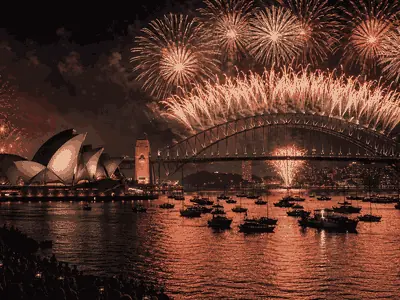
Sydney New Year's Eve
31 December 2026 – 1 January 2027 — Australia — Australia
Australia National Day
26 January 2027 — Across Australia — Australia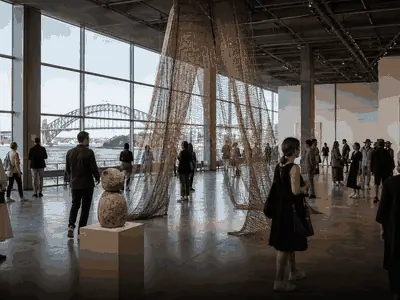
Biennale of Sydney
14 March 2027–14 June 2027 — Sydney — Australia
State of Origin
27 May 2027–9 July 2027 — Sydney — Australia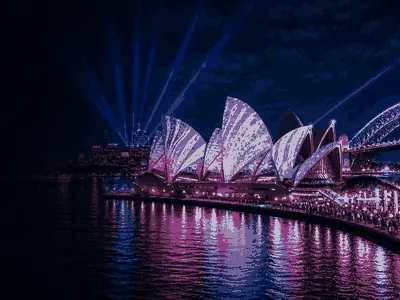
Vivid Sydney
28 May 2027 – 19 June 2027 — Sydney — Australia
Super Rugby Final
20 June 2027–21 June 2027 — Sydney — Australia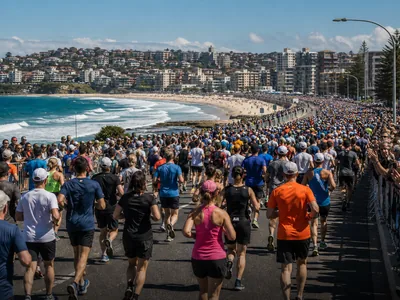
City2Surf Sydney
9 August 2027 — Sydney — Australia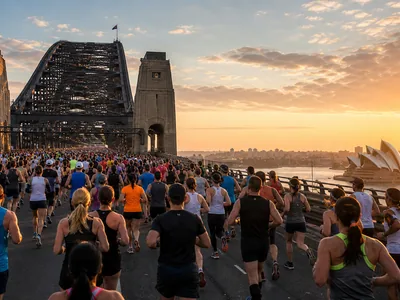
Sydney Marathon
29 Aug 2027 — Sydney — AustraliaCity history
The fleet soon moved to the more suitable Port Jackson where a settlement was established at Sydney Cove on 26 January 1788.
In November 1790 Bennelong led a group of survivors of the Sydney clans into the settlement, establishing a continuous presence of Aboriginal Australians in settled Sydney.
After Phillip's departure in December 1792, the colony's military officers began acquiring land and importing consumer goods from visiting ships.
A military garrison was established on the Hawkesbury in 1795.
Parramatta Road, linking Sydney and Parramatta, was opened in 1811, and a road across the Blue Mountains was completed in 1815, opening the way for large-scale farming and grazing west of the Great Dividing.
Transportation to New South Wales ceased in 1840. Conflict on the Cumberland Plain In 1804, Irish convicts led around 300 rebels in the Castle Hill Rebellion, an attempt to march on Sydney, commandeer a.
The New South Wales Legislative Council became a semi-elected body in 1842.
Sydney was declared a city the same year, and a governing council established, elected on a restrictive property franchise.The discovery of gold in New South Wales and Victoria in 1851 initially caused economic disruption.
New public buildings of sandstone abounded, including at the University of Sydney (1854–61), the Australian Museum (1858–66), the Town Hall (1868–88), and the General Post Office (1866–92).
Meanwhile, the Sydney-based premier of New South Wales, George Reid, became a key figure in the process of federation. State capital (1901–present) When the six colonies federated on 1 January 1901, Sydney became the.
The outbreak of the First World War in 1914 saw more Sydney males volunteer for the armed forces than the Commonwealth authorities could process, and helped reduce unemployment.
However, soon after it opened in 1973 it became a major tourist attraction and symbol of the city.
The New South Wales government also stimulated growth by investing heavily in railways, trams, roads, ports, telegraph, schools and urban services.
Military establishments in response to World War II in Australia included the Garden Island Tunnel System, the only tunnel warfare complex in Sydney, and the heritage-listed military fortification systems Bradleys Head Fortification Complex and.