Forecast
Toronto
Local time--:--
America/TorontoWeather Forecast
Toronto, CanadaOpen-Meteo forecast.

Toronto city overview
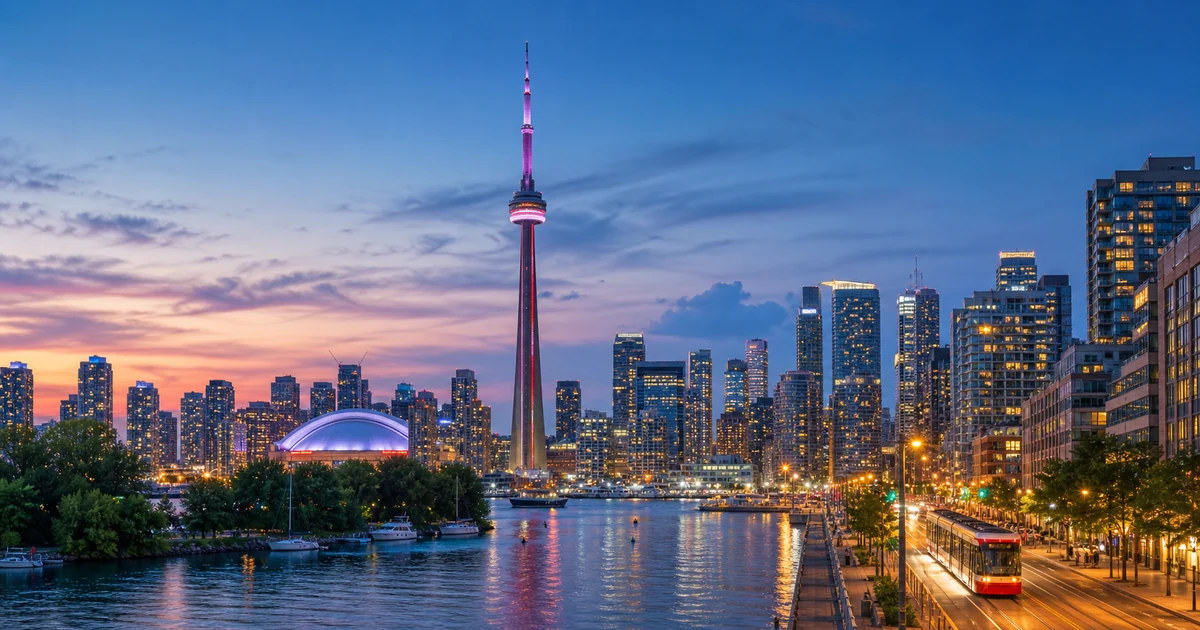
Toronto works best as a base in Canada when you anchor days around CN Tower, Royal Ontario Museum and Toronto Islands. Use those sights to understand the city's history, street life and visitor rhythm. Toronto Pearson handles the main arrival flow, so hotel choice should balance the centre, transfer time and day-trip plans.


Worth seeing
CN Tower
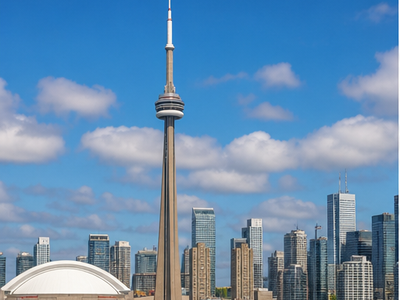
CN Tower is a clear heritage marker in Toronto, best used as a fixed point when grouping nearby streets, monuments and viewpoints.
View on map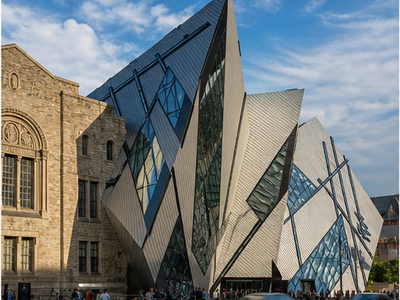
Royal Ontario Museum
Royal Ontario Museum is a key Toronto culture stop, useful for understanding local history, collections and rainy-day planning near the main sightseeing route.
View on map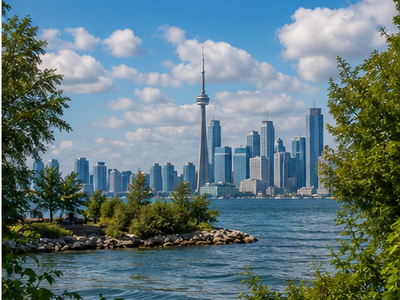
Toronto Islands
Toronto Islands adds the water-facing side of Toronto, making it a good break from museums, traffic and dense historic streets.
View on map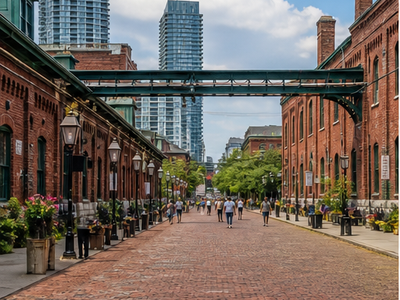
Distillery District
Distillery District is a named stop in Toronto worth keeping on the route when it fits the day's transport, timing and neighborhood plan.
View on map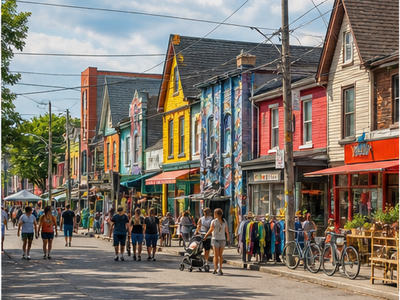
Kensington Market
Kensington Market gives Toronto a concrete street-life stop, with food, everyday shopping and local movement that helps visitors read the city.
View on map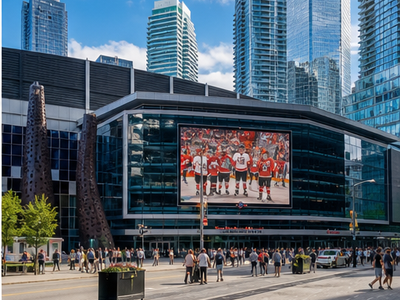
Scotiabank Arena
Scotiabank Arena is a practical event or leisure landmark in Toronto; check schedules and access before pairing it with the rest of the day.
View on mapStay overview
Start with City centre for the easiest first Toronto stay, then compare Old Town and Waterfront when price, nightlife, quieter evenings or transfer timing matter more than being beside every major sight.
Hotels & areas
Toronto hotel choice is mostly about repeat journeys: use City centre for sightseeing, Old Town for a different local base, and Waterfront or Airport area when views, parking, airport timing or longer stays matter.
City centre
City centre is the most practical first base in Toronto, keeping main sights, restaurants and short local transfers close.
Best for: first visits, sightseeing, restaurantsSee hotel optionsOld Town
Old Town is the most practical first base in Toronto, keeping main sights, restaurants and short local transfers close.
Best for: first visits, sightseeing, restaurantsSee hotel optionsWaterfront
Waterfront suits travellers who want views, evening walks and a calmer base while still keeping central Toronto reachable.
Best for: views, quieter evenings, walksSee hotel optionsAirport area
Airport area works mainly for early departures, late arrivals or car pickup, not for a first Toronto sightseeing base.
Best for: early flights, late arrivals, car pickupSee hotel optionsFlights & airports
Toronto Pearson International Airport (YYZ) arrival plan
- Toronto Pearson International Airport (YYZ)About 19 km from the centre
To the centre: UP Express to Union Station every 15 min (5:30 am–1 am); TTC express bus + subway is cheapest, about 25 min (UP Express ticket from machines or on board; TTC fare).
- John C. Munro Hamilton International Airport (YHM)About 73 km from the centre
Compare airport access against hotel location, arrival time, rental car pickup, late flights and onward driving before choosing the first night base.
- Billy Bishop Toronto City Airport (YTZ)About 9 km from the centre
Compare airport access against hotel location, arrival time, rental car pickup, late flights and onward driving before choosing the first night base.
Public transport
- Subway, buses and streetcars (TTC)One fare per one-way trip, free transfers within an hour; ~6 am–1:30 am, Blue Night Network 1:30–5 am
- TaxiLicensed Toronto Pearson taxis and limos — At the airport use only licensed taxis; pick-up at terminals 1 and 3, arrivals level
Rental cars
Toronto day-trip car use
Do not rent a car for central Toronto unless parking and traffic are part of the plan; use one mainly for regional day trips.
Compare rental carsTravel tips
Best base
Choose City centre for a first stay because it keeps main sights, restaurants and practical local movement close.
Airport timing
Leave extra time for Toronto Pearson, especially for early flights, late arrivals, traffic or unfamiliar transfer routes.
Local movement
Plan each day in clusters around CN Tower and Royal Ontario Museum so transfers do not consume the best sightseeing hours.
Day trips
Keep one flexible slot for nearby routes from Toronto, checking weather, transport and opening hours before committing.
Nearby ideas
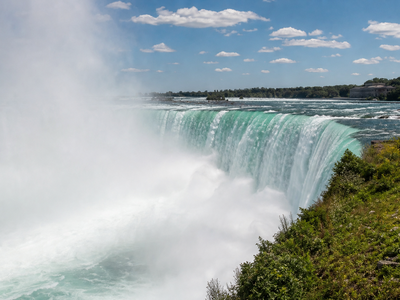
Nature · about 1 h 15 min · GO Transit train from Union Station to Niagara Falls
Niagara Falls
Walk to the Horseshoe brink, then take the boat under the spray; it runs April to November.
View on mapNature · about 1 h 15 min · car west on Highway 401 and County Road 7
Elora Gorge
A limestone gorge you can tube down in summer, beside a mill town of cut-stone buildings.
View on mapNature · about 1 h · GO train to Hamilton, then local bus
Hamilton waterfalls
More than a hundred waterfalls spill off the Niagara Escarpment; Webster's and Tew's are the easiest to reach.
View on mapTown · about 1 h 15 min · car or VIA Rail west
Stratford
A riverside town built round its Shakespeare festival, with theatres running April to October.
View on mapCity history
Toronto Hydro estimated 450,000 people were without power after the storm and Toronto Pearson International Airport reported 126 millimetres (5.0 in) of rain had fallen over five hours, more than during Hurricane Hazel.
French traders founded Fort Rouillé in 1750 (the current Exhibition grounds were later developed there), but abandoned it in 1759 during the Seven Years' War.
Long-distance railway lines were constructed, including a route completed in 1854 linking Toronto with the Upper Great Lakes.
A distillery built by Gooderham and Worts from 1859 to 1861 became the country's largest whisky factory.
After this date, Quebec was designated as the capital until 1865 (two years before Canadian Confederation).
Toronto became the capital of the province of Ontario after its official creation in 1867.
Long before the Royal Military College of Canada was established in 1876, supporters of the concept proposed military colleges in Canada.
In that year, a half-century after the Great Fire of 1904, disaster struck the city again when Hurricane Hazel brought intense winds and flash flooding.
The public transit system passed into public ownership in 1921 as the Toronto Transportation Commission, later renamed the Toronto Transit Commission.
American soldiers destroyed much of the garrison and set fire to the parliament buildings during their five-day occupation.
The advent of the railway dramatically increased the numbers of immigrants arriving, commerce and industry, as had the Lake Ontario steamers and schooners entering port before.
As new migrants began to prosper, they moved to better housing in other areas, in what is now understood to be succession waves of settlement.
In the decades after World War II, refugees from war-torn Europe and Chinese job-seekers arrived, as well as construction labourers, particularly from Italy and Portugal.