Forecast
Montreal
Local time--:--
America/TorontoWeather Forecast
Montreal, CanadaOpen-Meteo forecast.
Montreal city overview
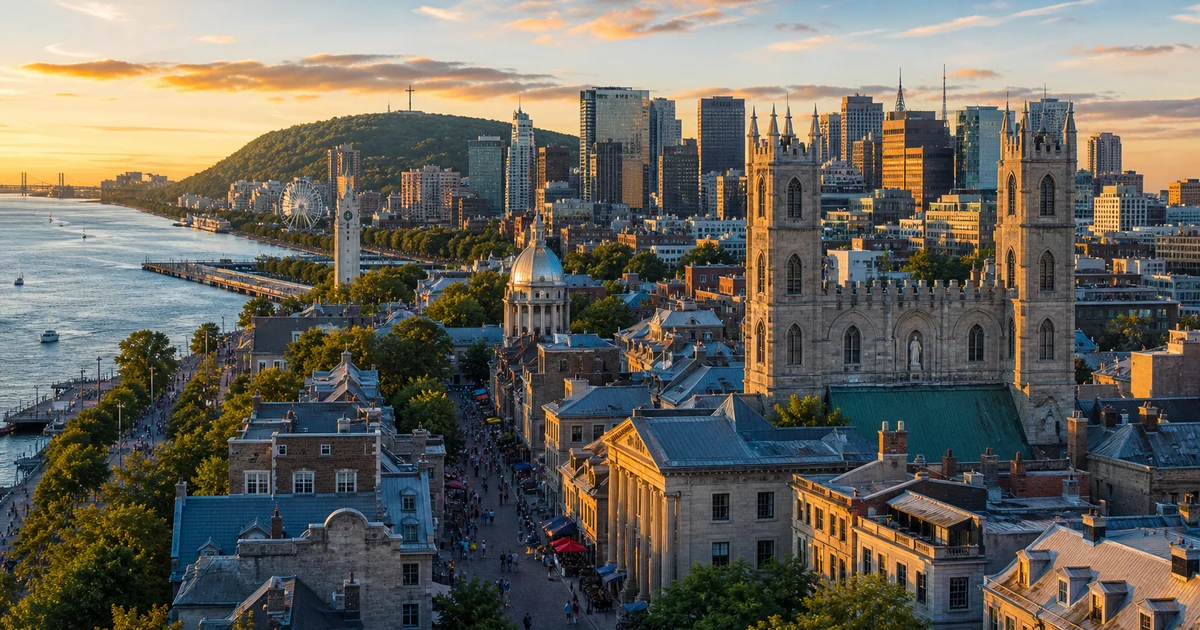
Montreal works best as a base in Canada when you anchor days around Old Montreal, Mount Royal and Notre-Dame Basilica. Use those sights to understand the city's history, street life and visitor rhythm. Montreal International Airport handles the main arrival flow, so hotel choice should balance the centre, transfer time and day-trip plans.
Worth seeing
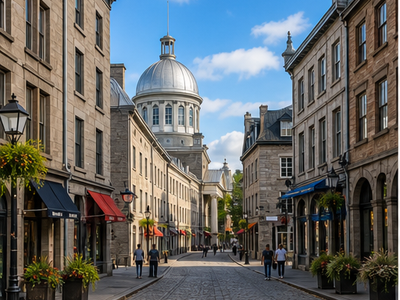
Old Montreal
Old Montreal is a named stop in Montreal worth keeping on the route when it fits the day's transport, timing and neighborhood plan.
View on map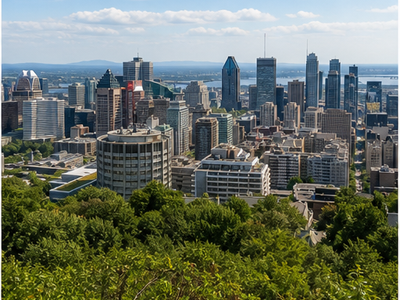
Mount Royal
Mount Royal adds outdoor time to a Montreal stay, with open space, views or waterfront breathing room between denser city sights.
View on map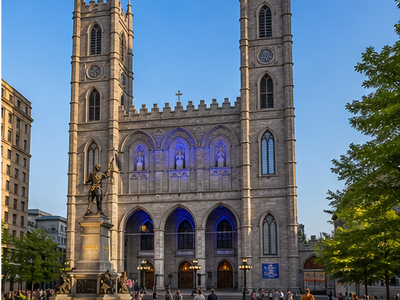
Notre-Dame Basilica
Notre-Dame Basilica anchors the historic and ceremonial side of Montreal, making it a practical stop for architecture, local memory and orientation.
View on map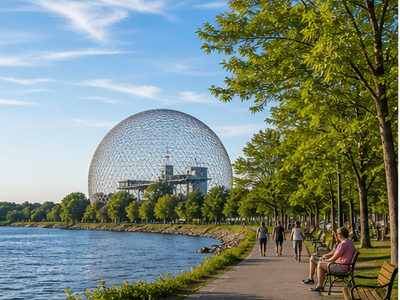
Jean-Drapeau Park
Jean-Drapeau Park adds outdoor time to a Montreal stay, with open space, views or waterfront breathing room between denser city sights.
View on map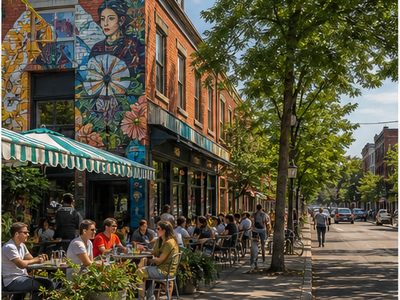
Mile End
Mile End is a named stop in Montreal worth keeping on the route when it fits the day's transport, timing and neighborhood plan.
View on map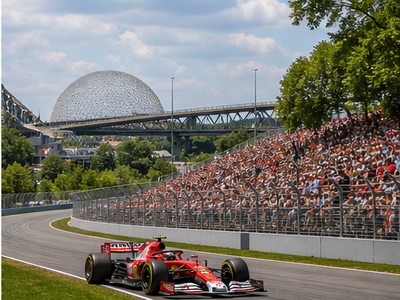
Formula 1 weekend
Formula 1 weekend is a named stop in Montreal worth keeping on the route when it fits the day's transport, timing and neighborhood plan.
View on mapStay overview
Start with City centre for the easiest first Montreal stay, then compare Old Town and Waterfront when price, nightlife, quieter evenings or transfer timing matter more than being beside every major sight.
Hotels & areas
Montreal hotel choice is mostly about repeat journeys: use City centre for sightseeing, Old Town for a different local base, and Waterfront or Airport area when views, parking, airport timing or longer stays matter.
City centre
City centre is the most practical first base in Montreal, keeping main sights, restaurants and short local transfers close.
Best for: first visits, sightseeing, restaurantsSee hotel optionsOld Town
Old Town is the most practical first base in Montreal, keeping main sights, restaurants and short local transfers close.
Best for: first visits, sightseeing, restaurantsSee hotel optionsWaterfront
Waterfront suits travellers who want views, evening walks and a calmer base while still keeping central Montreal reachable.
Best for: views, quieter evenings, walksSee hotel optionsAirport area
Airport area works mainly for early departures, late arrivals or car pickup, not for a first Montreal sightseeing base.
Best for: early flights, late arrivals, car pickupSee hotel optionsFlights & airports
Montreal / Pierre Elliott Trudeau International Airport (YUL) arrival plan
- Montreal / Pierre Elliott Trudeau International Airport (YUL)About 13 km from the centre
Compare airport access against hotel location, arrival time, rental car pickup, late flights and onward driving before choosing the first night base.
- Montréal / Saint-Hubert Metropolitan Airport (YHU)About 13 km from the centre
Compare airport access against hotel location, arrival time, rental car pickup, late flights and onward driving before choosing the first night base.
- Montreal Mirabel International Airport (YMX)About 40 km from the centre
Compare airport access against hotel location, arrival time, rental car pickup, late flights and onward driving before choosing the first night base.
Rental cars
Montreal day-trip car use
Do not rent a car for central Montreal unless parking and traffic are part of the plan; use one mainly for regional day trips.
Compare rental carsTravel tips
Best base
Choose City centre for a first stay because it keeps main sights, restaurants and practical local movement close.
Airport timing
Leave extra time for Montreal International Airport, especially for early flights, late arrivals, traffic or unfamiliar transfer routes.
Local movement
Plan each day in clusters around Old Montreal and Mount Royal so transfers do not consume the best sightseeing hours.
Day trips
Keep one flexible slot for nearby routes from Montreal, checking weather, transport and opening hours before committing.
Nearby ideas
Beach · about 50 min · car west on Highway 640
Parc national d'Oka
A sand beach on Lac des Deux Montagnes with a Calvary trail and winter cross-country tracks.
View on mapMountain · about 1 h · car north on Autoroute 15 into the Laurentians
Saint-Sauveur
Ski hills lit for night runs in winter, a water park on the same slopes in summer.
View on mapMountain · about 1 h 15 min · car north on Autoroute 15 then Route 117
Parc national du Mont-Tremblant
Quebec's oldest provincial park: lakes to paddle, and the Diable river running through hardwood forest.
View on mapCity history
In 1611, Champlain established a fur trading post on the Island of Montreal on a site initially named La Place Royale.
Evidence of earlier occupation of the island, such as those uncovered in 1642 during the construction of Fort Ville-Marie, have effectively been removed. Early European settlement (1600–1760) In 1603, French explorer Samuel de Champlain.
Ville-Marie was the name for the settlement that appeared in all official documents until 1705, when Montreal appeared for the first time, although people referred to the "Island of Montreal" long before then. American.
In 1745, several Mohawk families moved upriver to create another settlement, known as Akwesasne.
Montreal was the capital of the Province of Canada from 1844 to 1849, but lost its status when a Tory mob burnt down the Parliament building to protest the passage of the Rebellion Losses.
Thereafter, the capital rotated between Quebec City and Toronto until in 1857, Queen Victoria herself established Ottawa as the capital due to strategic reasons.
Ottawa retained the status as capital of Canada when the Province of Canada joined with Nova Scotia and New Brunswick to form the Dominion of Canada in 1867.
Montreal annexed 27 other cities, towns and villages beginning with Hochelaga in 1883, with the last prior to 2002 being Pointe-aux-Trembles in 1982.
Lawrence Seaway opened in 1959, allowing vessels to bypass Montreal.
The October Crisis and the 1976 election of the Parti Québécois, which supported sovereign status for Quebec, resulted in the departure of many businesses and people from the city.
In the Ojibwe language, the land is called Mooniyaang or Moon’yaang which was "the first stopping place" in the Ojibwe migration story as related in the seven fires prophecy.
By the early 18th century, the Sulpician Order was established there.
Within a few hundred years, they had built fortified villages.
The opening of the Lachine Canal permitted ships to bypass the unnavigable Lachine Rapids, while the construction of the Victoria Bridge established Montreal as a major railway hub.