Forecast
Ljubljana
Local time--:--
Europe/LjubljanaWeather Forecast
Ljubljana, SloveniaOpen-Meteo forecast.
Ljubljana city overview
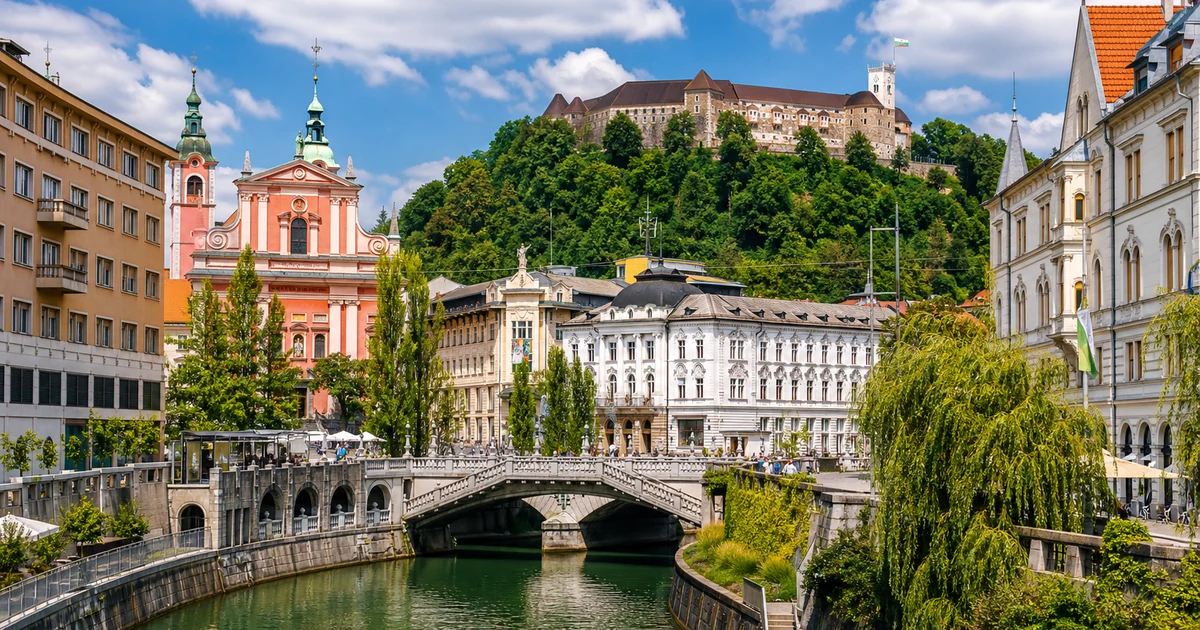
Ljubljana works best as a base in Slovenia when you anchor days around Ljubljana Castle, Triple Bridge and Prešeren Square. Use those sights to understand the city's history, street life and visitor rhythm. Ljubljana International Airport handles the main arrival flow, so hotel choice should balance the centre, transfer time and day-trip plans.
Worth seeing
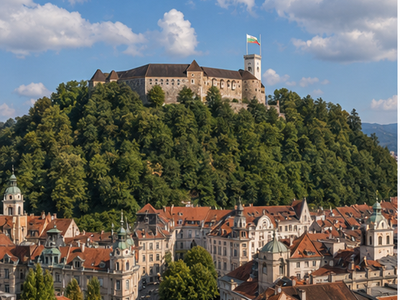
Ljubljana Castle
Ljubljana Castle is a clear heritage marker in Ljubljana, best used as a fixed point when grouping nearby streets, monuments and viewpoints.
View on map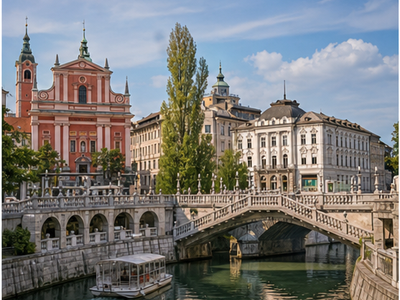
Triple Bridge
Triple Bridge is a clear heritage marker in Ljubljana, best used as a fixed point when grouping nearby streets, monuments and viewpoints.
View on map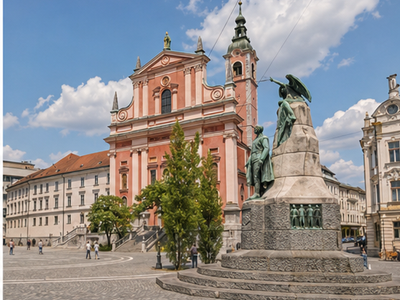
Prešeren Square
Prešeren Square is a clear heritage marker in Ljubljana, best used as a fixed point when grouping nearby streets, monuments and viewpoints.
View on map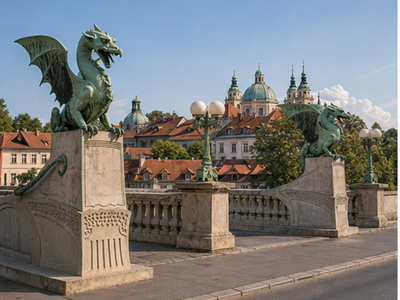
Dragon Bridge
Dragon Bridge is a clear heritage marker in Ljubljana, best used as a fixed point when grouping nearby streets, monuments and viewpoints.
View on map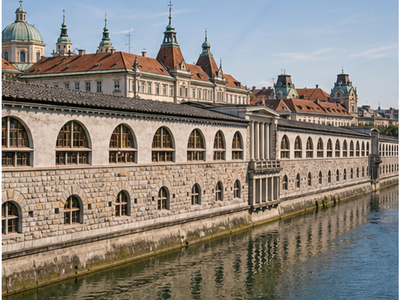
Central Market
Central Market gives Ljubljana a concrete street-life stop, with food, everyday shopping and local movement that helps visitors read the city.
View on map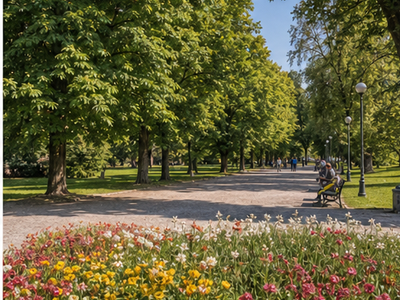
Tivoli Park
Tivoli Park adds outdoor time to a Ljubljana stay, with open space, views or waterfront breathing room between denser city sights.
View on mapStay overview
Start with City centre for the easiest first Ljubljana stay, then compare Old Town and Waterfront when price, nightlife, quieter evenings or transfer timing matter more than being beside every major sight.
Hotels & areas
Ljubljana hotel choice is mostly about repeat journeys: use City centre for sightseeing, Old Town for a different local base, and Waterfront or Airport area when views, parking, airport timing or longer stays matter.
City centre
City centre is the most practical first base in Ljubljana, keeping main sights, restaurants and short local transfers close.
Best for: first visits, sightseeing, restaurantsSee hotel optionsOld Town
Old Town is the most practical first base in Ljubljana, keeping main sights, restaurants and short local transfers close.
Best for: first visits, sightseeing, restaurantsSee hotel optionsWaterfront
Waterfront suits travellers who want views, evening walks and a calmer base while still keeping central Ljubljana reachable.
Best for: views, quieter evenings, walksSee hotel optionsAirport area
Airport area works mainly for early departures, late arrivals or car pickup, not for a first Ljubljana sightseeing base.
Best for: early flights, late arrivals, car pickupSee hotel optionsFlights & airports
Ljubljana Jože Pučnik Airport (LJU) arrival plan
- Ljubljana Jože Pučnik Airport (LJU)About 20 km from the centre
Compare airport access against hotel location, arrival time, rental car pickup, late flights and onward driving before choosing the first night base.
- Klagenfurt Airport (KLU)About 67 km from the centre
Compare airport access against hotel location, arrival time, rental car pickup, late flights and onward driving before choosing the first night base.
Rental cars
Ljubljana day-trip car use
Do not rent a car for central Ljubljana unless parking and traffic are part of the plan; use one mainly for regional day trips.
Compare rental carsTravel tips
Best base
Choose City centre for a first stay because it keeps main sights, restaurants and practical local movement close.
Airport timing
Leave extra time for Ljubljana International Airport, especially for early flights, late arrivals, traffic or unfamiliar transfer routes.
Local movement
Plan each day in clusters around Ljubljana Castle and Triple Bridge so transfers do not consume the best sightseeing hours.
Day trips
Keep one flexible slot for nearby routes from Ljubljana, checking weather, transport and opening hours before committing.
Nearby ideas
Nature · about 50 min · bus or train from Ljubljana to Bled
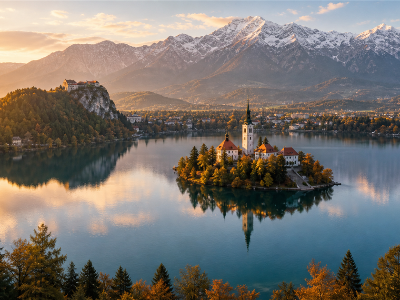
Lake Bled
An island church rowed to in a pletna boat, under a cliff castle; cream cake is the local order.
View on mapNature · about 50 min · train or bus from Ljubljana to Postojna
Postojna Cave
An electric train runs into 24 kilometres of karst passages, home to the blind olm.
View on mapNature · about 1 h · train to Divača, then the free shuttle
Škocjan Caves
A UNESCO underground canyon with a bridge 45 metres above the Reka river.
View on mapNature · about 1 h · bus to Bled, then shuttle to Vintgar
Vintgar Gorge
A boardwalk pinned to the rock above the Radovna river; open spring to late autumn.
View on mapCity history
21 people died due to the earthquake and some 10% of the city's 1,400 buildings were destroyed.
In 452, it was destroyed by the Huns under Attila's orders, and later by the Ostrogoths and the Lombards.
In 1256, when the Carinthian duke Ulrich III of Spanheim became lord of Carniola, the provincial capital was moved from Kamnik to Ljubljana.
It was administered by the Counts of Gorizia from 1279 until 1335, when it became the capital town of Carniola.
After the 1511 Idrija earthquake, the city was rebuilt in the Renaissance style and a new wall was built around it.
In 1929, Ljubljana became the capital of the Drava Banovina, a Yugoslav province.
In 1941, during World War II, Fascist Italy occupied the city, and then on 3 May 1941 made Lubiana the capital of Italy's Province of Ljubljana with former Yugoslav general Leon Rupnik as mayor.
It retained this status until Slovene independence in 1991. Contemporary situation Ljubljana is the capital of independent Slovenia, which joined the European Union in 2004.
Their archaeological remains, nowadays in the Municipality of Ig, have been designated a UNESCO World Heritage Site since June 2011, in the common nomination of six Alpine states.
In the 6th century, the ancestors of the Slovenes moved in.
Urban settlement started in the second half of the 12th century.
In the middle and the second half of the 17th century, foreign architects built and renovated monasteries, churches, and palaces and introduced Baroque architecture.
During the subsequent reconstruction, some districts were rebuilt in the Vienna Secession style.
After World War II, Ljubljana became the capital of the Socialist Republic of Slovenia, part of the Socialist Federal Republic of Yugoslavia.