Forecast
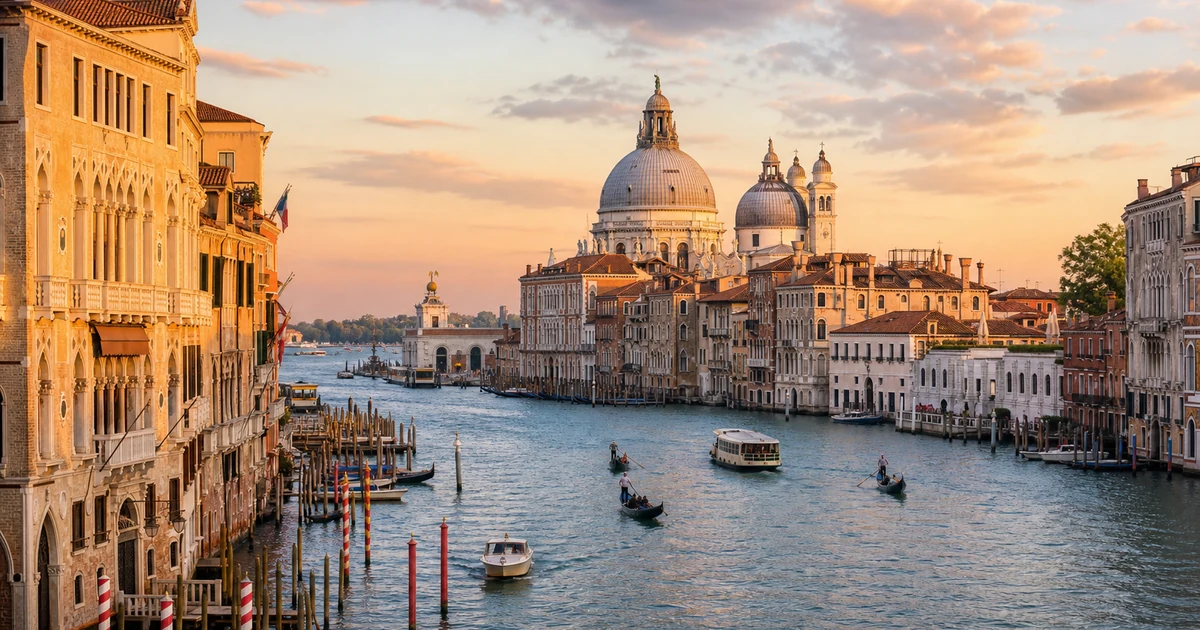
Venice
Local time--:--
Europe/RomeWeather Forecast
Venice, ItalyOpen-Meteo forecast.
Venice city overview
Venice works best as a base in Italy when you anchor days around St. Mark's Basilica, Grand Canal and Rialto Bridge. Use those sights to understand the city's history, street life and visitor rhythm. Venice Marco Polo handles the main arrival flow, so hotel choice should balance the centre, transfer time and day-trip plans.
Worth seeing
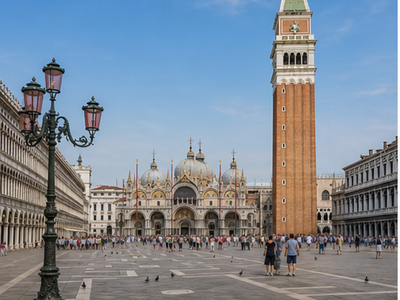
St. Mark's Basilica
St. Mark's Basilica anchors the historic and ceremonial side of Venice, making it a practical stop for architecture, local memory and orientation.
View on map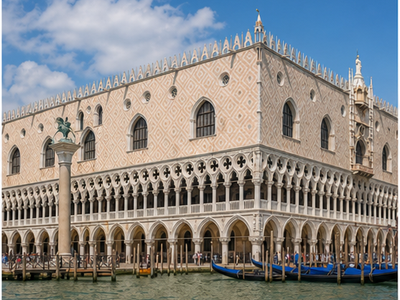
Grand Canal
Grand Canal adds the water-facing side of Venice, making it a good break from museums, traffic and dense historic streets.
View on map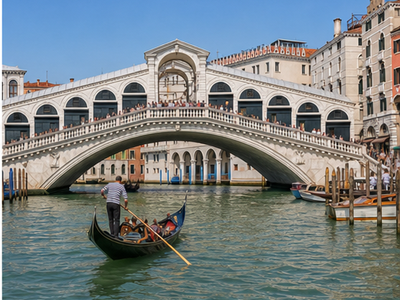
Rialto Bridge
Rialto Bridge is a clear heritage marker in Venice, best used as a fixed point when grouping nearby streets, monuments and viewpoints.
View on map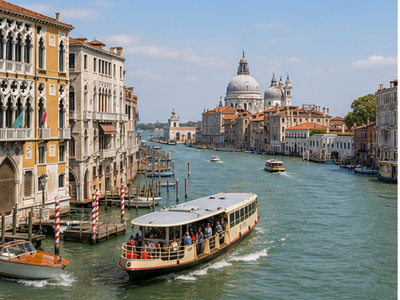
Doge's Palace
Doge's Palace anchors the historic and ceremonial side of Venice, making it a practical stop for architecture, local memory and orientation.
View on map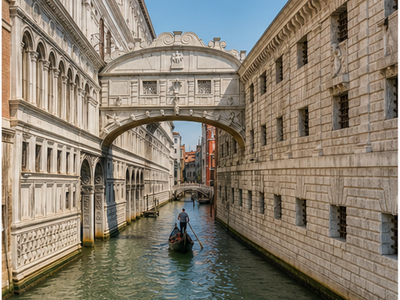
Murano
Murano is a named stop in Venice worth keeping on the route when it fits the day's transport, timing and neighborhood plan.
View on map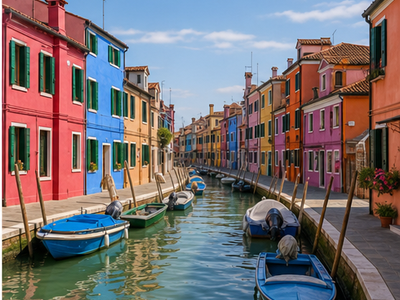
Burano
Burano is a named stop in Venice worth keeping on the route when it fits the day's transport, timing and neighborhood plan.
View on mapStay overview
Start with San Marco for the easiest first Venice stay, then compare Cannaregio and Dorsoduro when price, nightlife, quieter evenings or transfer timing matter more than being beside every major sight.
Hotels & areas
Venice hotel choice is mostly about repeat journeys: use San Marco for sightseeing, Cannaregio for a different local base, and Dorsoduro or Castello when views, parking, airport timing or longer stays matter.
San Marco
San Marco is useful when a Venice stay needs more local restaurants, apartment options or quieter nights outside the busiest core.
Best for: local stays, restaurants, quieter nightsSee hotel optionsCannaregio
Cannaregio is useful when a Venice stay needs more local restaurants, apartment options or quieter nights outside the busiest core.
Best for: local stays, restaurants, quieter nightsSee hotel optionsDorsoduro
Dorsoduro is useful when a Venice stay needs more local restaurants, apartment options or quieter nights outside the busiest core.
Best for: local stays, restaurants, quieter nightsSee hotel optionsCastello
Castello is useful when a Venice stay needs more local restaurants, apartment options or quieter nights outside the busiest core.
Best for: local stays, restaurants, quieter nightsSee hotel optionsFlights & airports
Venice Marco Polo Airport (VCE) arrival plan
- Venice Marco Polo Airport (VCE)About 8 km from the centre
Compare airport access against hotel location, arrival time, rental car pickup, late flights and onward driving before choosing the first night base.
- Treviso Airport (TSF)About 26 km from the centre
Compare airport access against hotel location, arrival time, rental car pickup, late flights and onward driving before choosing the first night base.
- Trieste Airport (TRS)About 98 km from the centre
Compare airport access against hotel location, arrival time, rental car pickup, late flights and onward driving before choosing the first night base.
Rental cars
Venice day-trip car use
Do not rent a car for central Venice unless parking and traffic are part of the plan; use one mainly for regional day trips.
Compare rental carsTravel tips
Best base
Choose San Marco for a first stay because it keeps main sights, restaurants and practical local movement close.
Airport timing
Leave extra time for Venice Marco Polo, especially for early flights, late arrivals, traffic or unfamiliar transfer routes.
Local movement
Plan each day in clusters around St. Mark's Basilica and Grand Canal so transfers do not consume the best sightseeing hours.
Day trips
Keep one flexible slot for nearby routes from Venice, checking weather, transport and opening hours before committing.
Nearby ideas
Town · about 30 min · regional train from Venezia Santa Lucia
Padua
Giotto's Scrovegni Chapel frescoes and the oldest university botanical garden in the world.
View on mapTown · about 35 min · regional train from Venezia Santa Lucia
Treviso
Canals and frescoed houses inside intact walls, and the home of radicchio and tiramisu.
View on mapTown · about 1 h 10 min · bus 80 from Piazzale Roma to Sottomarina, then the Chioggia ferry
Chioggia
A working fishing port laid out like a smaller Venice, with the catch auctioned each morning.
View on mapBeach · about 20 min · vaporetto line 1 or 5.1 from San Zaccaria
Lido di Venezia
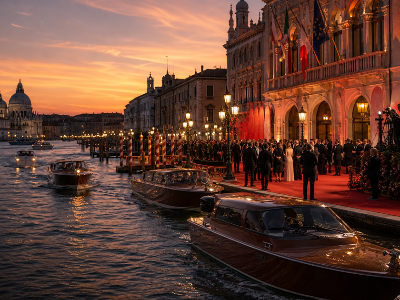
The lagoon's sandbar, with Adriatic beaches, bicycles and the film festival palace in September.
View on mapCity history
Beginning as early as AD 166–168, the Quadi and Marcomanni destroyed the main Roman town in the area, present-day Oderzo.
In 775/6, the episcopal seat of Olivolo (San Pietro di Castello) was created.
During the reign of duke Agnello Particiaco (811–827) the ducal seat moved from Malamocco to the more protected Rialto, within present-day Venice.
Venice became an imperial power following the Fourth Crusade, which, having veered off course, culminated in 1204 by the capture and sacking of Constantinople and the establishment of the Latin Empire.
By 1482, Venice was the printing capital of the world; the leading printer was Aldus Manutius, who invented paperback books that could be carried in a saddlebag.
Vasco da Gama's 1497–1499 voyage, which opened a sea route to India around the Cape of Good Hope, destroyed Venice's monopoly.
Venice became Austrian territory when Napoleon signed the Treaty of Campo Formio on 12 October 1797.
Venice was taken from Austria by the Treaty of Pressburg in 1805 and became part of Napoleon's Kingdom of Italy.
It was returned to Austria following Napoleon's defeat in 1814, when it became part of the Austrian-held Kingdom of Lombardy–Venetia.
In 1866, after the Third Italian War of Independence, Venice, along with the rest of the Veneto, became part of the newly created Kingdom of Italy.
However, Venice remained a major exporter of agricultural products and, until the mid-18th century, a significant manufacturing centre. Modern age The Republic of Venice lost its independence when Napoleon Bonaparte conquered Venice on 12.
New ports were built, including those at Malamocco and Torcello in the Venetian lagoon.
Venice's leading families vied with each other to build the grandest palaces and to support the work of the greatest and most talented artists.
During World War II, the historic city was largely free from attack, with the only aggressive effort of note being Operation Bowler, a successful Royal Air Force precision strike on the German naval operations.