Forecast
Juba
Local time--:--
Africa/JubaWeather Forecast
Juba, South SudanOpen-Meteo forecast.
Juba city overview
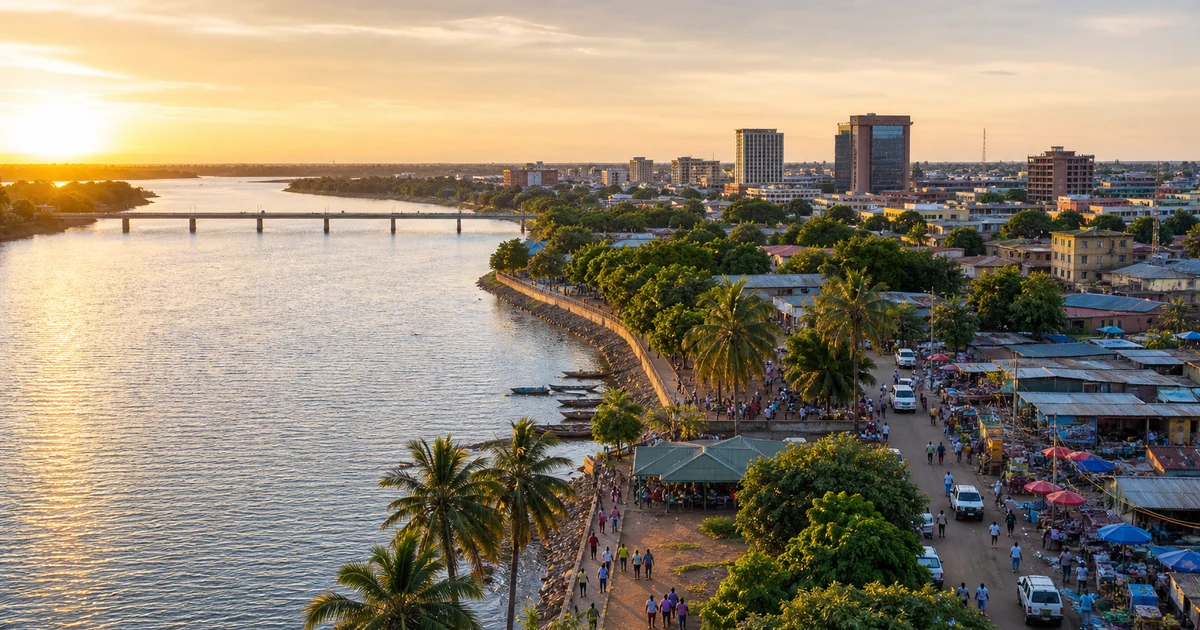
Juba is South Sudan's capital, spread along the White Nile's west bank at the country's southern crossroads. First-time visitors should pay respects at the John Garang Mausoleum, cross the Nile at Juba Bridge for river views, and browse produce and crafts at Konyo Konyo Market. Juba International Airport sits close to the city centre, and travel here calls for careful planning given the country's ongoing security and infrastructure challenges.
Worth seeing
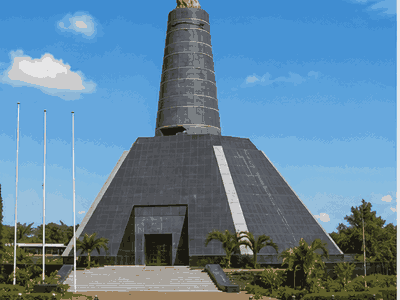
John Garang Mausoleum
John Garang Mausoleum is a named stop in Juba worth keeping on the route when it fits the day's transport, timing and neighborhood plan.
View on map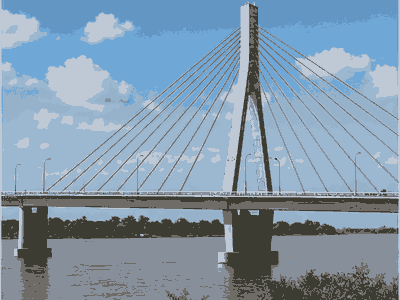
Juba Nile Bridge
Juba Nile Bridge is a clear heritage marker in Juba, best used as a fixed point when grouping nearby streets, monuments and viewpoints.
View on map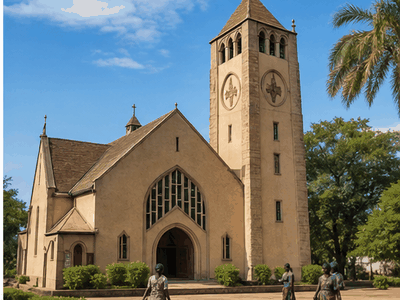
St. Theresa Cathedral
St. Theresa Cathedral anchors the historic and ceremonial side of Juba, making it a practical stop for architecture, local memory and orientation.
View on map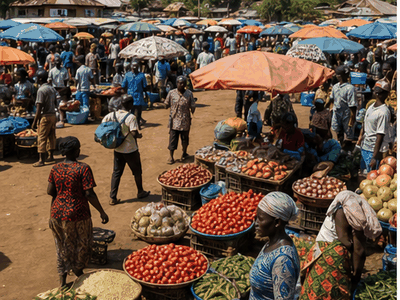
Konyo Konyo Market
Konyo Konyo Market gives Juba a concrete street-life stop, with food, everyday shopping and local movement that helps visitors read the city.
View on map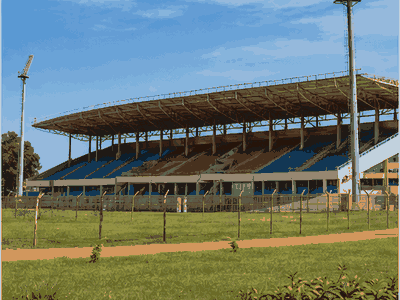
Juba Stadium
Juba Stadium is a practical event or leisure landmark in Juba; check schedules and access before pairing it with the rest of the day.
View on map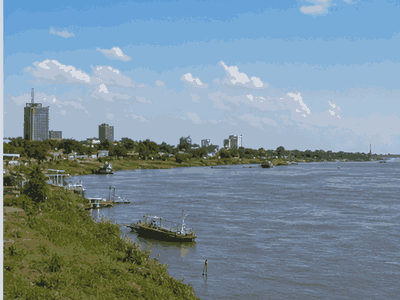
White Nile waterfront
White Nile waterfront adds the water-facing side of Juba, making it a good break from museums, traffic and dense historic streets.
View on mapStay overview
Most visits to Juba centre on Tongping or Juba Town, where international hotels, NGO offices and government buildings cluster close to the airport and river. Munuki and Hai Malakal suit longer, lower-key stays for those with local contacts and confirmed transport.
Hotels & areas
Juba hotel choice is shaped by logistics and security: Tongping suits NGO and official visitors wanting airport proximity, Juba Town suits business trips needing central offices and banks, and Munuki or Hai Malakal suit longer, more local stays arranged through trusted contacts.
Juba Town
Juba Town is the compact central district holding government offices, banks and the main market, the natural base for a short stay.
Best for: first visits, business, marketsSee hotel optionsTongping
Tongping sits near the airport and river, home to UN offices, NGOs and many of the city's international hotels.
Best for: official visits, NGO stays, airport accessSee hotel optionsMunuki
Munuki is a busy residential suburb west of the centre, useful for longer stays needing more local, lower-cost accommodation.
Best for: longer stays, budget optionsSee hotel optionsHai Malakal
Hai Malakal is a central neighborhood close to the Nile riverside, convenient for river views and short walks to downtown offices.
Best for: river views, central accessSee hotel optionsFlights & airports
Juba International Airport (JUB) arrival plan
- Juba International Airport (JUB)About 3 km from the centre
Compare airport access against hotel location, arrival time, rental car pickup, late flights and onward driving before choosing the first night base.
Rental cars
Juba day-trip car use
Independent car rental is uncommon; most visitors arrange a vetted driver through their hotel, employer or a local fixer for any movement around the city.
Compare rental carsTravel tips
Security planning
Arrange travel and accommodation in advance through a trusted employer, NGO or hotel, and check current advisories before booking.
Best base
Base in Tongping or Juba Town, where most international hotels and organisations operate with established transport arrangements.
River views
Take a short boat trip or riverside walk near Juba Bridge for views over the White Nile at sunset.
Cash and connectivity
Carry US dollars for most payments, since South Sudanese pounds are used mainly for small local purchases.
Nearby ideas
Nature
White Nile boat trip
A short boat trip on the White Nile offers a different perspective on Juba, with river life and birdlife visible from the water.
View on mapNature
Jebel Kujur
Jebel Kujur is a rocky hill on the city's western edge, offering a viewpoint over Juba for those with a trusted local guide.
View on mapCity history
Explorers and campaigners Samuel Baker and Florence Baker used the nearby island of Gondokoro as a base during their expeditions to what is now South Sudan and northern Uganda from 1863 to 1865 and.
From the establishment of Anglo-Egyptian Sudan in 1899, the British administered southern Sudan separately from the north.
Major construction of the new city of Juba was underway by 1927.
Traders from Rejaf relocated to the new city in 1929, and the Governor's office of Mongalla was moved there in 1930.
In 1946, without consulting Southern opinion, the British administration began instead to implement a policy of uniting the north and the south.
In 1955, a mutiny of southern soldiers in Torit sparked the First Sudanese Civil War, which did not end until 1972.
Until 1956, Juba was in Anglo-Egyptian Sudan, which was jointly administered by the United Kingdom and the Kingdom of Egypt.
Juba became South Sudan's national capital on 9 July 2011, when South Sudan formally declared its independence from the Republic of the Sudan.
In November 2017, the former chief of general staff Paul Malong Awan was removed from the city, and since then has become a fortified stronghold for President Kiir.
In the late 1920s, Anglo-Egyptian officials ordered Bari residents to relocate so that a new town could be constructed to serve as the capital of Mongalla Province.
Public buildings, such as the Ivory Bank, Notos Lounge, the old Sudan Airways Building, Paradise Hotel, and the Nile Commercial Bank and Buffalo Commercial Bank, were all built by Greeks.
Under the leadership of the United Nations Office for the Coordination of Humanitarian Affairs, the United Nations established a camp known as "OCHA Camp", which served as a base for many United Nations agencies.
However, influential parties including the South Sudanese government expressed dissatisfaction with the city's suitability as a national capital, and the government proposed that a new planned city be built as a replacement capital elsewhere.