South Sudan National Day 2027


More National days
National days topic
Return to the National days index for related events.
About the event
The date followed a referendum in which southern voters overwhelmingly chose separation after decades of civil war, displacement and demands for self-determination. Its joy was soon complicated by civil war, famine and political rivalry, so the holiday now carries both the hope of birth and the pain of unfinished peace.
The capital hosts the main Independence Day speeches and gatherings.
Why this day
9 July marks the day in 2011 when South Sudan became independent from Sudan. The date followed a referendum in which southern voters overwhelmingly chose separation after decades of civil war, displacement and demands for self-determination.
The day became a powerful independence celebration because it created the world's newest country. Its joy was soon complicated by civil war, famine and political rivalry, so the holiday now carries both the hope of birth and the pain of unfinished peace.
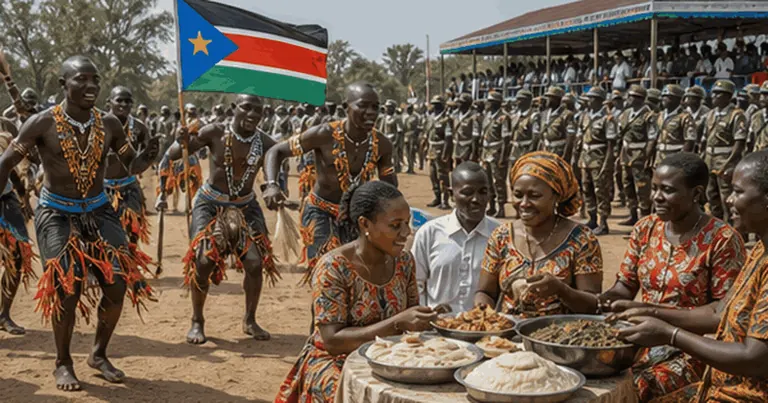
Today Independence Day is marked with official ceremonies, speeches, flags, church services and cultural performances, especially in Juba when conditions allow. Visitors see strong use of the flag, cattle symbolism, dance, drums and public language about unity.
Across South Sudan, the day belongs to communities as much as the state. Family gatherings, prayers, grilled meat, sorghum foods and songs from Dinka, Nuer, Shilluk, Bari and many other peoples shape the national picture.
Timeline
- 1956Sudan becomes independent while southern demands remain unresolved
- 2011South Sudan becomes the world's newest country
- 2013Civil war begins after political crisis
Key figures
Stay for the event
Check-in 8 Jul, check-out 10 Jul 2027 — 2 nights around 9 July 2027. Change the dates to stay longer.
AREA
Find stays in JubaGetting there
- Celebratednationwide
- CapitalJuba
- Time zoneCAT (UTC+2)
Host country
- Currency: South Sudanese pound
- Language: English
- Driving: on the right
- Capital: Juba
- Phone: +211
- Emergency: 911
What to eat
Thin fermented sorghum flatbread eaten with stews and sauces.
Thick porridge of sorghum or wheat served with savoury sauce.
Fava beans with oil, onion and spices, common in towns.
Goat meat cooked over fire for gatherings and ceremonies.
Nile fish cooked with tomato, okra and spices.
Groundnut sauce served with meat, greens or porridge.
What to drink
Hibiscus drink served hot or cold across the region.
Cow milk has deep importance in pastoral communities.
Tamarind drink used for refreshment in hot weather.
Culture & traditions
The capital hosts the main Independence Day speeches and gatherings.
Cattle are central to wealth, marriage, song and identity in many communities.
Group dances with drums and body decoration appear at public events.
The river shapes travel, food and the geography of the new state.
Coming years
South Sudan National Day 2028
- Sunday 9 July 2028Next event date
South Sudan National Day 2029
- Monday 9 July 2029Event date
South Sudan National Day 2030
- Tuesday 9 July 2030Event date