Forecast
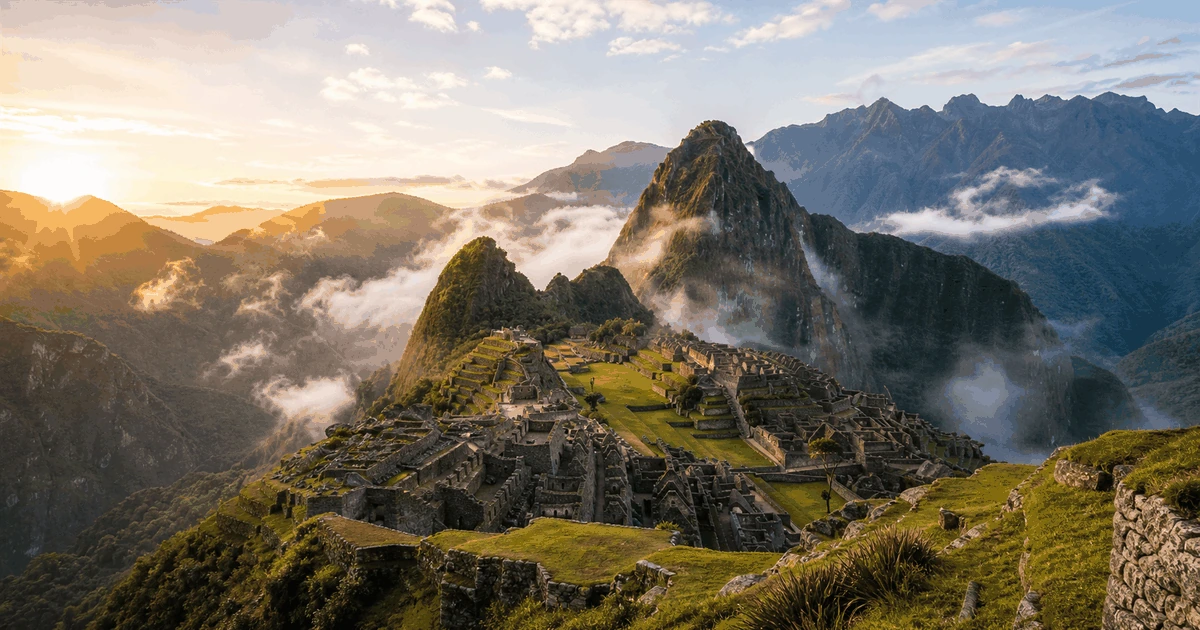
Cusco
Local time--:--
America/LimaWeather Forecast
Cusco, PeruOpen-Meteo forecast.
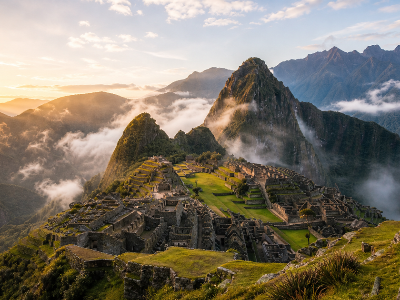
Cusco city overview
Cusco is the former Inca capital and Peru's main gateway to the Sacred Valley and Machu Picchu, with steep stone streets, churches and high-altitude plazas. Start at Plaza de Armas, walk up to San Blas, then visit Sacsayhuaman and Qorikancha for the Inca-Spanish layers. Alejandro Velasco Astete airport is close to town, but altitude makes the first day slower.
Worth seeing
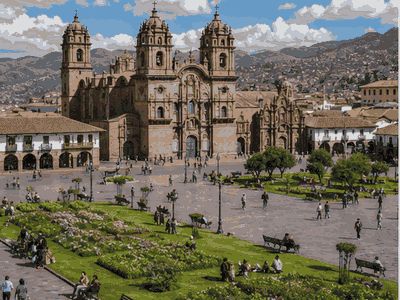
Plaza de Armas
Plaza de Armas is a named Cusco landmark that helps structure a real visit, adding orientation, local context and a clear route anchor.
View on map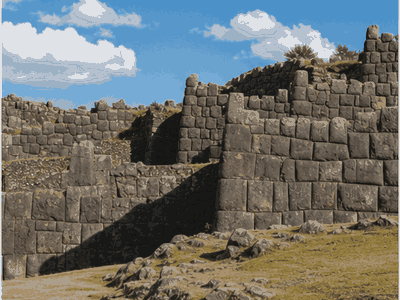
Sacsayhuaman
Sacsayhuaman is the monumental Inca site above Cusco, with huge stone walls and broad views over the city.
View on map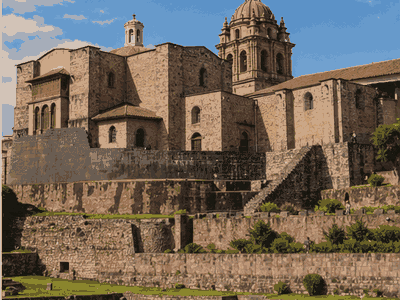
San Blas
San Blas is Cusco's steep artisan quarter, known for galleries, cafes, guesthouses and views back to the centre.
View on map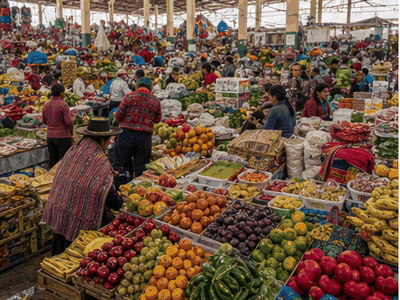
Qorikancha
Qorikancha shows Cusco's Inca and colonial layers, with Santo Domingo built over the former Temple of the Sun.
View on map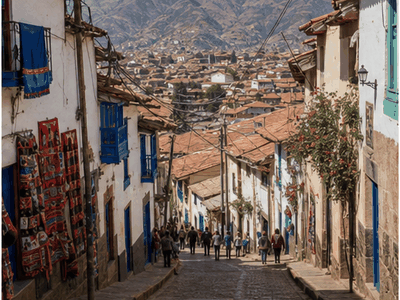
San Pedro Market
San Pedro Market is the main food and produce hall, useful for juices, simple meals and local shopping.
View on map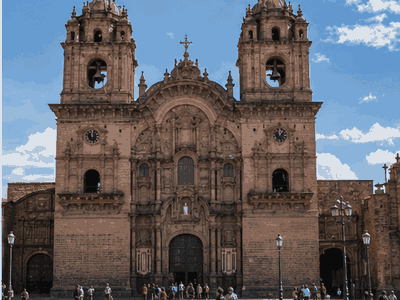
Twelve-Angled Stone
The Twelve-Angled Stone is a famous example of Inca masonry on a narrow street near the main plaza.
View on mapStay overview
Centro Historico is the strongest first Cusco base for Plaza de Armas, restaurants and tour pickups. San Blas is scenic but steep, San Pedro is practical and cheaper, Wanchaq helps with airport access, and Poroy only suits rail logistics.
Hotels & areas
Cusco hotel choice should account for altitude and hills: Centro Historico is easiest, San Blas is charming but steep, San Pedro is budget-friendly, Wanchaq is practical, and Poroy is mainly for specific train or car plans.
Centro Historico
Centro Historico is the easiest first base, with Plaza de Armas, restaurants, museums and tour pickups within short walks.
Best for: first visits, tours, restaurantsSee hotel optionsSan Blas
San Blas is steep, atmospheric and creative, with boutique stays, galleries and views above the main plaza.
Best for: boutique hotels, views, cafesSee hotel optionsSan Pedro
San Pedro is practical for the market, train logistics and budget stays west of the historic core.
Best for: market, budget stays, train accessSee hotel optionsWanchaq
Wanchaq is flatter and more local, useful for business, longer stays and easier airport-side transfers.
Best for: longer stays, airport access, local feelSee hotel optionsPoroy road
The Poroy road area is useful only for specific rail or car logistics, not for a classic first Cusco stay.
Best for: rail logistics, car trips, quiet nightsSee hotel optionsFlights & airports
Alejandro Velasco Astete International Airport (CUZ) arrival plan
- Alejandro Velasco Astete International Airport (CUZ)About 3 km from the centre
Compare airport access against hotel location, arrival time, rental car pickup, late flights and onward driving before choosing the first night base.
Rental cars
Cusco day-trip car use
Do not rent a car for Cusco itself; use tours, taxis or drivers for Sacred Valley and highland routes.
Compare rental carsTravel tips
Altitude
Take the first day slowly, drink water and avoid heavy hiking immediately after arriving at Cusco airport.
Best base
Stay near Plaza de Armas for a first visit unless steep streets or late-night noise are a concern.
Rail timing
Keep the Cusco plan compact: group nearby sights together and leave enough time for transfers, meals and weather changes.
Season
Keep the Cusco plan compact: group nearby sights together and leave enough time for transfers, meals and weather changes.
Nearby ideas
Heritage · about 50 min · colectivo from Calle Puputi
Sacred Valley and Pisac
Terraces climbing a spur above the Urubamba, with a craft market in the town below.
View on mapCraft · about 1 h · car north-west via Chinchero
Maras salt pans
Three thousand terraced pans fed by one salty spring, worked by families since Inca times.
View on mapHeritage · about 1 h · car north-west past Maras
Moray
Concentric terraced bowls with a 15-degree temperature range, thought to be a crop laboratory.
View on map
City history
Carbon-14 dating of Saksaywaman, the walled complex outside Cusco, established that Killke constructed the fortress about 1100 AD.
Alcaldes were established and regidores on 24 March 1534, which included the brothers Gonzalo Pizarro and Juan Pizarro.
In 1650, a violent earthquake destroyed almost all the colonial-era buildings.
Cusco became the last colonial capital during the rule of Viceroy José de la Serna, who held that position from this city between December 31, 1821, and December 1824.
Many of the buildings damaged in 1950 had been impacted by an earthquake only nine years previously.In the 1990s, during the mayoral administration of Mayor Daniel Estrada Pérez, the city underwent a new process.
Likewise, thanks to the efforts of this authority, various recognitions were achieved, such as the declaration as "Historical Capital of Peru" contained in the text of the Political Constitution of Peru of 1993.
Together with the results of excavations in 2007, when another temple was found at the edge of the fortress, this indicates a longtime religious as well as military use of the facility. Inca period.
In 2019, the Municipality of Cusco declared the performance of the anthem in Quechua at civic events to be of public interest and historical importance. Killke culture The Killke people occupied the region from.
According to Inca legend, the city was rebuilt by Sapa Inca Pachacuti, the man who transformed the Kingdom of Cusco from a sleepy city-state into the vast empire of Tawantinsuyu.
Father Vincente de Valverde became the Bishop of Cusco and built his cathedral facing the plaza.
He eventually retreated to Vilcabamba, the capital of the newly established small Neo-Inca State.
The Spanish colonists constructed many churches and convents, as well as a cathedral, university and archdiocese.
During this earthquake, the effigy of the Lord of the Earthquakes gained great importance and is still carried in procession every year.
The Dominican Priory and Church of Santo Domingo, which were built on top of the impressive Qurikancha (Temple of the Sun), were among the affected colonial era buildings.