Forecast
Blumenau
Local time--:--
America/Sao_PauloWeather Forecast
Blumenau, BrazilOpen-Meteo forecast.
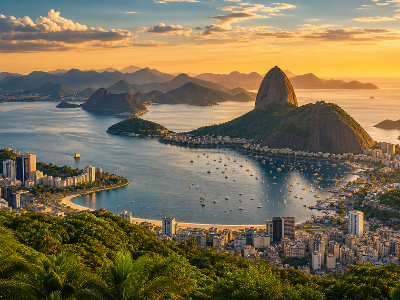
Blumenau city overview
Blumenau is a German-influenced city in southern Brazil, known for timbered facades, breweries and Brazil's biggest Oktoberfest. Base near Vila Germanica Park for events, walk Rua XV de Novembro for the historic centre, and stop at Museu da Cerveja for beer culture. Navegantes airport is the main flight gateway, with road transfers linking the city to the Santa Catarina coast.

Worth seeing
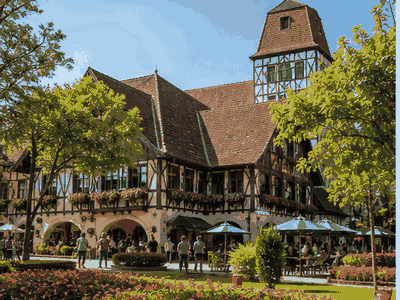
Vila Germanica Park
Vila Germanica Park is Blumenau's festival complex, the main stage for Oktoberfest and many of the city's largest events.
View on map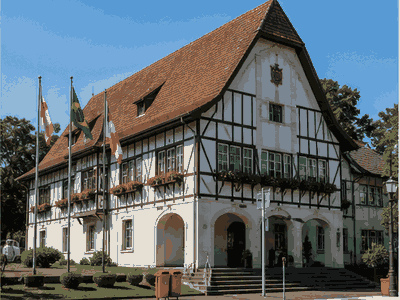
Rua XV de Novembro
Rua XV de Novembro is the central historic street, useful for architecture, shopping and a first walk through Blumenau.
View on map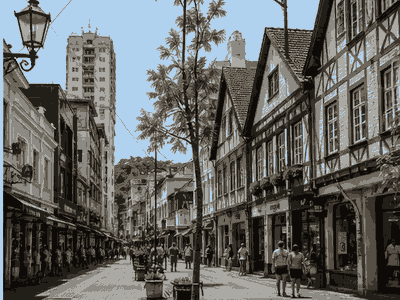
Museu da Cerveja
Museu da Cerveja is a named Blumenau landmark that helps structure a real visit, adding orientation, local context and a clear route anchor.
View on map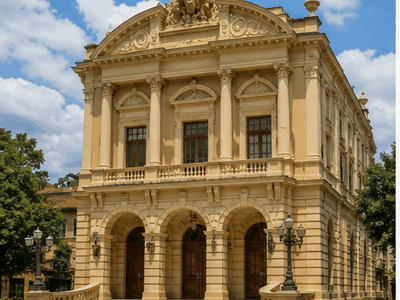
Catedral Sao Paulo Apostolo
Catedral Sao Paulo Apostolo is a modern landmark in the centre, easy to combine with Rua XV de Novembro.
View on map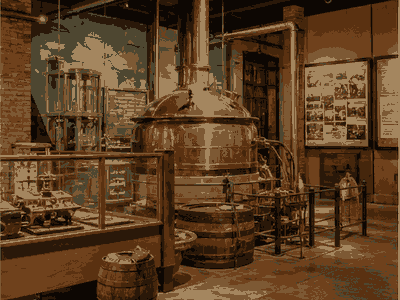
Museu Hering
Museu Hering is a named Blumenau landmark that helps structure a real visit, adding orientation, local context and a clear route anchor.
View on map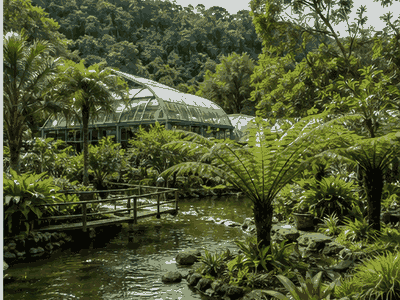
Parque Ramiro Ruediger
Parque Ramiro Ruediger is a practical green space near Vila Germanica, good for a walk between event sessions.
View on mapStay overview
Choose Centro for the easiest general Blumenau stay, or Vila Germanica when Oktoberfest, concerts or trade events drive the trip. Ponta Aguda is quieter, Victor Konder suits business errands, and Garcia is better for car-based local visits.
Hotels & areas
Blumenau hotels split between central convenience and event access: Centro keeps restaurants and Rua XV de Novembro close, Vila Germanica is strongest for festival dates, while Ponta Aguda, Victor Konder and Garcia work better with a car.
Centro
Centro is the most useful first base for Rua XV de Novembro, restaurants, shops and short taxi rides to Vila Germanica.
Best for: first visits, historic streets, diningSee hotel optionsVila Germanica
The Vila Germanica area is best during Oktoberfest or trade events, keeping the main pavilions and evening crowds close.
Best for: Oktoberfest, events, nightlifeSee hotel optionsPonta Aguda
Ponta Aguda sits across the river from Centro, quieter and residential, with easy access by car or rideshare.
Best for: quiet stays, river access, familiesSee hotel optionsVictor Konder
Victor Konder is practical for business trips and city services, close to the university side and central roads.
Best for: business, practical stays, car accessSee hotel optionsGarcia
Garcia works for visitors needing the southern side of Blumenau, with local hotels and routes toward parks and factories.
Best for: local visits, car trips, longer staysSee hotel optionsFlights & airports
Ministro Victor Konder International Airport (NVT) arrival plan
- Ministro Victor Konder International Airport (NVT)About 41 km from the centre
Compare airport access against hotel location, arrival time, rental car pickup, late flights and onward driving before choosing the first night base.
- Hercílio Luz International Airport (FLN)About 98 km from the centre
Compare airport access against hotel location, arrival time, rental car pickup, late flights and onward driving before choosing the first night base.
- Lauro Carneiro de Loyola Airport (JOI)About 82 km from the centre
Compare airport access against hotel location, arrival time, rental car pickup, late flights and onward driving before choosing the first night base.
Rental cars
Blumenau day-trip car use
A rental car helps for coastal trips, wineries and Navegantes transfers, but is not essential between Centro and Vila Germanica.
Compare rental carsTravel tips
Event dates
Book well ahead for Oktoberfest, when Vila Germanica rooms and central hotels rise sharply and traffic changes around the pavilions.
Airport transfers
Confirm Navegantes transfers in advance, especially for late arrivals, because Blumenau is inland and not beside the airport.
Best base
Stay in Centro outside festival periods; it keeps historic streets, restaurants and taxi access to Vila Germanica simple.
Coast add-on
Add Balneario Camboriu or Itajai if the trip needs beach time after the city and festival stops.
Nearby ideas
Town · about 35 min · bus north on SC-418
Pomerode
The most German town in Brazil, with half-timbered houses and Pomeranian still spoken.
View on mapNature · about 40 min · car south-west towards Apiúna
Parque Nacional da Serra do Itajaí
Atlantic forest on steep ridges, with the Spitzkopf peak trail starting near Blumenau.
View on mapNature · about 25 min · bus east on BR-470
Gaspar
A river town with thermal water parks that stay open through the southern winter.
View on mapCity history
In 1845, having an interest in the problems faced by European immigrants, Hermann Blumenau reached an agreement with the Society for the Protection of German Emigrants to represent it and traveled to Brazil, aiming.
The city was founded September 2, 1850, by Hermann Blumenau and seventeen other German immigrants.
On February 4, 1880, the municipality of Blumenau was created, composed of about 13,000 residents.
Aware of comments about the Itajaí Valley, he explored it in detail, in association with his compatriot Ferdinand Hackradt, since the aforementioned society was dissolved.
After taking certain precautions, Hermann Blumenau headed for Germany, to seek immigrants.
Despite the floods, clashes with wild animals and even with the indigenous peoples, due to the work of German immigrants willing to migrate continuously in greater numbers, the settlement prospered.
Those first immigrants had a great support from the Brazilian government, who gave them land, housing, livestock, seeds, education and healthcare for very low prices, and in many cases, entirely free.