Forecast

Sucre
Local time--:--
America/La_PazWeather Forecast
Sucre, BoliviaOpen-Meteo forecast.

Sucre city overview
Sucre is Bolivia's whitewashed constitutional capital, a relaxed highland city where colonial streets, university life and independence history sit close together. Start at Plaza 25 de Mayo, visit Casa de la Libertad for the republic's founding story, then climb to Convento de la Recoleta for city views. Alcantari airport handles arrivals outside town, and Parque Cretacico adds a very different half-day stop.
Worth seeing
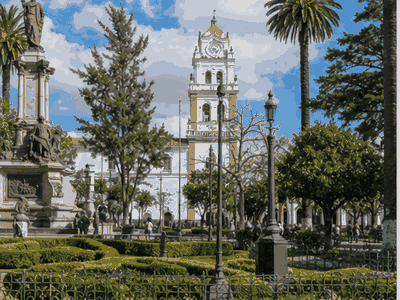
Plaza 25 de Mayo
Plaza 25 de Mayo is Sucre's central square, framed by civic buildings, cafes and the easiest orientation point for a first walk.
View on map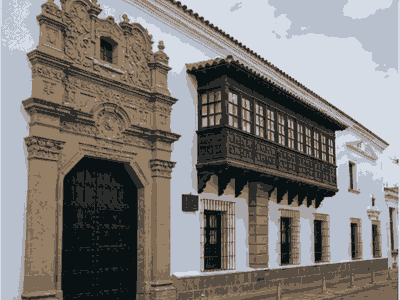
Casa de la Libertad
Casa de la Libertad is the key independence-history museum, where Bolivia's declaration was signed and national memory is presented.
View on map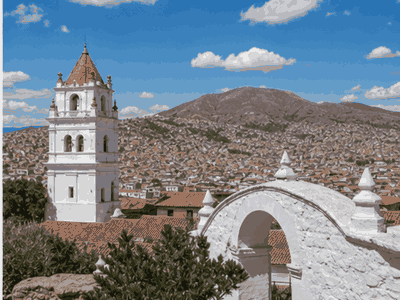
Convento de la Recoleta
Convento de la Recoleta sits above the centre with arcades, a quiet plaza and one of Sucre's best city views.
View on map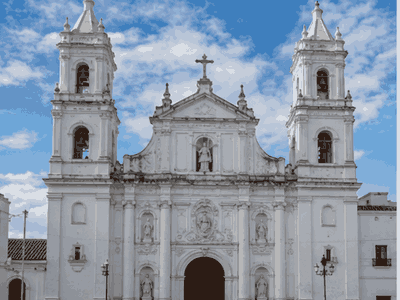
Parque Cretacico
Parque Cretacico protects dinosaur footprints on a cliff outside Sucre, a useful half-day contrast to the colonial centre.
View on map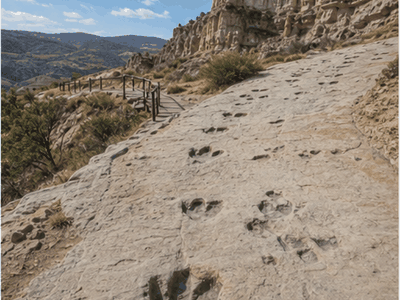
Castillo de la Glorieta
Castillo de la Glorieta is a fanciful former princely residence outside town, best visited by taxi or on a short tour.
View on map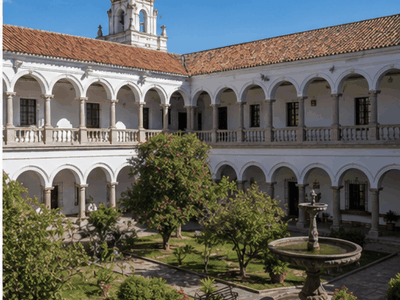
Mercado Central
Mercado Central is a named Sucre landmark that helps structure a real visit, adding orientation, local context and a clear route anchor.
View on mapStay overview
Stay in Centro Historico for the easiest first Sucre visit, especially if Plaza 25 de Mayo, museums and restaurants matter. Recoleta is calmer and scenic, the Mercado Central area is practical and cheaper, while La Glorieta works best with car-based plans.
Hotels & areas
Sucre hotel choice is mostly about walking versus quiet: Centro Historico keeps the core sights close, Recoleta trades convenience for views, Mercado Central helps budget travelers stay central, and La Glorieta is better for drivers or tour pickups.
Centro Historico
Centro Historico is the best first base, putting Plaza 25 de Mayo, museums, cafes and most colonial streets within easy walking distance.
Best for: first visits, museums, walkingSee hotel optionsRecoleta
Recoleta sits uphill from the centre, quieter and scenic, with guesthouses near viewpoints and short taxi rides back to the main plazas.
Best for: views, quiet stays, longer visitsSee hotel optionsMercado Central area
The Mercado Central area is practical for budget stays, local food and quick walks to the cathedral, though streets are busier by day.
Best for: budget stays, food, central errandsSee hotel optionsLa Glorieta road
The La Glorieta side suits travelers with a car or tour pickup, useful for quieter nights and access toward the castle route.
Best for: car trips, quiet hotels, outskirtsSee hotel optionsFlights & airports
Alcantarí International Airport (SRE) arrival plan
- Alcantarí International Airport (SRE)About 27 km from the centre
Compare airport access against hotel location, arrival time, rental car pickup, late flights and onward driving before choosing the first night base.
Rental cars
Sucre day-trip car use
A rental car is not needed in central Sucre, but it helps for independent trips toward Tarabuco, Maragua or Potosi.
Compare rental carsTravel tips
Best base
Choose Centro Historico for a first stay; most museums, cafes and evening walks cluster around Plaza 25 de Mayo.
Altitude pacing
Sucre is high enough to slow some arrivals, so keep the first afternoon light before longer walks or day trips.
Market timing
Visit Mercado Central earlier in the day for food stalls and local produce, then move uphill to Recoleta for sunset.
Day trips
Tarabuco works well on market days, while Maragua needs more planning, better footwear and usually a guided route.
Nearby ideas
Market
Tarabuco
Tarabuco is known for its Sunday market and Yampara textiles, best planned as a guided or early-start day trip.
View on mapNature
Maragua Crater
Maragua Crater offers hiking, villages and unusual geology outside Sucre, usually better with a guide and full day.
View on mapHeritage
Potosi
Potosi is a longer high-altitude trip from Sucre, built around mining history, colonial architecture and Cerro Rico.
View on mapUpcoming events
City history
Although the Chiriguanos were repelled by commanders sent by Wayna Qhapaq from Quito, the Portuguese conquistador Aleixo Garcia is believed to be the first European to make contact with Charcas in 1525.
In 1559, the Spanish King Philip II established the Audiencia de Charcas in La Plata with authority over an area which covers what is now Paraguay, southeastern Peru, northern Chile and Argentina, and much.
In 1601 the Recoleta Monastery was founded by the Franciscans.
In 1624 St Francis Xavier University of Chuquisaca was founded.
The Real Audiencia of Charcas was a subdivision of the Viceroyalty of Peru until 1776, when it was transferred to the newly created Viceroyalty of the Río de la Plata.
On May 25, 1809, the Bolivian independence movement was started with the ringing of the bell of the Basilica of Saint Francisco.
From that point of view, Bolivia was the last Spanish imperial territory in South America to gain its independence, in 1825.
It was proclaimed provisional capital of the newly independent Upper Peru (later, Bolivia) in July 1826.
On July 12, 1839, President José Miguel de Velasco proclaimed a law naming the city as the capital of Bolivia, and renaming it in honor of the revolutionary leader Antonio José de Sucre.
After the economic decline of Potosí and its silver industry, the Bolivian seat of government was moved from Sucre to La Paz in 1898.
Chuquisaca was the provincial capital of the wamani of Charca, established after Topa Inka Yupanqui conquered the Aymara kingdom that originally occupied the area and imposed the Quechua language on them.
The settlement was briefly occupied by Diego Méndez, under the orders of Diego de Almagro II, during Almagro II's uprising against Pizarro and the Spanish government.
Very much a Spanish city during the colonial era, the narrow streets of the city centre are organised in a grid, reflecting the Andalusian culture that is embodied in the architecture of the city's.
Sucre's University (Universidad Mayor Real y Pontificia de San Francisco Xavier de Chuquisaca) is one of the oldest universities in the new world.