Bolivia National Day 2027

More National days
National days topic
Return to the National days index for related events.
About the event
Bolivia's national day marks independence from Spain, declared on 6 August 1825 and named for Simon Bolivar, the day's namesake and a central figure in South America's independence wars. Celebrations centre on Sucre, the constitutional capital, with military parades and civic ceremony held nationwide.
UNESCO-listed Bolivian carnival — the Diablada devil dance and elaborate costumes in the world's most spectacular Andean festival.
Why this day
Bolivia celebrates Independence Day on 6 August, marking the 1825 declaration of independence after long wars against Spanish rule. The country was named for Simón Bolívar.
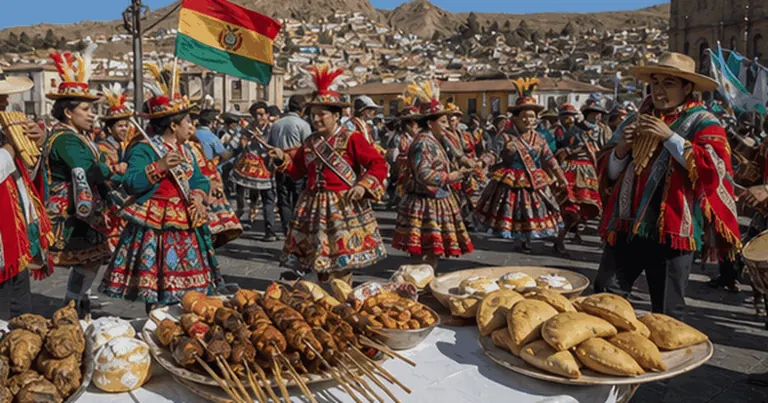
The day connects republican history with Bolivia's Indigenous majorities, regional identities and highland-lowland diversity. Official ceremony and folk culture often stand side by side.
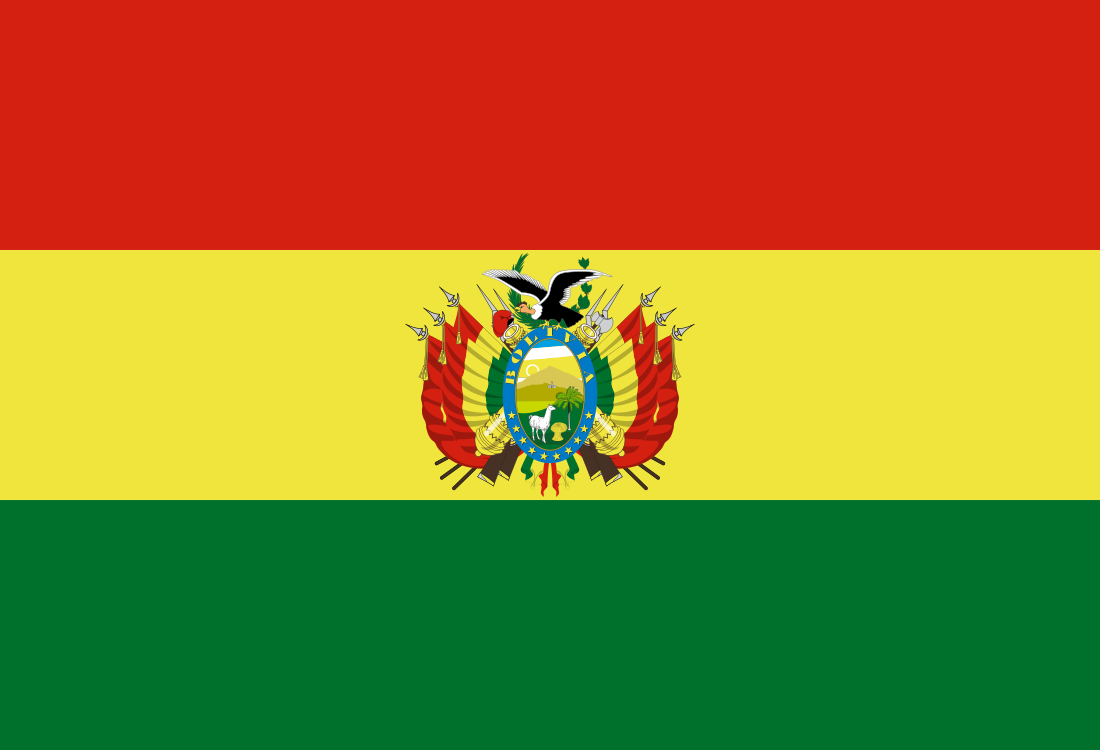
Sucre, La Paz and cities across the country mark the day with parades, speeches, school events, music, dance and red-yellow-green flags.
Timeline
- 1825Independence declared
- 1809Chuquisaca uprising
- 1825Republic founded
Key figures
Stay for the event
Check-in 5 Aug, check-out 7 Aug 2027 — 2 nights around 6 August 2027. Change the dates to stay longer.
AREA
Find stays in La PazGetting there
- Celebratednationwide
- CapitalSucre
- Time zoneBOT (UTC-4)
Host country
- Currency: Bolivian boliviano
- Language: Aymara, Guaraní
- Driving: on the right
- Capital: Sucre
- Phone: +591
- Emergency: 110
- Electricity: 230 V, 50 Hz, plugs A/B/C
What to eat
Juicy baked pastry filled with spiced beef or chicken stew — Bolivia's national breakfast pastry, eaten standing up.
Skewered beef heart marinated in cumin and garlic, grilled over coals — the street food of La Paz and every Bolivian city.
Chopped beef and sausage with chips, onion, tomato and a fried egg on top — the indulgent Bolivian party dish.
Andean soup with freeze-dried potato (chuño), beef, vegetables and barley — a warming altiplano highland stew.
Breaded beef on rice with potato, fried egg and tomato — the Cochabamba specialty and a Bolivian comfort food.
Hot purple corn drink thickened with starch, spiced with cinnamon and cloves — the traditional Bolivian morning drink.
What to drink
Bolivian grape brandy distilled in the high altitude valleys — the national spirit of Bolivia.
Purple corn drink — sweet and lightly spiced, consumed cold as a refreshment at Bolivian celebrations.
Coca leaf tea — drunk to combat altitude sickness in La Paz at 3600 metres, freely available across Bolivia.
Culture & traditions
UNESCO-listed Bolivian carnival — the Diablada devil dance and elaborate costumes in the world's most spectacular Andean festival.
Pre-Columbian ceremonial centre near Lake Titicaca — the heart of a civilisation that preceded the Incas by a thousand years.
Indigenous Aymara women wrestlers in traditional bowler hats and full skirts — a spectacle unique to El Alto above La Paz.
The Cerro Rico silver mountain — where Spanish colonial wealth was extracted by forced Indigenous labour for 200 years.
Coming years
Bolivia National Day 2028
- Sunday 6 August 2028Next event date
Bolivia National Day 2029
- Monday 6 August 2029Event date
Bolivia National Day 2030
- Tuesday 6 August 2030Event date