Forecast
Port-au-Prince
Local time--:--
America/Port-au-PrinceWeather Forecast
Port-au-Prince, HaitiOpen-Meteo forecast.
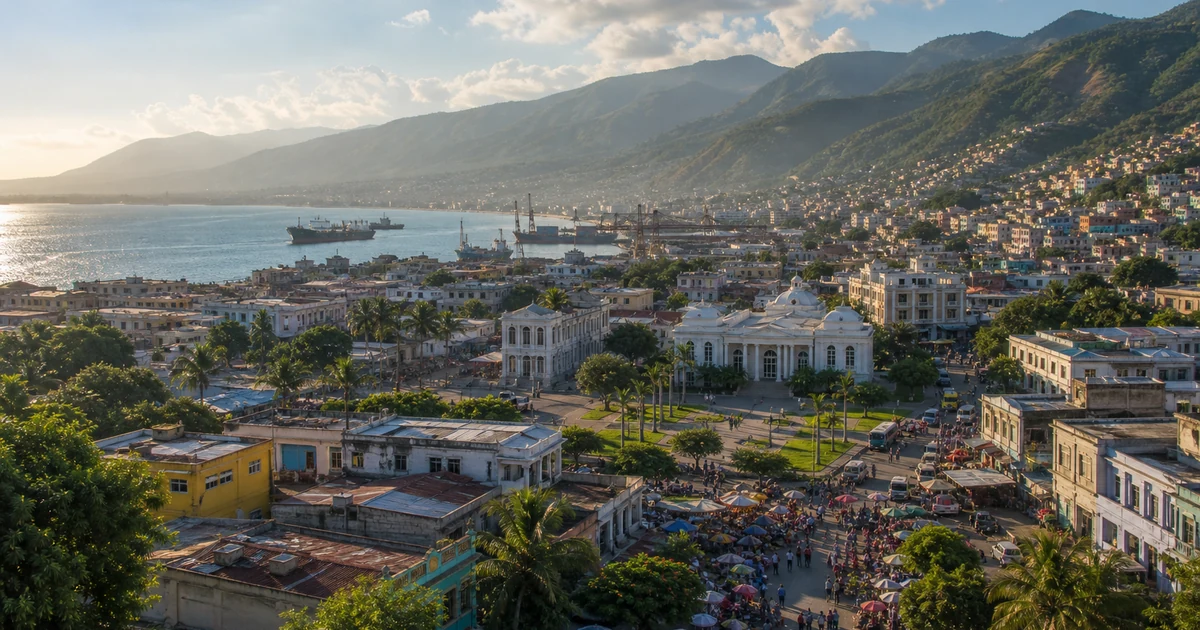
Port-au-Prince city overview
Port-au-Prince works best as a base in Haiti when you anchor days around Musee du Pantheon National Haitien, Iron Market Port-au-Prince and Champ de Mars Port-au-Prince. Use those sights to understand the city's history, street life and visitor rhythm. Toussaint Louverture International Airport handles the main arrival flow, so hotel choice should balance the centre, transfer time and day-trip plans.

Worth seeing
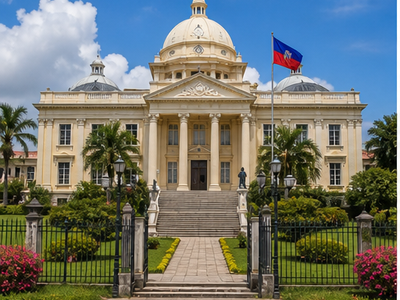
Musee du Pantheon National Haitien
Musee du Pantheon National Haitien is a named stop in Port-au-Prince worth keeping on the route when it fits the day's transport, timing and neighborhood plan.
View on map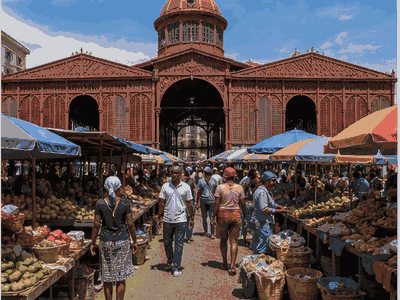
Iron Market Port-au-Prince
Iron Market Port-au-Prince gives Port-au-Prince a concrete street-life stop, with food, everyday shopping and local movement that helps visitors read the city.
View on map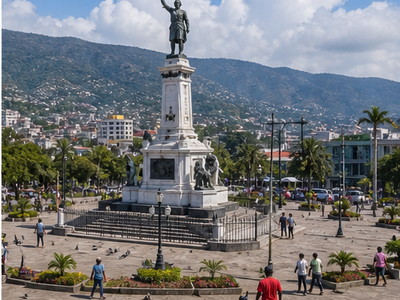
Champ de Mars Port-au-Prince
Champ de Mars Port-au-Prince adds the water-facing side of Port-au-Prince, making it a good break from museums, traffic and dense historic streets.
View on map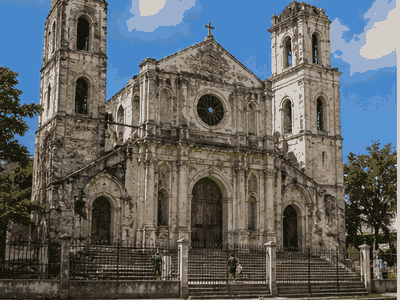
Cathedral of Our Lady of the Assumption
Cathedral of Our Lady of the Assumption anchors the historic and ceremonial side of Port-au-Prince, making it a practical stop for architecture, local memory and orientation.
View on map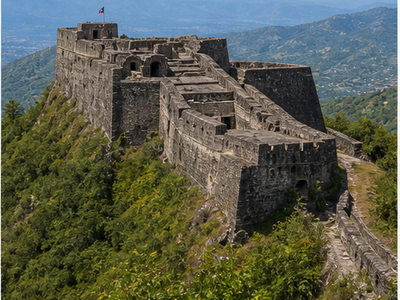
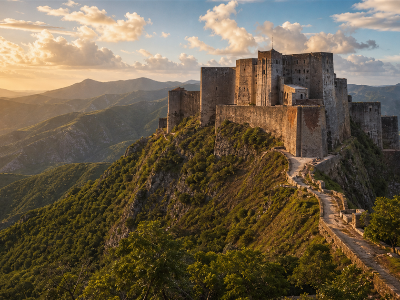
Fort Jacques
Fort Jacques is a clear heritage marker in Port-au-Prince, best used as a fixed point when grouping nearby streets, monuments and viewpoints.
View on map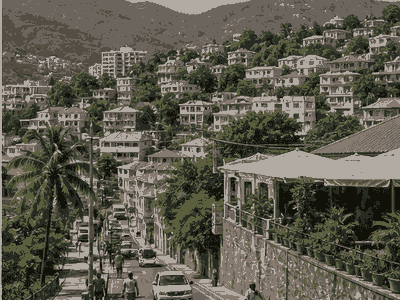
Petion-Ville
Petion-Ville is a named stop in Port-au-Prince worth keeping on the route when it fits the day's transport, timing and neighborhood plan.
View on mapStay overview
Start with City centre for the easiest first Port-au-Prince stay, then compare Old Town and Waterfront when price, nightlife, quieter evenings or transfer timing matter more than being beside every major sight.
Hotels & areas
Port-au-Prince hotel choice is mostly about repeat journeys: use City centre for sightseeing, Old Town for a different local base, and Waterfront or Airport area when views, parking, airport timing or longer stays matter.
City centre
City centre is the most practical first base in Port-au-Prince, keeping main sights, restaurants and short local transfers close.
Best for: first visits, sightseeing, restaurantsSee hotel optionsOld Town
Old Town is the most practical first base in Port-au-Prince, keeping main sights, restaurants and short local transfers close.
Best for: first visits, sightseeing, restaurantsSee hotel optionsWaterfront
Waterfront suits travellers who want views, evening walks and a calmer base while still keeping central Port-au-Prince reachable.
Best for: views, quieter evenings, walksSee hotel optionsAirport area
Airport area works mainly for early departures, late arrivals or car pickup, not for a first Port-au-Prince sightseeing base.
Best for: early flights, late arrivals, car pickupSee hotel optionsFlights & airports
Toussaint Louverture International Airport (PAP) arrival plan
- Toussaint Louverture International Airport (PAP)About 6 km from the centre
Compare airport access against hotel location, arrival time, rental car pickup, late flights and onward driving before choosing the first night base.
Rental cars
Port-au-Prince day-trip car use
Do not rent a car for central Port-au-Prince unless parking and traffic are part of the plan; use one mainly for regional day trips.
Compare rental carsTravel tips
Best base
Choose City centre for a first stay because it keeps main sights, restaurants and practical local movement close.
Airport timing
Leave extra time for Toussaint Louverture International Airport, especially for early flights, late arrivals, traffic or unfamiliar transfer routes.
Local movement
Plan each day in clusters around Musee du Pantheon National Haitien and Iron Market Port-au-Prince so transfers do not consume the best sightseeing hours.
Day trips
Keep one flexible slot for nearby routes from Port-au-Prince, checking weather, transport and opening hours before committing.
Upcoming events
City history
Thus, in 1749, a new city was built, Port-au-Prince The Place du Champ-de-Mars—the site of a number of historically notable structures in the centre of the city—was hit hard by the 2010 earthquake.
French colonial commissioner Étienne Polverel named the city Port-Républicain on 23 September 1793 "in order that the inhabitants be kept continually in mind of the obligations which the French Revolution imposed on them".
In 1804, it became the capital of newly independent Haïti.
When Jean-Jacques Dessalines was assassinated in 1806, Port-au-Prince became the capital of the mulatto-dominated south (Cap-Haïtien was the capital of the black-dominated north).
It was re-established as the capital of all of Haiti when the country was unified again in 1820 Port-au-Prince was the centre of the political and intellectual life of the country and is the.
Other notable landmarks include the Cathedral of Notre Dame and the adjacent colonial cathedral, both of which also collapsed in the 2010 earthquake, and the National Archives, National Library, and National Museum. Foundation of.
It was later renamed back to Port-au-Prince by Jacques I, Emperor of Haiti.
When Haiti was divided between a kingdom in the north and a republic in the south, Port-au-Prince was the capital of the republic, under the leadership of Alexandre Pétion.
Henri Christophe renamed the city Port-aux-Crimes after the assassination of Jacques I at Pont Larnage (now known as Pont-Rouge, and located north of the city). Taino Period The Port-au-Prince area was part of the.
Direct Spanish rule over the area having been established, Ovando founded a settlement not far from the coast (west of Etang Saumâtre), ironically named Santa Maria de la Paz Verdadera, which would be abandoned.
While the first French presence in Hôpital, the region later to contain Port-au-Prince was that of the flibustiers; as the region became a real French colony, the colonial administration began to worry about the.
By then, the colonial administration was convinced that a capital needed to be chosen, in order to better control the French portion of Hispaniola (Saint-Domingue).
Most of the central historic area of the city was destroyed, including Haiti's prized Cathédrale de Port-au-Prince, the capital building, Legislative Palace (the parliament building), Palace of Justice (Supreme Court building), several ministerial buildings.
Aid was delivered to Port-au-Prince by numerous nations and voluntary groups as part of a global relief effort.