Forecast
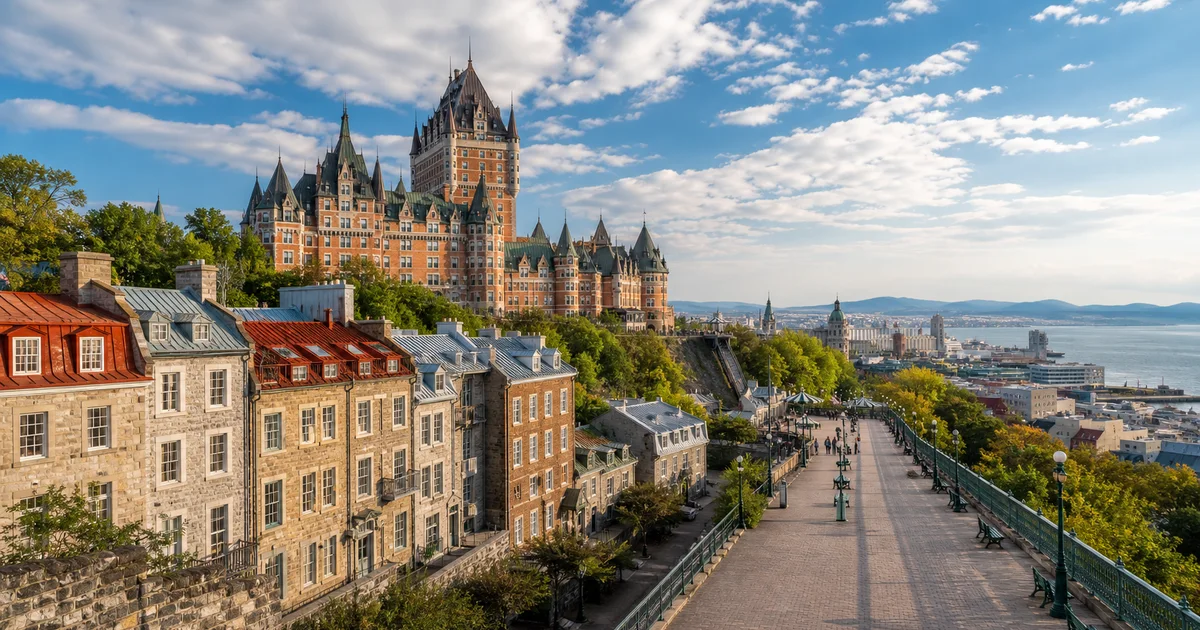
Quebec City
Local time--:--
tbaWeather Forecast
Quebec City, CanadaOpen-Meteo forecast.
Quebec City city overview
Quebec City works best as a base in Canada when you anchor days around Old Quebec, Chateau Frontenac and Petit-Champlain. Use those sights to understand the city's history, street life and visitor rhythm. Quebec City International Airport handles the main arrival flow, so hotel choice should balance the centre, transfer time and day-trip plans.

Worth seeing
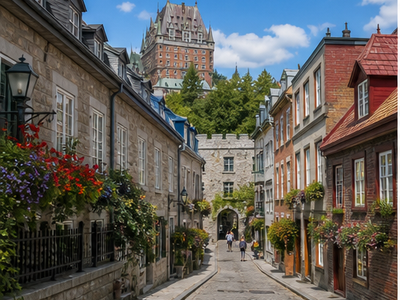
Old Quebec
Old Quebec is a named stop in Quebec City worth keeping on the route when it fits the day's transport, timing and neighborhood plan.
View on map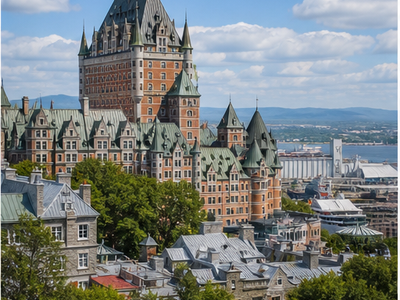
Chateau Frontenac
Chateau Frontenac is a named stop in Quebec City worth keeping on the route when it fits the day's transport, timing and neighborhood plan.
View on map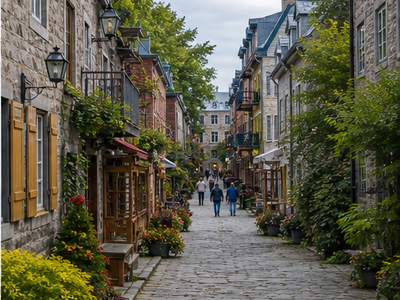
Petit-Champlain
Petit-Champlain is a named stop in Quebec City worth keeping on the route when it fits the day's transport, timing and neighborhood plan.
View on map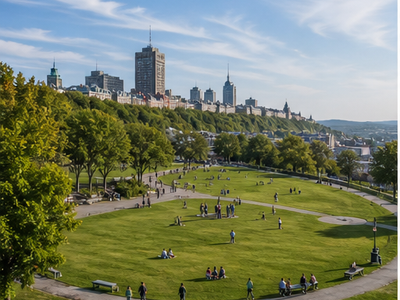
Plains of Abraham
Plains of Abraham is a named stop in Quebec City worth keeping on the route when it fits the day's transport, timing and neighborhood plan.
View on map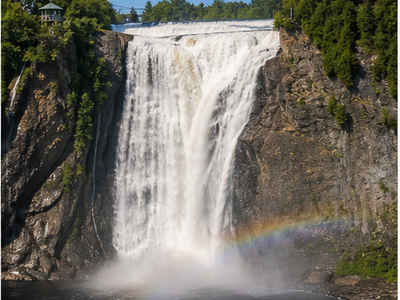
Montmorency Falls
Montmorency Falls gives Quebec City a greener or more scenic stop, useful when the route needs views, shade, walking space or a slower hour.
View on map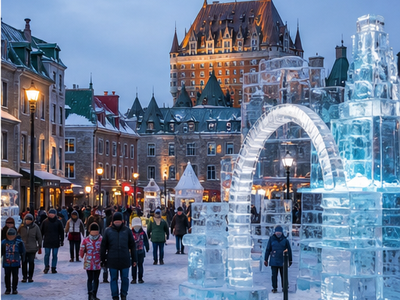
Winter Carnival
Winter Carnival is a named stop in Quebec City worth keeping on the route when it fits the day's transport, timing and neighborhood plan.
View on mapStay overview
Start with City centre for the easiest first Quebec City stay, then compare Old Town and Waterfront when price, nightlife, quieter evenings or transfer timing matter more than being beside every major sight.
Hotels & areas
Quebec City hotel choice is mostly about repeat journeys: use City centre for sightseeing, Old Town for a different local base, and Waterfront or Airport area when views, parking, airport timing or longer stays matter.
City centre
City centre is the most practical first base in Quebec City, keeping main sights, restaurants and short local transfers close.
Best for: first visits, sightseeing, restaurantsSee hotel optionsOld Town
Old Town is the most practical first base in Quebec City, keeping main sights, restaurants and short local transfers close.
Best for: first visits, sightseeing, restaurantsSee hotel optionsWaterfront
Waterfront suits travellers who want views, evening walks and a calmer base while still keeping central Quebec City reachable.
Best for: views, quieter evenings, walksSee hotel optionsAirport area
Airport area works mainly for early departures, late arrivals or car pickup, not for a first Quebec City sightseeing base.
Best for: early flights, late arrivals, car pickupSee hotel optionsFlights & airports
Quebec Jean Lesage International Airport (YQB) arrival plan
- Quebec Jean Lesage International Airport (YQB)About 14 km from the centre
Compare airport access against hotel location, arrival time, rental car pickup, late flights and onward driving before choosing the first night base.
Rental cars
Quebec City day-trip car use
Do not rent a car for central Quebec City unless parking and traffic are part of the plan; use one mainly for regional day trips.
Compare rental carsTravel tips
Best base
Choose City centre for a first stay because it keeps main sights, restaurants and practical local movement close.
Airport timing
Leave extra time for Quebec City International Airport, especially for early flights, late arrivals, traffic or unfamiliar transfer routes.
Local movement
Plan each day in clusters around Old Quebec and Chateau Frontenac so transfers do not consume the best sightseeing hours.
Day trips
Keep one flexible slot for nearby routes from Quebec City, checking weather, transport and opening hours before committing.
Nearby ideas
Island · about 30 min · car east over the island bridge
Île d'Orléans
A farming island of six villages, cider houses and strawberry stands, circled in an afternoon.
View on mapHeritage · about 35 min · bus 800 then 250 east along the north shore
Sainte-Anne-de-Beaupré
A pilgrimage basilica with crutches stacked by the door and a mosaic ceiling above.
View on mapNature · about 50 min · car east on Route 138 past Beaupré
Canyon Sainte-Anne
A 74-metre fall through a granite gorge crossed on three suspension bridges.
View on mapUpcoming events
City history
It is home to the earliest known French settlement in North America, Fort Charlesbourg-Royal, established in 1541 by explorer Jacques Cartier with some 400 persons but abandoned less than a year later due to.
Quebec was founded by Samuel de Champlain, a French explorer and diplomat, on 3 July 1608, and at the site of a long abandoned St.
In that time many battles and sieges took place: the Battle of Beauport, a French victory (31 July 1759); the Battle of the Plains of Abraham, in which British troops under General James Wolfe.
Nearby inhabitants traded their farm surpluses and firewood for imported goods from France at the two city markets. British and Canadian rule (1763–present) During the American Revolution, revolutionary troops from the southern colonies assaulted.
French regime (1500s–1763) Quebec City is one of the oldest European settlements in North America and the only fortified city north of Mexico whose walls still exist.
It was then made the capital of Lower Canada by the Constitutional Act of 1791.
From 1841 to 1867, the capital of the Province of Canada rotated between Kingston, Montreal, Toronto, Ottawa and Quebec City (from 1851 to 1855 and from 1859 to 1865).
In 1867, Queen Victoria chose Ottawa as the definite capital of the Dominion of Canada, while Quebec City was confirmed as the capital of the newly created province of Quebec.
Before the Royal Military College of Canada was established in 1876, the only French-speaking officer training school was the Quebec City School of Military Instruction, founded in 1864.
The fort was at the mouth of the Rivière du Cap Rouge, in the suburban former town of Cap-Rouge (which merged into Quebec City in 2002).
The city experienced an economic golden age in the 1800s, due to its favorable location on the Saint Lawrence River which gave rise to industries of wooden sailing ships manufacture, export of squared timber.
Although the Acadian settlement at Port-Royal was established three years earlier, Quebec came to be known as the cradle of North America's Francophone population.
The town was distinguished by its monumental architecture, fortifications, and affluent homes of masonry and shacks in the suburbs of Saint-Jean and Saint-Roch.
Contributing factors included the rise of steel-hulled steamships, the expansion of railroads at the expense of waterways for continental commerce; the depletion of forest resources near major rivers upstream of Québec City and in.