Forecast
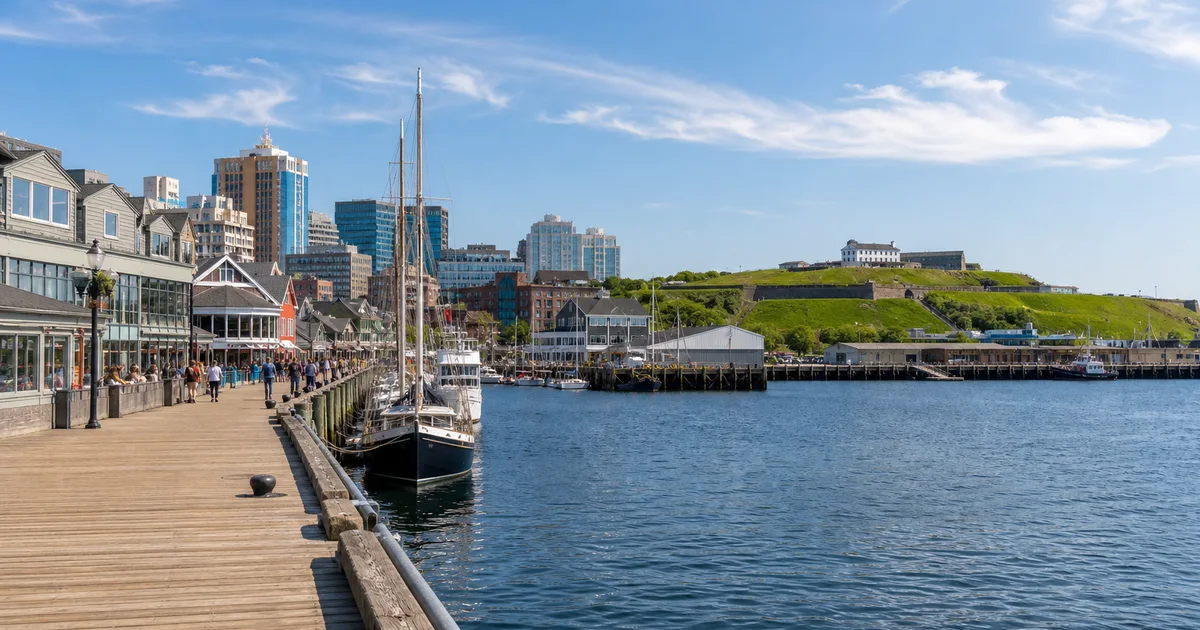
Halifax
Local time--:--
America/HalifaxWeather Forecast
Halifax, CanadaOpen-Meteo forecast.

Halifax city overview
Halifax works best as a base in Canada when you anchor days around Halifax Waterfront, Citadel Hill and Pier 21. Use those sights to understand the city's history, street life and visitor rhythm. Halifax International Airport handles the main arrival flow, so hotel choice should balance the centre, transfer time and day-trip plans.

Worth seeing
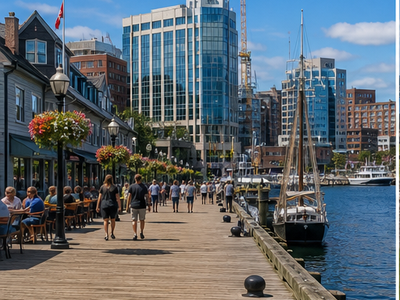
Halifax Waterfront
Halifax Waterfront adds the water-facing side of Halifax, making it a good break from museums, traffic and dense historic streets.
View on map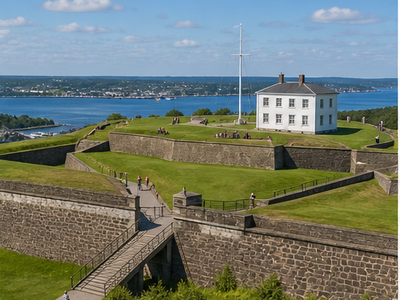
Citadel Hill
Citadel Hill adds outdoor time to a Halifax stay, with open space, views or waterfront breathing room between denser city sights.
View on map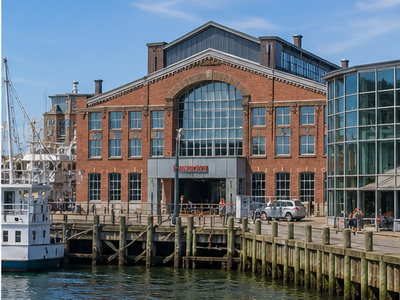
Pier 21
Pier 21 is a named stop in Halifax worth keeping on the route when it fits the day's transport, timing and neighborhood plan.
View on map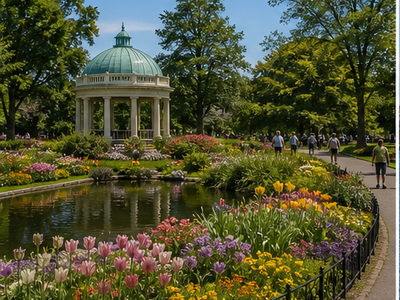
Public Gardens
Public Gardens adds outdoor time to a Halifax stay, with open space, views or waterfront breathing room between denser city sights.
View on map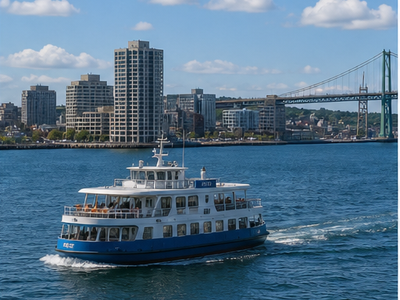
Dartmouth ferry
Dartmouth ferry gives Halifax a strong culture stop for museums, exhibitions or local collections, and works best as an indoor anchor in the day's route.
View on map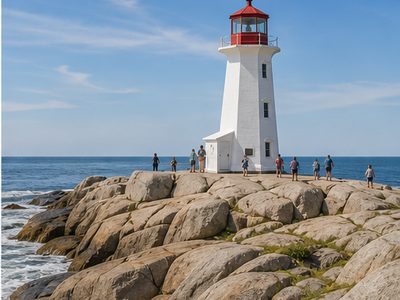
Peggy's Cove trips
Peggy's Cove trips is a named stop in Halifax worth keeping on the route when it fits the day's transport, timing and neighborhood plan.
View on mapStay overview
Start with City centre for the easiest first Halifax stay, then compare Old Town and Waterfront when price, nightlife, quieter evenings or transfer timing matter more than being beside every major sight.
Hotels & areas
Halifax hotel choice is mostly about repeat journeys: use City centre for sightseeing, Old Town for a different local base, and Waterfront or Airport area when views, parking, airport timing or longer stays matter.
City centre
City centre is the most practical first base in Halifax, keeping main sights, restaurants and short local transfers close.
Best for: first visits, sightseeing, restaurantsSee hotel optionsOld Town
Old Town is the most practical first base in Halifax, keeping main sights, restaurants and short local transfers close.
Best for: first visits, sightseeing, restaurantsSee hotel optionsWaterfront
Waterfront suits travellers who want views, evening walks and a calmer base while still keeping central Halifax reachable.
Best for: views, quieter evenings, walksSee hotel optionsAirport area
Airport area works mainly for early departures, late arrivals or car pickup, not for a first Halifax sightseeing base.
Best for: early flights, late arrivals, car pickupSee hotel optionsFlights & airports
Halifax / Stanfield International Airport (YHZ) arrival plan
- Halifax / Stanfield International Airport (YHZ)About 27 km from the centre
Compare airport access against hotel location, arrival time, rental car pickup, late flights and onward driving before choosing the first night base.
Rental cars
Halifax day-trip car use
Do not rent a car for central Halifax unless parking and traffic are part of the plan; use one mainly for regional day trips.
Compare rental carsTravel tips
Best base
Choose City centre for a first stay because it keeps main sights, restaurants and practical local movement close.
Airport timing
Leave extra time for Halifax International Airport, especially for early flights, late arrivals, traffic or unfamiliar transfer routes.
Local movement
Plan each day in clusters around Halifax Waterfront and Citadel Hill so transfers do not consume the best sightseeing hours.
Day trips
Keep one flexible slot for nearby routes from Halifax, checking weather, transport and opening hours before committing.
Nearby ideas
Heritage · about 1 h 15 min · car south-west on Highway 103
Lunenburg
A UNESCO colonial town of painted wooden houses, home port of the schooner Bluenose II.
View on mapTown · about 1 h · car south-west on Highway 103
Mahone Bay
Three churches lined up on the waterfront, with pewter and quilt shops along the main street.
View on mapUpcoming events
City history
By unilaterally establishing Halifax, the British were violating treaties with the Mi'kmaq (1726) that were signed after Father Rale's War.
Equipped with 13 transports and a sloop of war, Cornwallis founded the Town of Halifax on what is now known as the Halifax Peninsula, on June 21, 1749.
The completion of the Intercolonial Railway in 1876 helped make Halifax a major gateway for Atlantic trade—particularly in winter, when ice made ports on the St.
This connection to trans-Atlantic trade and military enterprises bore deadly consequences on December 6, 1917.
In April 2014, the Regional Council approved a new brand identity for the region, under which the name "Halifax" is used for marketing and communications purposes; "Halifax Regional Municipality" remains the region's official name.
Before the mid-1700s, when a European (British) settlement was established at Halifax, the Colony of Nova Scotia had been administered from Annapolis Royal, near the Western opening of the Bay of Fundy.
However, by the mid-20th century, this structure had evolved such that "the County" was a distinct municipality including only the areas that were not included within the Cities and Town.
The Mi'kmaq name for the harbour around which Halifax exists is K'jipuktuk or Chebookt, meaning "Chief Harbour" or "Great Harbour" in the Mi'kmaq language.
Additionally, the Mi'kmaq referred to the area of the Halifax Peninsula comprising the downtown area and Point Pleasant Park as Amntu'kati, while the hillside where Halifax was established was referred to as Gooowakade, meaning.
Margaret's Bay, also in the Municipality, was first settled by French-speaking Foreign Protestants at French Village, Nova Scotia, who migrated from Lunenburg, Nova Scotia, during the American Revolution.
In the 18th and 19th centuries, Halifax grew to become a centre of government (particularly military), trade, and shipbuilding.
In one of the great disasters in Canadian history, the SS Mont-Blanc, a French cargo ship carrying munitions, collided with the Belgian Relief vessel SS Imo in "The Narrows" between upper Halifax Harbour and.
In addition to the capital City of Halifax (on the western side of the harbour), the City of Dartmouth (eastern side) and the Town of Bedford (northern tip of the Bedford Basin) grew up.
Halifax County was originally understood as a higher-level geographic unit responsible for, among other things, court services throughout both the incorporated Cities and Town, and the unorganized territory of the remainder of the county.