Forecast
Vatican City
Local time--:--
Europe/VaticanWeather Forecast
Vatican City, Vatican CityOpen-Meteo forecast.
Vatican City city overview
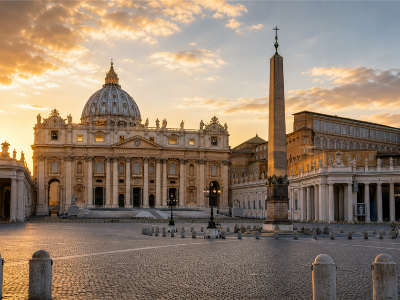
Vatican City works best as a base in Vatican City when you anchor days around St. Peter's Basilica, St. Peter's Square and Vatican Museums. Use those sights to understand the city's history, street life and visitor rhythm. Vatican City International Airport handles the main arrival flow, so hotel choice should balance the centre, transfer time and day-trip plans.
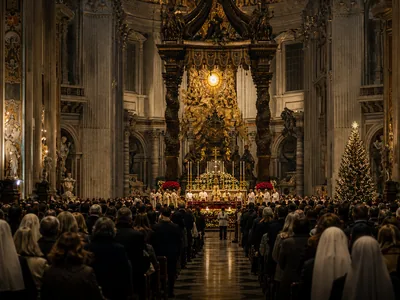
Worth seeing
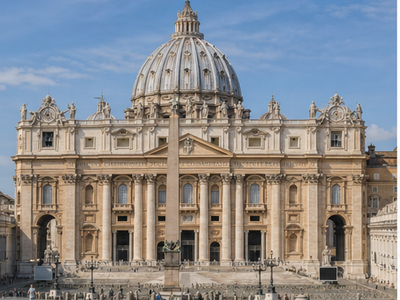
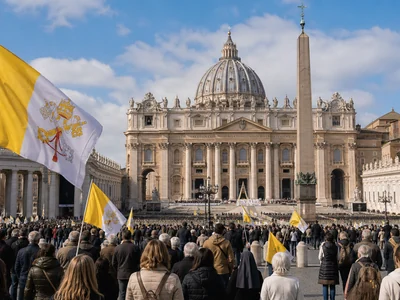
St. Peter's Basilica
St. Peter's Basilica anchors the historic and ceremonial side of Vatican City, making it a practical stop for architecture, local memory and orientation.
View on map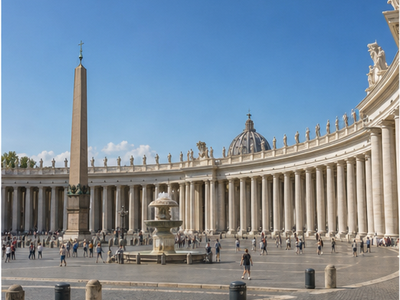
St. Peter's Square
St. Peter's Square is a clear heritage marker in Vatican City, best used as a fixed point when grouping nearby streets, monuments and viewpoints.
View on map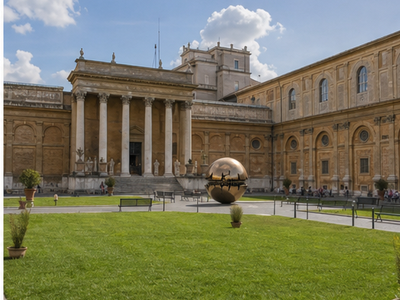
Vatican Museums
Vatican Museums is a key Vatican City culture stop, useful for understanding local history, collections and rainy-day planning near the main sightseeing route.
View on map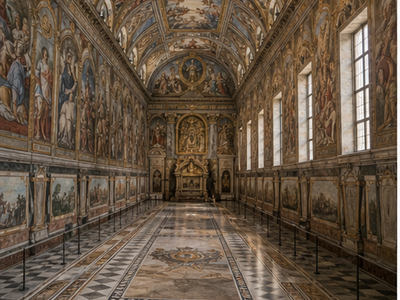
Sistine Chapel
Sistine Chapel is a named stop in Vatican City worth keeping on the route when it fits the day's transport, timing and neighborhood plan.
View on map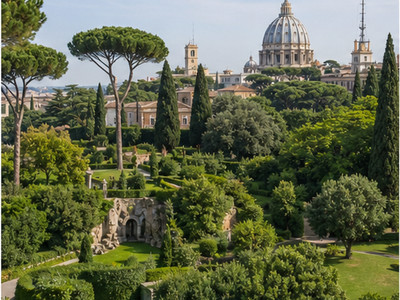
Vatican Gardens
Vatican Gardens adds outdoor time to a Vatican City stay, with open space, views or waterfront breathing room between denser city sights.
View on map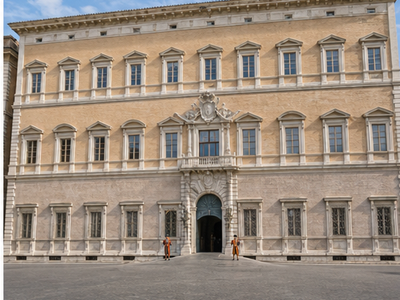
Apostolic Palace
Apostolic Palace anchors the historic and ceremonial side of Vatican City, making it a practical stop for architecture, local memory and orientation.
View on mapStay overview
Start with City centre for the easiest first Vatican City stay, then compare Old Town and Waterfront when price, nightlife, quieter evenings or transfer timing matter more than being beside every major sight.
Hotels & areas
Vatican City hotel choice is mostly about repeat journeys: use City centre for sightseeing, Old Town for a different local base, and Waterfront or Airport area when views, parking, airport timing or longer stays matter.
City centre
City centre is the most practical first base in Vatican City, keeping main sights, restaurants and short local transfers close.
Best for: first visits, sightseeing, restaurantsSee hotel optionsOld Town
Old Town is the most practical first base in Vatican City, keeping main sights, restaurants and short local transfers close.
Best for: first visits, sightseeing, restaurantsSee hotel optionsWaterfront
Waterfront suits travellers who want views, evening walks and a calmer base while still keeping central Vatican City reachable.
Best for: views, quieter evenings, walksSee hotel optionsAirport area
Airport area works mainly for early departures, late arrivals or car pickup, not for a first Vatican City sightseeing base.
Best for: early flights, late arrivals, car pickupSee hotel optionsFlights & airports
Ciampino–G. B. Pastine International Airport (CIA) arrival plan
- Ciampino–G. B. Pastine International Airport (CIA)About 16 km from the centre
Compare airport access against hotel location, arrival time, rental car pickup, late flights and onward driving before choosing the first night base.
- Rome–Fiumicino Leonardo da Vinci International Airport (FCO)About 20 km from the centre
Compare airport access against hotel location, arrival time, rental car pickup, late flights and onward driving before choosing the first night base.
Rental cars
Vatican City day-trip car use
Do not rent a car for central Vatican City unless parking and traffic are part of the plan; use one mainly for regional day trips.
Compare rental carsTravel tips
Best base
Choose City centre for a first stay because it keeps main sights, restaurants and practical local movement close.
Airport timing
Leave extra time for Vatican City International Airport, especially for early flights, late arrivals, traffic or unfamiliar transfer routes.
Local movement
Plan each day in clusters around St. Peter's Basilica and St. Peter's Square so transfers do not consume the best sightseeing hours.
Day trips
Keep one flexible slot for nearby routes from Vatican City, checking weather, transport and opening hours before committing.
City history
The Constantinian basilica was built in 326 over what was believed to be the tomb of Saint Peter, buried in that cemetery.
A palace was constructed nearby as early as the 5th century during the pontificate of Pope Symmachus (reigned 498–514).
They moved to the Quirinal Palace in 1583, after work on it was completed under Pope Paul V (1605–1621).
In 1586, the obelisk was moved to its current position by Pope Sixtus V, using a method devised by the Italian architect Domenico Fontana.
Their prior residence at the Quirinal Palace was taken over by the King of Italy. Under Italian rule (1871–1929) In 1870 the pope's holdings were left in an uncertain situation when Rome was annexed.
In 1871 the Quirinal Palace was confiscated by the king of Italy and became the royal palace.
The treaty, which was ratified and took effect on 7 June 1929, established the independent state of Vatican City and reaffirmed the special status of Catholic Christianity in Italy. World War II The Holy.
In connection with the Allied invasion of Sicily, 500 United States Army Air Forces aircraft bombed Rome on 19 July 1943, targeting Rome's railway hub in particular.
Pius XII created 32 cardinals in early 1946, having announced his intention to do so in his preceding Christmas message.
They ruled the Papal States, which covered a large portion of the Italian peninsula, for more than a thousand years until the mid-19th century, when all the territory belonging to the papacy was seized.
It was later completed by the emperor Nero and named the Circus Gaii et Neronis, usually called, simply, the Circus of Nero.
From then on, the land mass became more populated in connection with activity at the basilica.
The Lateran Palace, on the opposite side of Rome, was their habitual residence for about a thousand years.
By the end of World War II, there were several prominent vacancies: Cardinal Secretary of State, Camerlengo, Chancellor, and Prefect for the Congregation for the Religious among them.