Forecast
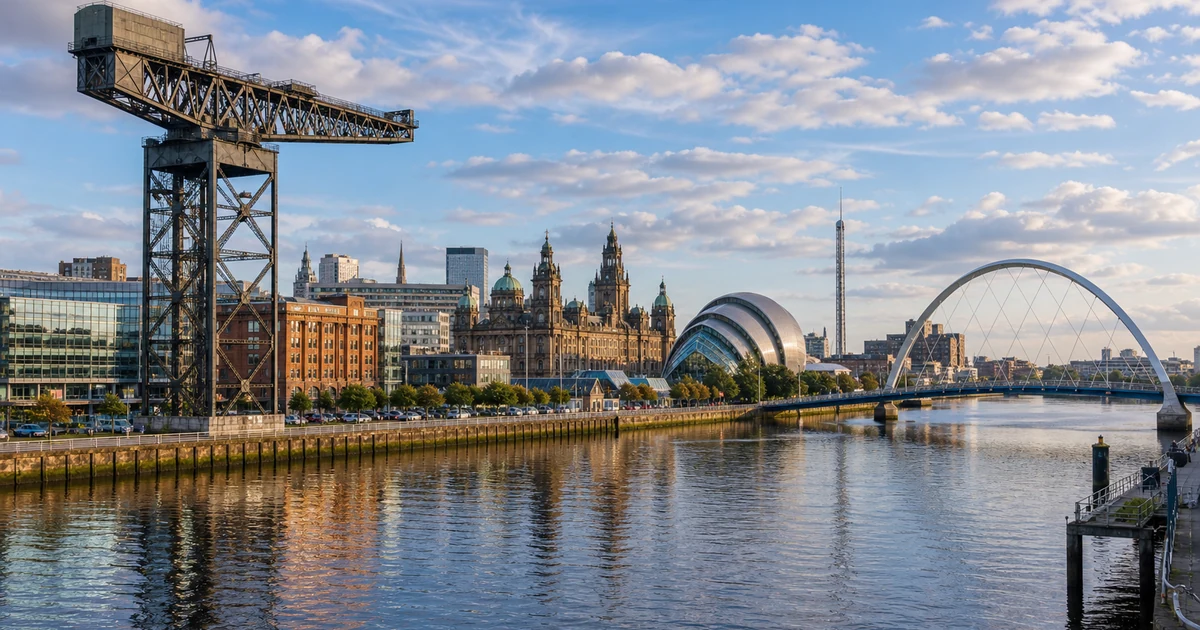
Glasgow
Local time--:--
Europe/LondonWeather Forecast
Glasgow, United KingdomOpen-Meteo forecast.
Glasgow city overview
Glasgow works best as a base in United Kingdom when you anchor days around Kelvingrove Art Gallery and Museum, Glasgow Cathedral and George Square. Use those sights to understand the city's history, street life and visitor rhythm. Glasgow Airport handles the main arrival flow, so hotel choice should balance the centre, transfer time and day-trip plans.
City facts
Population~636kcity context
Worth seeing
Kelvingrove Art Gallery and Museum
Kelvingrove Art Gallery and Museum is a key Glasgow culture stop, useful for understanding local history, collections and rainy-day planning near the main sightseeing route.
View on map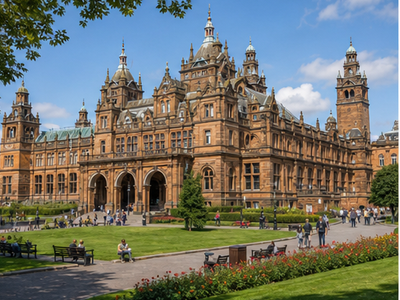
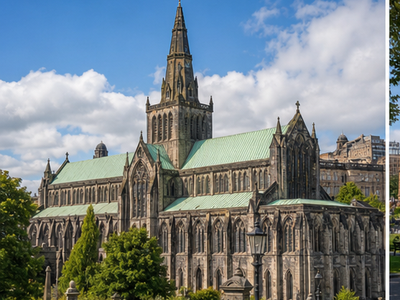
Glasgow Cathedral
Glasgow Cathedral anchors the historic and ceremonial side of Glasgow, making it a practical stop for architecture, local memory and orientation.
View on map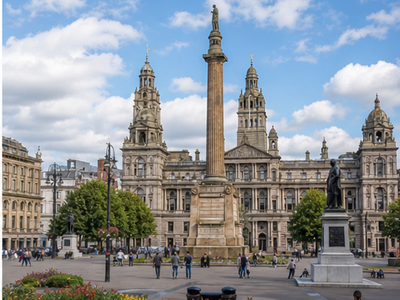
George Square
George Square is a clear heritage marker in Glasgow, best used as a fixed point when grouping nearby streets, monuments and viewpoints.
View on map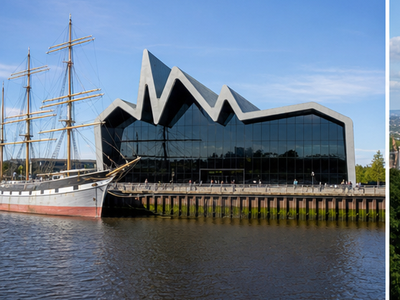
Riverside Museum
Riverside Museum is a key Glasgow culture stop, useful for understanding local history, collections and rainy-day planning near the main sightseeing route.
View on map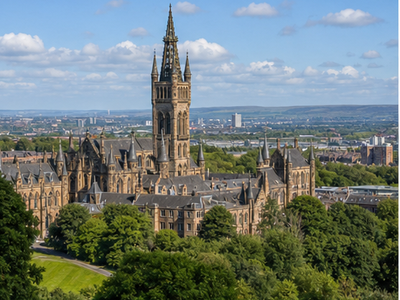
Glasgow Botanic Gardens
Glasgow Botanic Gardens adds outdoor time to a Glasgow stay, with open space, views or waterfront breathing room between denser city sights.
View on map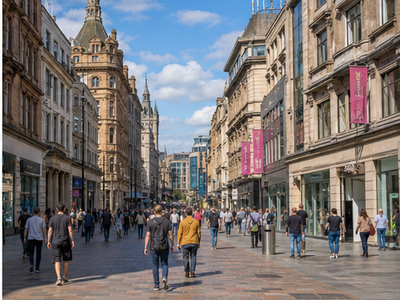
Buchanan Street
Buchanan Street is a named stop in Glasgow worth keeping on the route when it fits the day's transport, timing and neighborhood plan.
View on mapStay overview
Start with City Centre for the easiest first Glasgow stay, then compare West End and Merchant City when price, nightlife, quieter evenings or transfer timing matter more than being beside every major sight.
Hotels & areas
Glasgow hotel choice is mostly about repeat journeys: use City Centre for sightseeing, West End for a different local base, and Merchant City or Finnieston when views, parking, airport timing or longer stays matter.
City Centre
City Centre is the most practical first base in Glasgow, keeping main sights, restaurants and short local transfers close.
Best for: first visits, sightseeing, restaurantsSee hotel optionsWest End
West End is useful when a Glasgow stay needs more local restaurants, apartment options or quieter nights outside the busiest core.
Best for: local stays, restaurants, quieter nightsSee hotel optionsMerchant City
Merchant City is useful when a Glasgow stay needs more local restaurants, apartment options or quieter nights outside the busiest core.
Best for: local stays, restaurants, quieter nightsSee hotel optionsFinnieston
Finnieston is useful when a Glasgow stay needs more local restaurants, apartment options or quieter nights outside the busiest core.
Best for: local stays, restaurants, quieter nightsSee hotel optionsFlights & airports
Glasgow Airport (GLA) arrival plan
- Glasgow Airport (GLA)About 11 km from the centre
Compare airport access against hotel location, arrival time, rental car pickup, late flights and onward driving before choosing the first night base.
- Glasgow Prestwick Airport (PIK)About 45 km from the centre
Compare airport access against hotel location, arrival time, rental car pickup, late flights and onward driving before choosing the first night base.
- Edinburgh Airport (EDI)About 56 km from the centre
Compare airport access against hotel location, arrival time, rental car pickup, late flights and onward driving before choosing the first night base.
Rental cars
Glasgow day-trip car use
Do not rent a car for central Glasgow unless parking and traffic are part of the plan; use one mainly for regional day trips.
Compare rental carsTravel tips
Best base
Choose City Centre for a first stay because it keeps main sights, restaurants and practical local movement close.
Airport timing
Leave extra time for Glasgow Airport, especially for early flights, late arrivals, traffic or unfamiliar transfer routes.
Local movement
Plan each day in clusters around Kelvingrove Art Gallery and Museum and Glasgow Cathedral so transfers do not consume the best sightseeing hours.
Day trips
Keep one flexible slot for nearby routes from Glasgow, checking weather, transport and opening hours before committing.
Nearby ideas
Nature · about 45 min · train from Glasgow Queen Street to Balloch
Loch Lomond
Britain's largest lake by area, with boat trips and the Conic Hill walk over the Highland fault.
View on mapHeritage · about 40 min · train from Glasgow Queen Street
Stirling
A castle on a volcanic crag above the Wallace Monument and two battlefields.
View on mapHeritage · about 1 h · train to Lanark, then bus 135
New Lanark
Robert Owen's model cotton village of 1786, a UNESCO site beside the Falls of Clyde.
View on mapCity history
Its port increased to 12 miles of quays and docks and 500 miles of railway.
The settlement may have an earlier Brittonic name, Cathures; the modern name appears for the first time in the Gaelic period (1116), as Glasgu.
The founding of the University of Glasgow adjoining the cathedral in 1451 and elevation of the bishopric to become the Archdiocese of Glasgow in 1492 increased the town's religious and educational status and landed.
A new bell was purchased by the magistrates in 1641 and that bell is still on display in the People's Palace Museum, near Glasgow Green.
Trade greatly expanded and, starting in 1668, the city's magistrates created a new town and deep water port at Port Glasgow about 20 mi (32 km) down the River Clyde, as the river from.
The opening of the Monkland Canal and basin linking to the Forth and Clyde Canal at Port Dundas in 1795, also facilitated access to the extensive iron-ore and coal mines in Lanarkshire.
The original 1866 grant placed the crest atop a helm, but this was removed in subsequent grants.
The Caledonian Railway rebuilt many of the sewers, as part of a deal to allow them to tunnel under the city, and sewage treatment works were opened at Dalmarnoch in 1894, Dalmuir in 1904.
Following the 2002 Glasgow floods, the waterborne parasite cryptosporidium was found in the reservoir at Milngavie, and so the new Milngavie water treatment works was built.
It was opened by Queen Elizabeth in 2007, and won the 2007 Utility Industry Achievement Award, having been completed ahead of its time schedule and for £10 million below its budgeted cost.
The report led to a huge and radical programme of rebuilding and regeneration efforts that started in the mid-1950s and lasted into the late 1970s.
Items from the wall, such as altars from Roman forts of Balmuildy, are now located at the Hunterian Museum.
He established a church on the Molendinar Burn, where the present Glasgow Cathedral stands, and in the following years Glasgow became a religious centre.
By the fifteenth century the urban area stretched from the area around the cathedral and university in the north down to the bridge and the banks of the Clyde in the south along High.