Forecast
Bern
Local time--:--
Europe/ZurichWeather Forecast
Bern, SwitzerlandOpen-Meteo forecast.
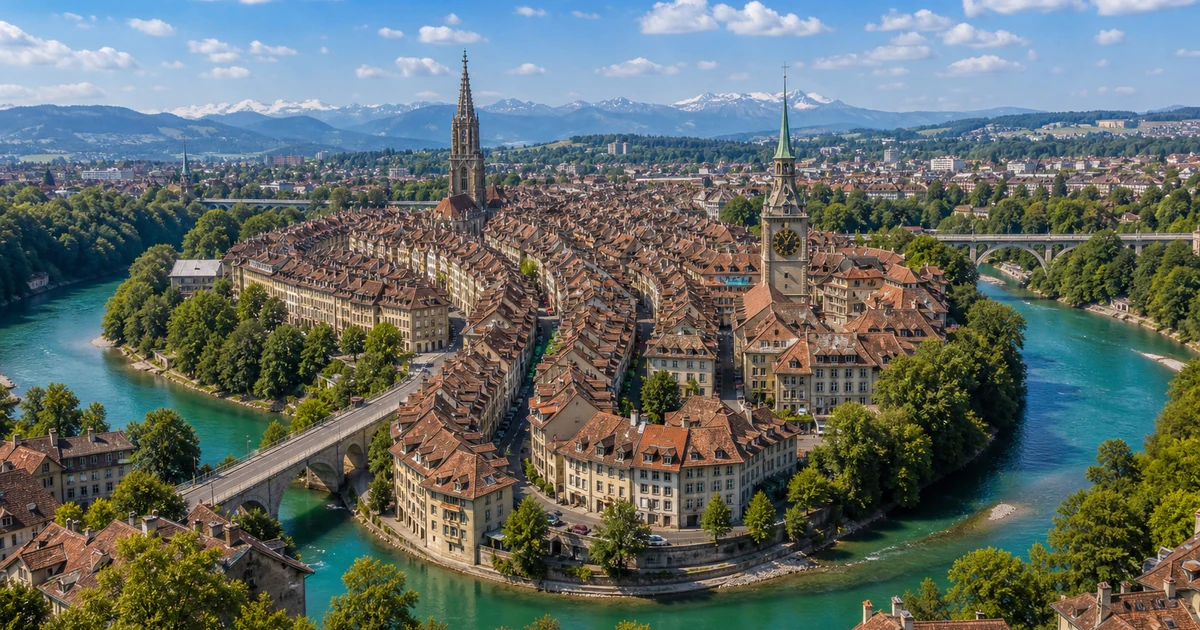
Bern city overview
Bern works best as a base in Switzerland when you anchor days around Old City of Bern, Zytglogge and Bern Minster. Use those sights to understand the city's history, street life and visitor rhythm. Bern International Airport handles the main arrival flow, so hotel choice should balance the centre, transfer time and day-trip plans.
Worth seeing
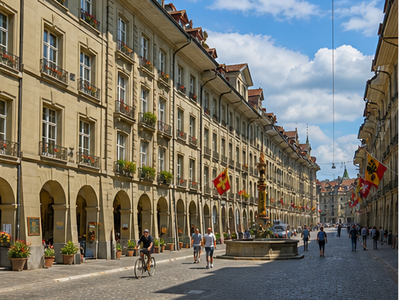
Old City of Bern
Old City of Bern is a clear heritage marker in Bern, best used as a fixed point when grouping nearby streets, monuments and viewpoints.
View on map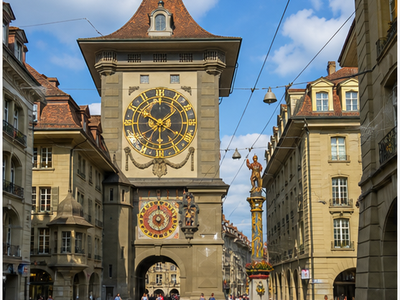
Zytglogge
Zytglogge is a named stop in Bern worth keeping on the route when it fits the day's transport, timing and neighborhood plan.
View on map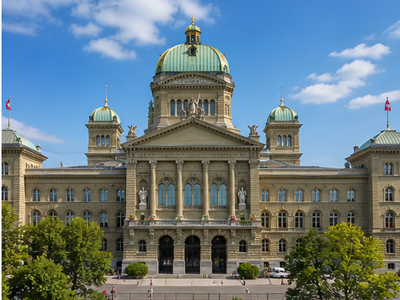
Bern Minster
Bern Minster is a named stop in Bern worth keeping on the route when it fits the day's transport, timing and neighborhood plan.
View on map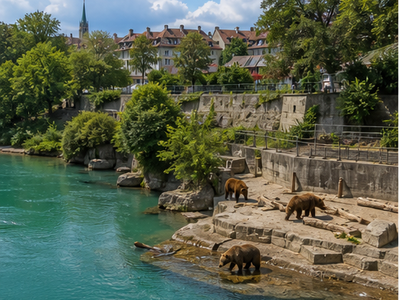
Bear Park
Bear Park adds outdoor time to a Bern stay, with open space, views or waterfront breathing room between denser city sights.
View on map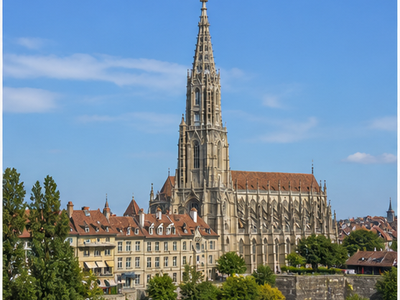
Federal Palace
Federal Palace anchors the historic and ceremonial side of Bern, making it a practical stop for architecture, local memory and orientation.
View on map
Rosengarten
Rosengarten gives Bern a strong culture stop for museums, exhibitions or local collections, and works best as an indoor anchor in the day's route.
View on mapStay overview
Start with City centre for the easiest first Bern stay, then compare Old Town and Waterfront when price, nightlife, quieter evenings or transfer timing matter more than being beside every major sight.
Hotels & areas
Bern hotel choice is mostly about repeat journeys: use City centre for sightseeing, Old Town for a different local base, and Waterfront or Airport area when views, parking, airport timing or longer stays matter.
City centre
City centre is the most practical first base in Bern, keeping main sights, restaurants and short local transfers close.
Best for: first visits, sightseeing, restaurantsSee hotel optionsOld Town
Old Town is the most practical first base in Bern, keeping main sights, restaurants and short local transfers close.
Best for: first visits, sightseeing, restaurantsSee hotel optionsWaterfront
Waterfront suits travellers who want views, evening walks and a calmer base while still keeping central Bern reachable.
Best for: views, quieter evenings, walksSee hotel optionsAirport area
Airport area works mainly for early departures, late arrivals or car pickup, not for a first Bern sightseeing base.
Best for: early flights, late arrivals, car pickupSee hotel optionsFlights & airports
Zürich Airport (ZRH) arrival plan
- Zürich Airport (ZRH)About 101 km from the centre
Compare airport access against hotel location, arrival time, rental car pickup, late flights and onward driving before choosing the first night base.
- Bern Airport (BRN)About 6 km from the centre
Compare airport access against hotel location, arrival time, rental car pickup, late flights and onward driving before choosing the first night base.
Rental cars
Bern day-trip car use
Do not rent a car for central Bern unless parking and traffic are part of the plan; use one mainly for regional day trips.
Compare rental carsTravel tips
Best base
Choose City centre for a first stay because it keeps main sights, restaurants and practical local movement close.
Airport timing
Leave extra time for Bern International Airport, especially for early flights, late arrivals, traffic or unfamiliar transfer routes.
Local movement
Plan each day in clusters around Old City of Bern and Zytglogge so transfers do not consume the best sightseeing hours.
Day trips
Keep one flexible slot for nearby routes from Bern, checking weather, transport and opening hours before committing.
Nearby ideas
Nature · about 20 min · train from Bern to Thun
Thun and Lake Thun
A castle town where the Aare leaves the lake, with pavement cafés built on the bridges.
View on mapTown · about 25 min · train from Bern
Fribourg
A medieval lower town in a river loop, on the language border between French and German.
View on mapMountain · about 25 min · tram 9 to Gurtenbahn, then the funicular
Gurten
The city's own 858-metre hill, with an Alpine panorama and a festival meadow in July.
View on mapCraft · about 45 min · train from Bern to Burgdorf or Langnau
Emmental
Rolling dairy country where the cheese is still made in open copper vats you can watch.
View on mapCity history
According to 14th-century historiography (Cronica de Berno, 1309), Bern was founded in 1191 by Berthold V, Duke of Zähringen.
In 1218, after Berthold died without an heir, Bern was made a free imperial city by the Goldene Handfeste of Holy Roman Emperor Frederick II. Old Swiss Confederacy In 1353, Bern joined the Swiss.
After a major blaze in 1405, the city's original wooden buildings were gradually replaced by half-timbered houses, and subsequently the sandstone buildings which came to be characteristic for the Old Town.
Bern invaded and conquered Aargau in 1415 and Vaud in 1536, as well as other smaller territories, thereby becoming the largest city-state north of the Alps.
It was succeeded by the Christoffelturm (formerly located closer to the site of the modern-day railway station) until 1622.
On 28 November 1848, during the revolutions that year, a majority of the new Swiss Federal Assembly deputies chose Bern as the Federal City (seat of the government) of the newly created Swiss federal.
At this time, it once again became the largest canton of the Confederacy as it stood during the Restoration and until the secession of the canton of Jura in 1979.
No archaeological evidence that indicates a settlement on the site of today's city centre prior to the 12th century has been found so far.
By the 18th century, it comprised most of what is today the canton of Bern and the canton of Vaud.
The city was originally built on a hilly peninsula surrounded by the river Aare, but outgrew natural boundaries by the 19th century.
In antiquity, a Celtic oppidum stood on the Engehalbinsel (peninsula) north of Bern, fortified since the second century BC (late La Tène period), thought to be one of the 12 oppida of the Helvetii.
During the Thirty Years' War, two new fortifications – the so-called big and small Schanze (entrenchments) – were built to protect the whole area of the peninsula.
In addition, Bern had a more central location and was supported by the French-speaking cantons due to proximity to them.
A number of congresses of the socialist First and Second Internationals were held in Bern, particularly during World War I when Switzerland was neutral; see Bern International.