Forecast
Belgrade
Local time--:--
Europe/BelgradeWeather Forecast
Belgrade, SerbiaOpen-Meteo forecast.
Belgrade city overview
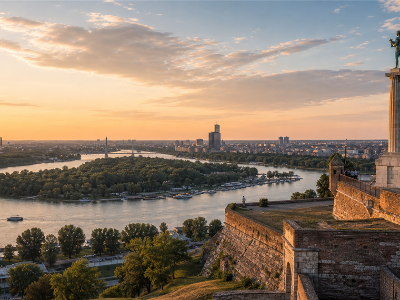
Belgrade works best as a base in Serbia when you anchor days around Belgrade Fortress, Knez Mihailova Street and Saint Sava Temple. Use those sights to understand the city's history, street life and visitor rhythm. Belgrade International Airport handles the main arrival flow, so hotel choice should balance the centre, transfer time and day-trip plans.
Worth seeing
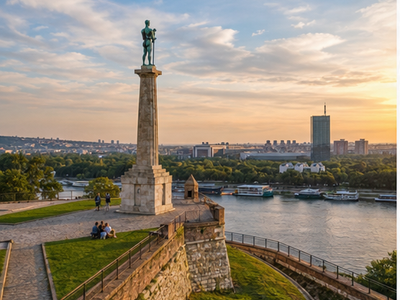
Belgrade Fortress
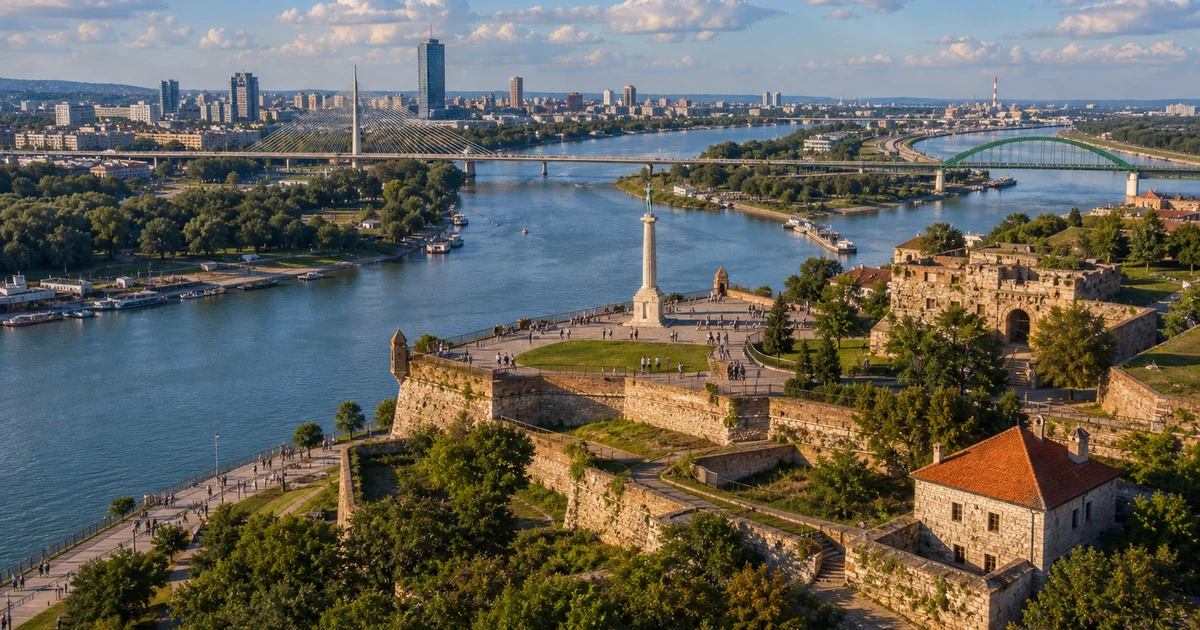
Belgrade Fortress is a clear heritage marker in Belgrade, best used as a fixed point when grouping nearby streets, monuments and viewpoints.
View on map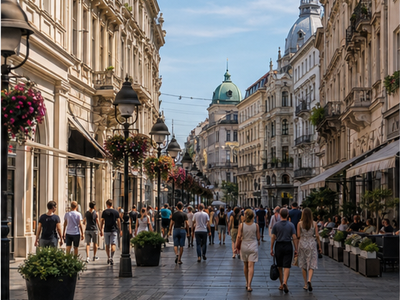
Knez Mihailova Street
Knez Mihailova Street is a named stop in Belgrade worth keeping on the route when it fits the day's transport, timing and neighborhood plan.
View on map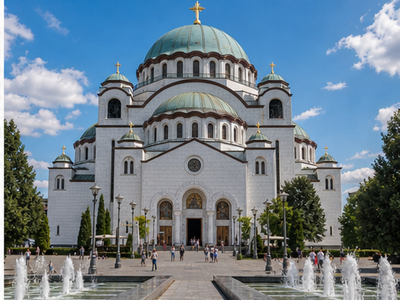
Saint Sava Temple
Saint Sava Temple anchors the historic and ceremonial side of Belgrade, making it a practical stop for architecture, local memory and orientation.
View on map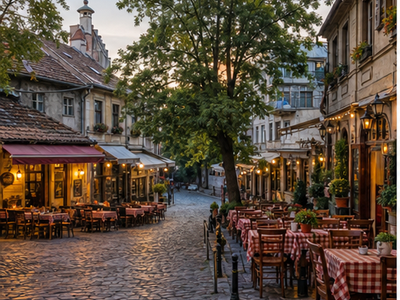
Skadarlija
Skadarlija is a named stop in Belgrade worth keeping on the route when it fits the day's transport, timing and neighborhood plan.
View on map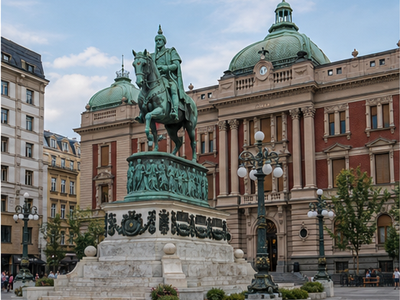
Nikola Tesla Museum
Nikola Tesla Museum is a key Belgrade culture stop, useful for understanding local history, collections and rainy-day planning near the main sightseeing route.
View on map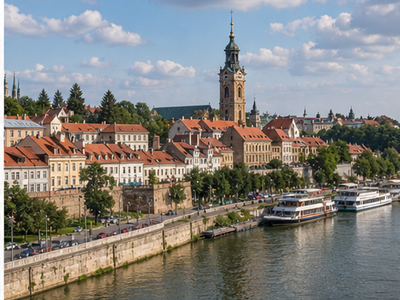
Ada Ciganlija
Ada Ciganlija is a named stop in Belgrade worth keeping on the route when it fits the day's transport, timing and neighborhood plan.
View on mapStay overview
Start with Stari Grad for the easiest first Belgrade stay, then compare Dorcol and Vracar when price, nightlife, quieter evenings or transfer timing matter more than being beside every major sight.
Hotels & areas
Belgrade hotel choice is mostly about repeat journeys: use Stari Grad for sightseeing, Dorcol for a different local base, and Vracar or Savamala when views, parking, airport timing or longer stays matter.
Stari Grad
Stari Grad is the most practical first base in Belgrade, keeping main sights, restaurants and short local transfers close.
Best for: first visits, sightseeing, restaurantsSee hotel optionsDorcol
Dorcol is useful when a Belgrade stay needs more local restaurants, apartment options or quieter nights outside the busiest core.
Best for: local stays, restaurants, quieter nightsSee hotel optionsVracar
Vracar is useful when a Belgrade stay needs more local restaurants, apartment options or quieter nights outside the busiest core.
Best for: local stays, restaurants, quieter nightsSee hotel optionsSavamala
Savamala is useful when a Belgrade stay needs more local restaurants, apartment options or quieter nights outside the busiest core.
Best for: local stays, restaurants, quieter nightsSee hotel optionsFlights & airports
Belgrade Nikola Tesla Airport (BEG) arrival plan
- Belgrade Nikola Tesla Airport (BEG)About 12 km from the centre
Compare airport access against hotel location, arrival time, rental car pickup, late flights and onward driving before choosing the first night base.
Rental cars
Belgrade day-trip car use
Do not rent a car for central Belgrade unless parking and traffic are part of the plan; use one mainly for regional day trips.
Compare rental carsTravel tips
Best base
Choose Stari Grad for a first stay because it keeps main sights, restaurants and practical local movement close.
Airport timing
Leave extra time for Belgrade International Airport, especially for early flights, late arrivals, traffic or unfamiliar transfer routes.
Local movement
Plan each day in clusters around Belgrade Fortress and Knez Mihailova Street so transfers do not consume the best sightseeing hours.
Day trips
Keep one flexible slot for nearby routes from Belgrade, checking weather, transport and opening hours before committing.
Nearby ideas
Town · about 40 min · Soko high-speed train from Belgrade Centre
Novi Sad and Petrovaradin
A fortress above the Danube that hosts EXIT festival in July, over a Habsburg-era old town.
View on mapNature · about 1 h · train to Novi Sad, then local bus
Fruška Gora National Park
Sixteen Orthodox monasteries hidden in lime forest on a ridge above the Danube plain.
View on mapNature · about 40 min · bus 400 from Voždovac
Avala
A wooded hill with a television tower you can ride up and the Monument to the Unknown Hero.
View on mapCity history
Specifically, Belgrade was at one point inhabited by the Thraco-Dacian tribe Singi; following Celtic invasion in 279 BC, the Scordisci wrested the city from their hands, naming it Singidūn (d|ūn, fortress).
1276–1282) received Belgrade from his father-in-law, Stephen V of Hungary, in 1284, and it served as the capital of the Kingdom of Syrmia, a vassal state to the Kingdom of Hungary.
In 1427, Stefan's successor Đurađ Branković, returning Belgrade to the Hungarian king, made Smederevo his new capital.
Between 1835 and 1850, the amount of neoclassicist and baroque buildings south of the Austrian border rose considerably, exemplified by Cathedral of Saint Archangel Michael (Serbian: Saborna crkva), completed in 1840.
In 1841, Prince Mihailo Obrenović moved the capital of the Principality of Serbia from Kragujevac to Belgrade.
With the Principality's full independence in 1878 and its transformation into the Kingdom of Serbia in 1882, Belgrade once again became a key city in the Balkans, and developed rapidly.
The first permanent cinema was opened in 1909 in Belgrade. World War I: Austro–German invasion The First World War began on 28 July 1914 when Austria-Hungary declared war on Serbia.
In 1927, Belgrade's first airport opened, and in 1929, its first radio station began broadcasting.
On 3 September 1939 the first Belgrade Grand Prix, the last Grand Prix motor racing race before the outbreak of World War II, was held around the Belgrade Fortress and was followed by 80,000.
The winner was Tazio Nuvolari. World War II On 25 March 1941, the government of regent Crown Prince Paul signed the Tripartite Pact, joining the Axis powers in an effort to stay out of.
In 1962, Belgrade Nikola Tesla Airport was built.
The Starčevo culture was succeeded by the Vinča culture (5500–4500 BC), a more sophisticated farming culture that grew out of the earlier Starčevo settlements and also named for a site in the Belgrade region.
It became the romanised Singidunum in the 1st century AD and, by the mid-2nd century, the city was proclaimed a municipium by the Roman authorities, evolving into a full-fledged colonia (the highest city class).
Belgrade, devastated as a front-line city, lost the title of largest city in the Kingdom to Subotica for some time. Kingdom of Yugoslavia After the war, Belgrade became the capital of the new Kingdom.