Forecast
Lisbon
Local time--:--
Europe/LisbonWeather Forecast
Lisbon, PortugalOpen-Meteo forecast.
Lisbon city overview
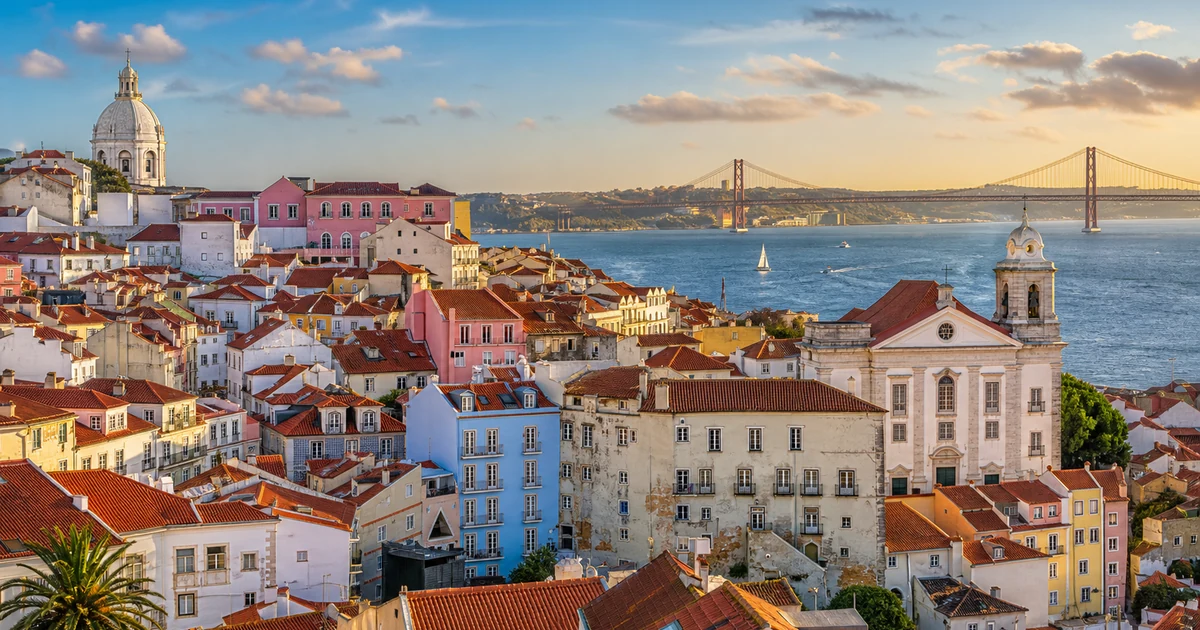
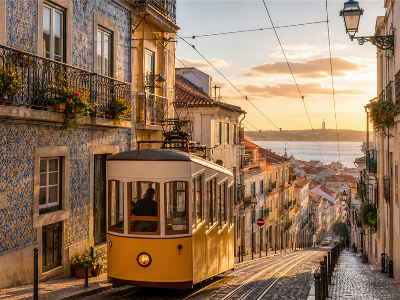
Lisbon works best as a base in Portugal when you anchor days around Belem Tower, Jerónimos Monastery and Alfama. Use those sights to understand the city's history, street life and visitor rhythm. Lisbon Portela handles the main arrival flow, so hotel choice should balance the centre, transfer time and day-trip plans.

Worth seeing
Belem Tower
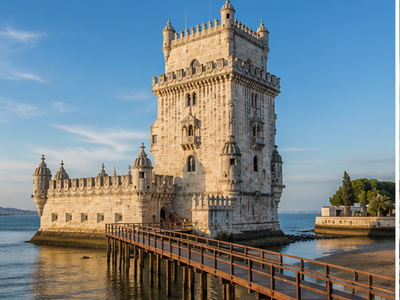
Belem Tower is a clear heritage marker in Lisbon, best used as a fixed point when grouping nearby streets, monuments and viewpoints.
View on map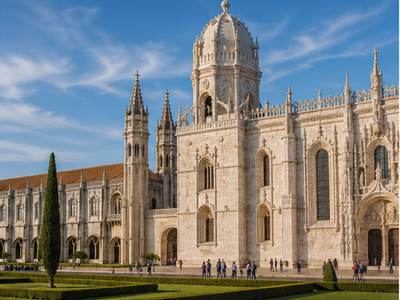
Jerónimos Monastery
Jerónimos Monastery is one of Lisbon's religious landmarks; check visiting hours and dress expectations before building the route around it.
View on map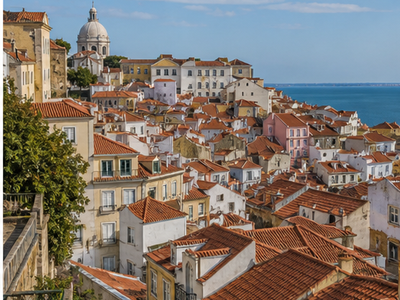
Alfama
Alfama is a named stop in Lisbon worth keeping on the route when it fits the day's transport, timing and neighborhood plan.
View on map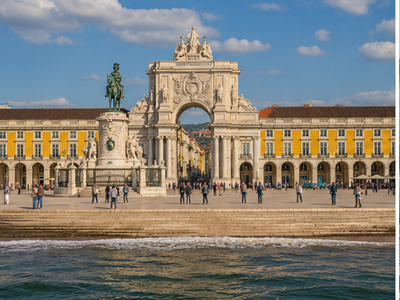
Praca do Comercio
Praca do Comercio is a named stop in Lisbon worth keeping on the route when it fits the day's transport, timing and neighborhood plan.
View on map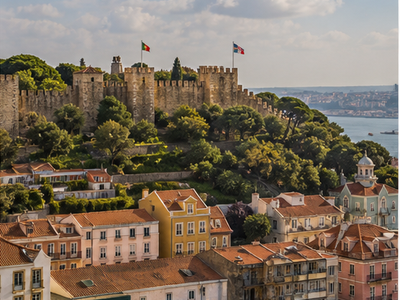
Sao Jorge Castle
Sao Jorge Castle is a clear heritage marker in Lisbon, best used as a fixed point when grouping nearby streets, monuments and viewpoints.
View on map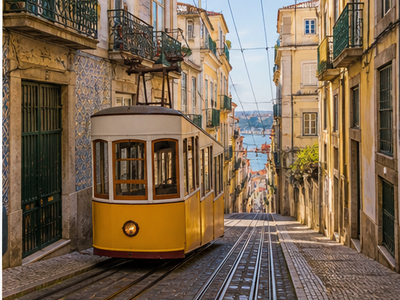
Santa Justa Lift
Santa Justa Lift is a named stop in Lisbon worth keeping on the route when it fits the day's transport, timing and neighborhood plan.
View on mapStay overview
Start with Baixa for the easiest first Lisbon stay, then compare Chiado and Alfama when price, nightlife, quieter evenings or transfer timing matter more than being beside every major sight.
Hotels & areas
Lisbon hotel choice is mostly about repeat journeys: use Baixa for sightseeing, Chiado for a different local base, and Alfama or Avenida da Liberdade when views, parking, airport timing or longer stays matter.
Baixa
Baixa is useful when a Lisbon stay needs more local restaurants, apartment options or quieter nights outside the busiest core.
Best for: local stays, restaurants, quieter nightsSee hotel optionsChiado
Chiado is useful when a Lisbon stay needs more local restaurants, apartment options or quieter nights outside the busiest core.
Best for: local stays, restaurants, quieter nightsSee hotel optionsAlfama
Alfama is useful when a Lisbon stay needs more local restaurants, apartment options or quieter nights outside the busiest core.
Best for: local stays, restaurants, quieter nightsSee hotel optionsAvenida da Liberdade
Avenida da Liberdade is useful when a Lisbon stay needs more local restaurants, apartment options or quieter nights outside the busiest core.
Best for: local stays, restaurants, quieter nightsSee hotel optionsFlights & airports
Lisbon Humberto Delgado Airport (LIS) arrival plan
- Lisbon Humberto Delgado Airport (LIS)About 6 km from the centre
Compare airport access against hotel location, arrival time, rental car pickup, late flights and onward driving before choosing the first night base.
- Cascais Airport (CAT)About 18 km from the centre
Compare airport access against hotel location, arrival time, rental car pickup, late flights and onward driving before choosing the first night base.
Rental cars
Lisbon day-trip car use
Do not rent a car for central Lisbon unless parking and traffic are part of the plan; use one mainly for regional day trips.
Compare rental carsTravel tips
Best base
Choose Baixa for a first stay because it keeps main sights, restaurants and practical local movement close.
Airport timing
Leave extra time for Lisbon Portela, especially for early flights, late arrivals, traffic or unfamiliar transfer routes.
Local movement
Plan each day in clusters around Belem Tower and Jerónimos Monastery so transfers do not consume the best sightseeing hours.
Day trips
Keep one flexible slot for nearby routes from Lisbon, checking weather, transport and opening hours before committing.
Nearby ideas
Heritage · about 40 min · train from Rossio station
Sintra
The painted Pena Palace and Quinta da Regaleira's initiation well, in hills that make their own mist.
View on mapBeach · about 40 min · train from Cais do Sodré
Cascais
A former royal resort with town beaches and the Boca do Inferno sea arch along the cliff path.
View on mapNature · about 50 min · Fertagus train from Roma-Areeiro
Setúbal and the Arrábida
White limestone cliffs over turquoise coves, with dolphins in the Sado estuary.
View on mapHeritage · about 1 h · Mafrense bus from Campo Grande
Mafra National Palace
A baroque palace-convent with six working carillons and a library of 36,000 books guarded by bats.
View on mapCity history
The Germanic Suebi, who established a kingdom in Gallaecia (modern Galicia and northern Portugal), with its capital in Bracara Augusta, also controlled the region of Lisbon until 585.
With its central location, Lisbon became the capital city of the new Portuguese territory in 1255.
The first Portuguese university was founded in Lisbon in 1290 by King Denis I; for many years the Studium Generale (General Study) was transferred intermittently to Coimbra, where it was installed permanently in the.
The Portuguese Restoration War, which began with a coup d'état organised by the nobility and bourgeoisie in Lisbon and executed on 1 December 1640, restored Portuguese independence.
After the 1755 earthquake, the city was rebuilt largely according to the plans of Prime Minister Sebastião José de Carvalho e Melo, the 1st Marquis of Pombal; the lower town began to be known.
The capital of the United Kingdom of Portugal, Brazil and the Algarves was located in Rio de Janeiro from 1808 to 1821.
The first, the 5 October 1910 revolution, brought an end to the Portuguese monarchy and established the highly unstable and corrupt Portuguese First Republic.
The 6 June 1926 revolution ended the first republic and firmly established the Estado Novo, or the Portuguese Second Republic, as the ruling regime. Contemporary The Carnation Revolution, which took place on 25 April.
Although the first fortifications on Lisbon's Castelo hill are known to be no older than the 2nd century BC, recent archaeological finds have shown that Iron Age people occupied the site from the 8th.
During the Neolithic period, the region was inhabited by Pre-Celtic tribes, who built religious and funerary monuments, megaliths, dolmens and menhirs, which still survive in areas on the periphery of Lisbon.
The Tagus settlement was an important centre of commercial trade with the inland tribes, providing an outlet for the valuable metals, salt and salted-fish they collected, and for the sale of the Lusitanian horses.
The city was connected by a broad road to Western Hispania's two other large cities, Bracara Augusta in the province of Tarraconensis (Portuguese Braga), and Emerita Augusta, the capital of Lusitania.
During the last centuries of the Middle Ages, Lisbon expanded substantially and became an important trading post with both Northern European and Mediterranean cities. Early Modern When the Spaniards expelled the Jews from Spanish.
During World War II, Lisbon was one of the very few neutral, open European Atlantic ports, a major gateway for refugees to the U.S. and a haven for spies.