Forecast
Riga
Local time--:--
Europe/RigaWeather Forecast
Riga, LatviaOpen-Meteo forecast.
Riga city overview
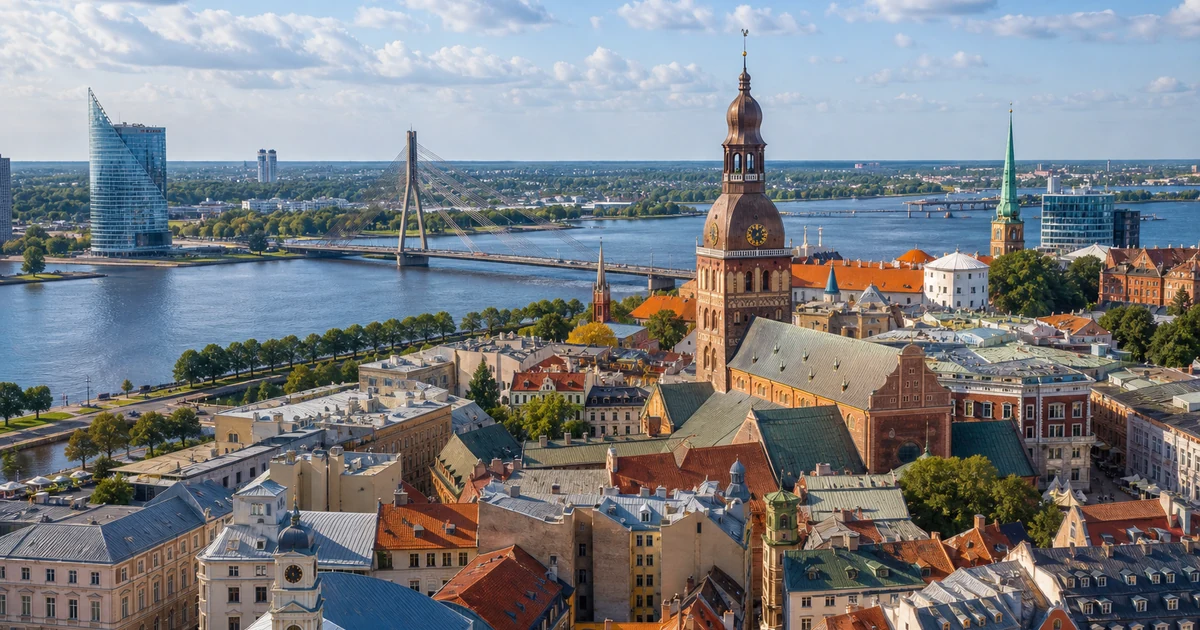
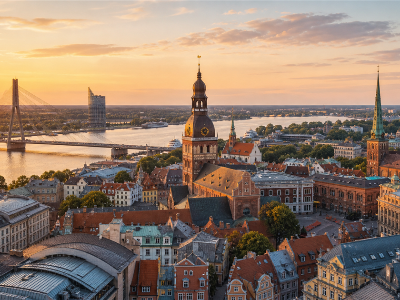
Riga works best as a base in Latvia when you anchor days around Riga Old Town, House of the Blackheads and Riga Central Market. Use those sights to understand the city's history, street life and visitor rhythm. Riga International handles the main arrival flow, so hotel choice should balance the centre, transfer time and day-trip plans.
Worth seeing
Riga Old Town
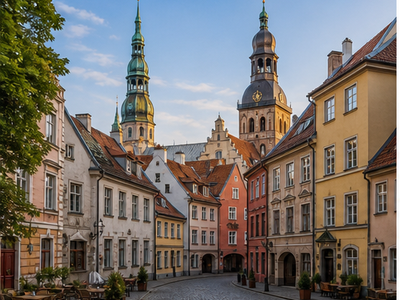
Riga Old Town is a named stop in Riga worth keeping on the route when it fits the day's transport, timing and neighborhood plan.
View on map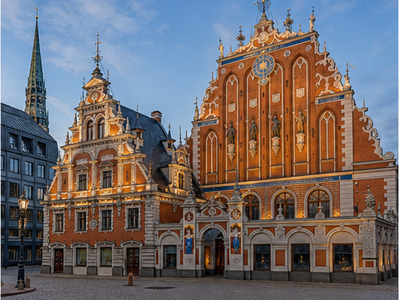
House of the Blackheads
House of the Blackheads is a named stop in Riga worth keeping on the route when it fits the day's transport, timing and neighborhood plan.
View on map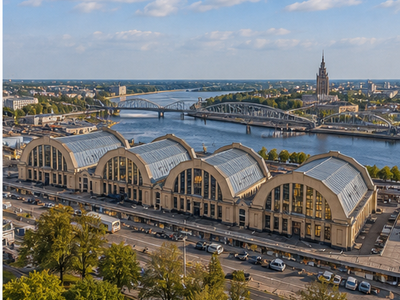
Riga Central Market
Riga Central Market gives Riga a concrete street-life stop, with food, everyday shopping and local movement that helps visitors read the city.
View on map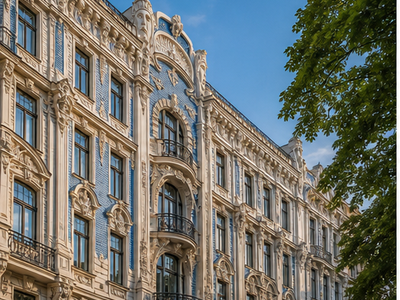
Freedom Monument Riga
Freedom Monument Riga is a clear heritage marker in Riga, best used as a fixed point when grouping nearby streets, monuments and viewpoints.
View on map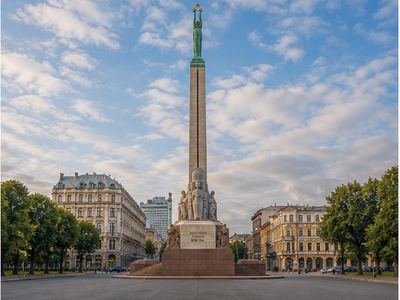
Art Nouveau District Riga
Art Nouveau District Riga gives Riga a strong culture stop for museums, exhibitions or local collections, and works best as an indoor anchor in the day's route.
View on map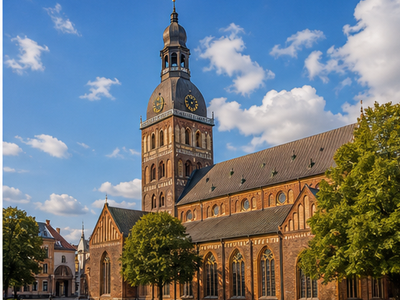
St. Peter's Church Riga
St. Peter's Church Riga anchors the historic and ceremonial side of Riga, making it a practical stop for architecture, local memory and orientation.
View on mapStay overview
Start with Old Town for the easiest first Riga stay, then compare Centrs and Art Nouveau District when price, nightlife, quieter evenings or transfer timing matter more than being beside every major sight.
Hotels & areas
Riga hotel choice is mostly about repeat journeys: use Old Town for sightseeing, Centrs for a different local base, and Art Nouveau District or Agenskalns when views, parking, airport timing or longer stays matter.
Old Town
Old Town is the most practical first base in Riga, keeping main sights, restaurants and short local transfers close.
Best for: first visits, sightseeing, restaurantsSee hotel optionsCentrs
Centrs is useful when a Riga stay needs more local restaurants, apartment options or quieter nights outside the busiest core.
Best for: local stays, restaurants, quieter nightsSee hotel optionsArt Nouveau District
Art Nouveau District is useful when a Riga stay needs more local restaurants, apartment options or quieter nights outside the busiest core.
Best for: local stays, restaurants, quieter nightsSee hotel optionsAgenskalns
Agenskalns is useful when a Riga stay needs more local restaurants, apartment options or quieter nights outside the busiest core.
Best for: local stays, restaurants, quieter nightsSee hotel optionsFlights & airports
Riga International Airport (RIX) arrival plan
- Riga International Airport (RIX)About 9 km from the centre
Compare airport access against hotel location, arrival time, rental car pickup, late flights and onward driving before choosing the first night base.
Rental cars
Riga day-trip car use
Do not rent a car for central Riga unless parking and traffic are part of the plan; use one mainly for regional day trips.
Compare rental carsTravel tips
Best base
Choose Old Town for a first stay because it keeps main sights, restaurants and practical local movement close.
Airport timing
Leave extra time for Riga International, especially for early flights, late arrivals, traffic or unfamiliar transfer routes.
Local movement
Plan each day in clusters around Riga Old Town and House of the Blackheads so transfers do not consume the best sightseeing hours.
Day trips
Keep one flexible slot for nearby routes from Riga, checking weather, transport and opening hours before committing.
Nearby ideas
Beach · about 35 min · train from Rīga Pasažieru station to Majori
Jūrmala
Thirty kilometres of white sand backed by wooden dacha architecture and spa hotels.
View on mapNature · about 1 h · train from Rīga towards Valga
Sigulda
The Gauja valley with three castles, a cable car across the gorge and a bobsleigh track.
View on mapHeritage · about 1 h 15 min · bus from Rīga coach station to Bauska, then local bus
Rundāle Palace
Rastrelli's baroque palace for the Duke of Courland, with a restored French formal garden.
View on mapCity history
Albert's difficulties with Riga's citizenry continued; with papal intervention, a settlement was reached in 1225 whereby they no longer had to pay tax to the Bishop of Riga, and Riga's citizens acquired the right.
He failed in his aspiration to be anointed archbishop but the German hegemony he established over the Livonia would last for seven centuries. Hanseatic League In 1282, Riga became a member of the Hanseatic.
In 1524, iconoclasts during iconoclast riots targeted a statue of the Virgin Mary in the cathedral to make a statement against religious icons.
In 1621, during the Polish–Swedish War (1621–1625), Riga and the outlying fortress of Daugavgrīva came under the rule of Gustavus Adolphus, King of Sweden, who intervened in the Thirty Years' War not only for.
The nationalist movement of the Neo-Latvians was followed by the socialist New Current during the city's rapid industrialisation, culminating in the 1905 Revolution led by the Latvian Social Democratic Workers' Party. World War I.
Latvia, with Riga as its capital city, thus declared its independence on 18 November 1918.
The majority of the Baltic Germans were resettled in late 1939, prior to the occupation of Estonia and Latvia by the Soviet Union in June 1940. World War II and Soviet era During World.
The most notorious deportation, the June deportation, took place on 13 and 14 June 1941, estimated at 15,600 men, women, and children, and including 20% of Latvia's last legal government.
Peter's Church which lost its wooden tower after a fire caused by the Wehrmacht (renovated in 1954).
The Livonian Chronicle of Henry testifies to Riga having long been a trading centre by the 12th century, referring to it as portus antiquus (ancient port), and describes dwellings and warehouses used to store.
At the beginning of the 20th century, Riga was the largest timber export port in the Russian Empire and ranked the 3rd according to the external trade volume.
The Danes landed in Livonia, built a fortress at Reval (Tallinn) and set about conquering Estonian and Livonian lands.
James's Church, (now a cathedral) and founded a parochial school at the Church of St.
Similar deportations were repeated after the end of World War II.