Forecast
Rome
Local time--:--
Europe/RomeWeather Forecast
Rome, ItalyOpen-Meteo forecast.
Rome city overview
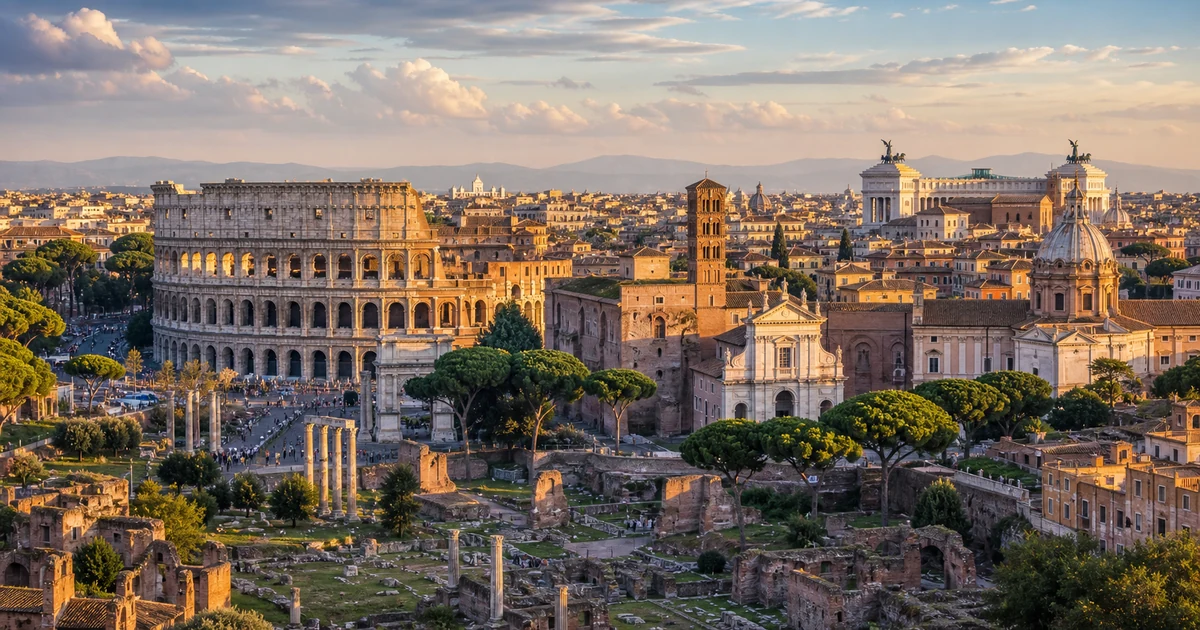
Rome works best as a base in Italy when you anchor days around Colosseum, Roman Forum and Pantheon. Use those sights to understand the city's history, street life and visitor rhythm. Rome Fiumicino handles the main arrival flow, so hotel choice should balance the centre, transfer time and day-trip plans.
Worth seeing
Colosseum
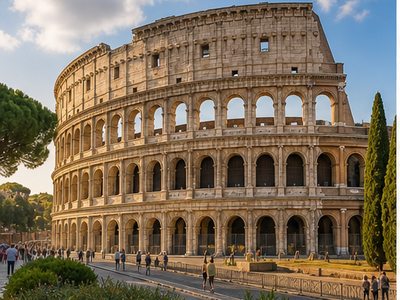
Colosseum is a named stop in Rome worth keeping on the route when it fits the day's transport, timing and neighborhood plan.
View on map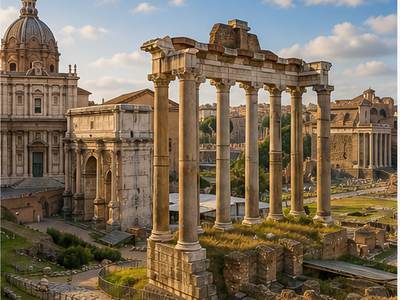
Roman Forum
Roman Forum is a named stop in Rome worth keeping on the route when it fits the day's transport, timing and neighborhood plan.
View on map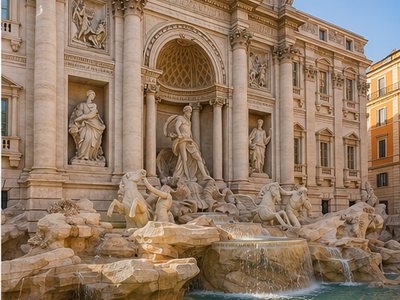
Pantheon
Pantheon is a named stop in Rome worth keeping on the route when it fits the day's transport, timing and neighborhood plan.
View on map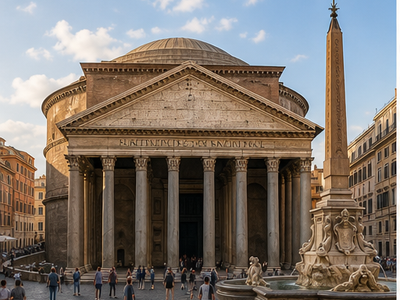
Trevi Fountain
Trevi Fountain is a named stop in Rome worth keeping on the route when it fits the day's transport, timing and neighborhood plan.
View on map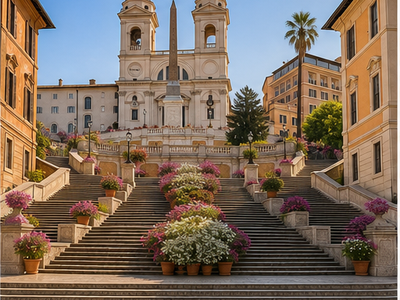
Piazza Navona
Piazza Navona is a named stop in Rome worth keeping on the route when it fits the day's transport, timing and neighborhood plan.
View on map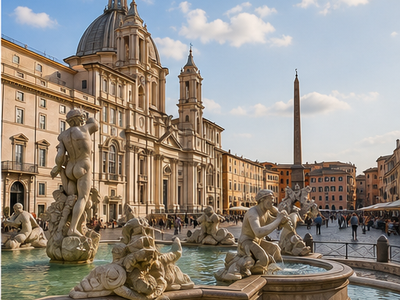
Spanish Steps
Spanish Steps is a named stop in Rome worth keeping on the route when it fits the day's transport, timing and neighborhood plan.
View on mapStay overview
Start with Centro Storico for the easiest first Rome stay, then compare Monti and Trastevere when price, nightlife, quieter evenings or transfer timing matter more than being beside every major sight.
Hotels & areas
Rome hotel choice is mostly about repeat journeys: use Centro Storico for sightseeing, Monti for a different local base, and Trastevere or Prati when views, parking, airport timing or longer stays matter.
Centro Storico
Centro Storico is the most practical first base in Rome, keeping main sights, restaurants and short local transfers close.
Best for: first visits, sightseeing, restaurantsSee hotel optionsMonti
Monti is useful when a Rome stay needs more local restaurants, apartment options or quieter nights outside the busiest core.
Best for: local stays, restaurants, quieter nightsSee hotel optionsTrastevere
Trastevere is useful when a Rome stay needs more local restaurants, apartment options or quieter nights outside the busiest core.
Best for: local stays, restaurants, quieter nightsSee hotel optionsPrati
Prati is useful when a Rome stay needs more local restaurants, apartment options or quieter nights outside the busiest core.
Best for: local stays, restaurants, quieter nightsSee hotel optionsFlights & airports
Ciampino–G. B. Pastine International Airport (CIA) arrival plan
- Ciampino–G. B. Pastine International Airport (CIA)About 12 km from the centre
To the centre: Bus to Anagnina metro station, or taxi ~20 min, about 40 min (bus ticket).
- Rome–Fiumicino Leonardo da Vinci International Airport (FCO)About 24 km from the centre
To the centre: Leonardo Express non-stop to Termini every 15–30 min; FL1 regional train cheaper to Trastevere/Tiburtina, about 32 min (train ticket; Terravision shuttle 50–70 min).
Public transport
- Metro A/B/C, buses, trams (ATAC)Tickets and 24 h–weekly passes at machines, newsagents and ATAC offices
- TaxiOfficial white taxis, FreeNow, IT Taxi — Use stands at squares and stations; licensed cabs show the city emblem and licence number
Rental cars
Rome day-trip car use
Do not rent a car for central Rome unless parking and traffic are part of the plan; use one mainly for regional day trips.
Compare rental carsTravel tips
Best base
Choose Centro Storico for a first stay because it keeps main sights, restaurants and practical local movement close.
Airport timing
Leave extra time for Rome Fiumicino, especially for early flights, late arrivals, traffic or unfamiliar transfer routes.
Local movement
Plan each day in clusters around Colosseum and Roman Forum so transfers do not consume the best sightseeing hours.
Day trips
Keep one flexible slot for nearby routes from Rome, checking weather, transport and opening hours before committing.
Nearby ideas
Heritage · about 40 min · Roma-Lido train from Porta San Paolo
Ostia Antica
Rome's port city with streets, baths and a theatre still standing, and almost no crowds.
View on mapHeritage · about 1 h · regional train from Roma Tiburtina
Tivoli
Villa d'Este's hydraulic fountains and Hadrian's Villa, two UNESCO sites in one hill town.
View on mapWine · about 50 min · regional train from Roma Termini to Frascati
Castelli Romani
Volcanic hill towns above Lake Albano where Romans go for white wine and porchetta.
View on mapHeritage · about 1 h · train to Cerveteri-Ladispoli, then local bus
Cerveteri
An Etruscan necropolis of tumulus tombs laid out like streets of houses.
View on mapUpcoming events
No upcoming Rome events in the shared event index yet.
City history
In 192, emperor Commodus renamed the city Colonia Lucia Annia Commodiana after himself.
Strabo also writes that Lucius Coelius Antipater believed that Rome was founded by Greeks. Monarchy and republic After the foundation by Romulus (according to a legend), Rome was ruled for a period of 244.
In 330, he transformed Byzantium into Constantinople, which became his new capital.
Christianity in the form of the Nicene Creed became the official religion of the empire in 380, via the Edict of Thessalonica issued in the name of three emperors – Gratian, Valentinian II, and.
After the fall of the Western Roman Empire in AD 476, Rome was first under the control of Odoacer and then became part of the Ostrogothic Kingdom before returning to East Roman control after.
In 509 BC, the Romans expelled the last king from their city and established an oligarchic republic led by two annually elected consuls.
Rome then became the focus of hopes of Italian reunification after the rest of Italy was united as the Kingdom of Italy in 1861 with the temporary capital in Florence.
In 1871 the capital of Italy was moved from Florence to Rome.
Dionysius of Halicarnassus states that the lagobolon was a symbol of the settlement of the city of Rome, and recounts that following the destruction by fire of a sacred hut of Mars on the.
Several excavations support the view that Rome grew from pastoral settlements on the Palatine Hill built above the area of the future Roman Forum.
Despite recent excavations at the Palatine hill, the view that Rome was founded deliberately in the middle of the eighth century BC, as the legend of Romulus suggests, remains a fringe hypothesis. Legend of.
In this period the city was also shattered by continuous fights between the aristocratic families: Annibaldi, Caetani, Colonna, Orsini, Conti, nested in their fortresses built above ancient Roman edifices, fought each other to control.
Majestic works, as the new Saint Peter's Basilica, the Sistine Chapel and Ponte Sisto (the first bridge to be built across the Tiber since antiquity, although on Roman foundations) were created.
Raphael, who in Rome became one of the most famous painters of Italy, created frescoes in the Villa Farnesina, the Raphael's Rooms, plus many other famous paintings.