Forecast
Tunis
Local time--:--
Africa/TunisWeather Forecast
Tunis, TunisiaOpen-Meteo forecast.
Tunis city overview
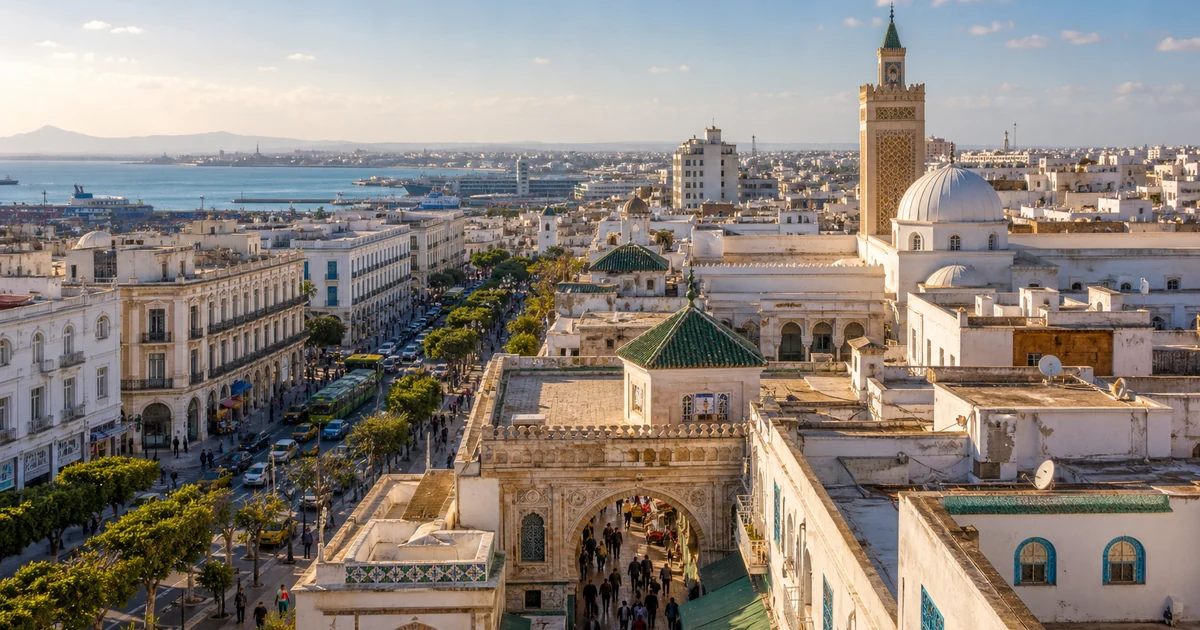
Tunis is Tunisia's Mediterranean capital, where a UNESCO-listed medina meets French-colonial boulevards and ancient Carthage just along the coast. First-time visitors should get lost in the Medina of Tunis's covered souks, admire the Roman mosaics at the Bardo National Museum, and stroll palm-lined Avenue Habib Bourguiba. Tunis–Carthage International Airport sits just minutes from downtown, making Tunis an easy gateway to both city sights and Mediterranean beach towns.
Worth seeing
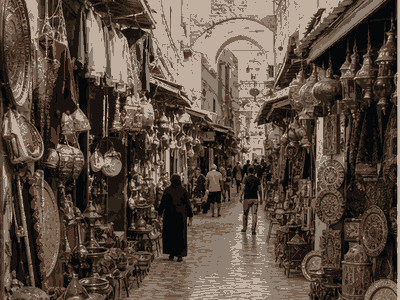
Medina of Tunis
Medina of Tunis is a clear heritage marker in Tunis, best used as a fixed point when grouping nearby streets, monuments and viewpoints.
View on map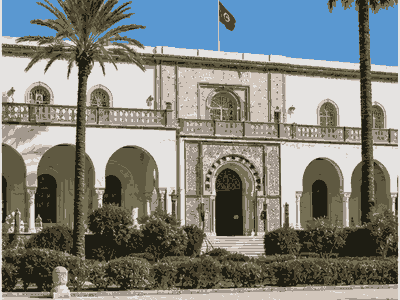
Bardo National Museum
Bardo National Museum is a key Tunis culture stop, useful for understanding local history, collections and rainy-day planning near the main sightseeing route.
View on map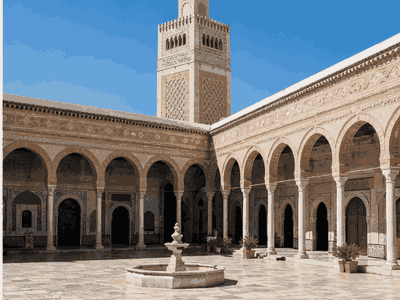
Zitouna Mosque
Zitouna Mosque anchors the historic and ceremonial side of Tunis, making it a practical stop for architecture, local memory and orientation.
View on map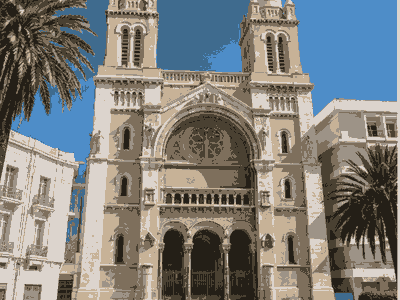
Cathedral of St. Vincent de Paul
Cathedral of St. Vincent de Paul anchors the historic and ceremonial side of Tunis, making it a practical stop for architecture, local memory and orientation.
View on map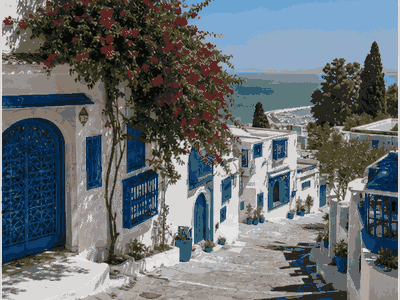
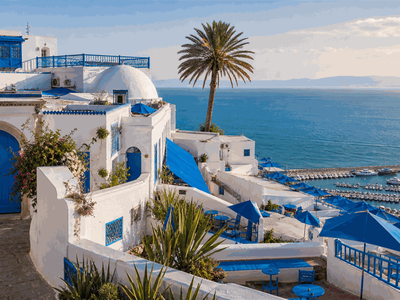
Sidi Bou Said
Sidi Bou Said is a named stop in Tunis worth keeping on the route when it fits the day's transport, timing and neighborhood plan.
View on map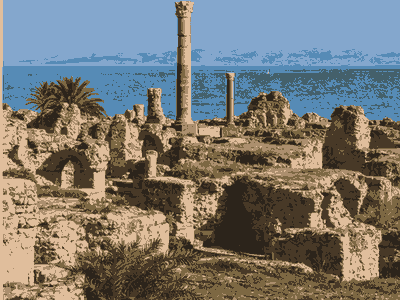
Carthage
Carthage gives Tunis a strong culture stop for museums, exhibitions or local collections, and works best as an indoor anchor in the day's route.
View on mapStay overview
Base in the Medina or Ville Nouvelle for an easy first stay near souks, museums and Avenue Habib Bourguiba, or choose Les Berges du Lac for modern business hotels. La Marsa suits travelers wanting easy access to Carthage, Sidi Bou Said and the coast.
Hotels & areas
Tunis hotel choice depends on priorities: the Medina and Ville Nouvelle suit first-time visitors wanting sights within walking distance, Les Berges du Lac suits business travelers, and La Marsa suits those prioritising beaches and day trips to Carthage.
Medina
The Medina of Tunis is the historic walled old town, a UNESCO-listed maze of souks, mosques and artisan workshops best explored on foot.
Best for: first visits, history, shoppingSee hotel optionsVille Nouvelle
Ville Nouvelle centres on Avenue Habib Bourguiba, Tunis's French-colonial boulevard lined with cafes, theatres and hotels.
Best for: walking, cafes, central hotelsSee hotel optionsLes Berges du Lac
Les Berges du Lac is a modern business district by the lake, home to newer hotels, malls and international offices.
Best for: business trips, modern hotelsSee hotel optionsLa Marsa
La Marsa is an upscale coastal suburb near Carthage and Sidi Bou Said, popular for beach cafes and a relaxed seaside pace.
Best for: beaches, day trips, relaxed staysSee hotel optionsFlights & airports
Tunis Carthage International Airport (TUN) arrival plan
- Tunis Carthage International Airport (TUN)About 7 km from the centre
Compare airport access against hotel location, arrival time, rental car pickup, late flights and onward driving before choosing the first night base.
- Enfidha - Hammamet International Airport (NBE)About 86 km from the centre
Compare airport access against hotel location, arrival time, rental car pickup, late flights and onward driving before choosing the first night base.
Rental cars
Tunis day-trip car use
A rental car helps for exploring Carthage, Sidi Bou Said and the northern coast, though downtown Tunis is easily covered on foot, by taxi or the TGM light rail.
Compare rental carsTravel tips
Best base
Choose the Medina or Ville Nouvelle for an easy first stay close to souks, museums and Avenue Habib Bourguiba.
Medina navigation
Expect to get pleasantly lost in the Medina's narrow lanes, and use landmark gates like Bab el Bhar to reorient.
Airport transfers
Take a metered taxi or the TGM connection from Tunis–Carthage International Airport for the short ride into the centre.
Carthage day trip
Take the TGM light rail directly from downtown to Carthage and Sidi Bou Said for an easy half-day coastal excursion.
Nearby ideas
Heritage · about 1 h 15 min · car south-west on the P5 towards Téboursouk
Dougga
The best-preserved Roman town in North Africa, with its theatre and capitol standing.
View on mapUpcoming events
City history
According to Strabo, it was destroyed by the Romans in 146 BC during the Third Punic War.
In 1048 the Zirid ruler Al-Muizz ibn Badis rejected his city's obedience to the Fatimids and re-established Sunni rites throughout all of Ifriqiya.
To punish the Zirids, he unleashed the Banu Hilal Arab tribe on Ifriqiya; a large part of the country was set to the torch, the Zirid capital Kairouan was razed in 1057, and only.
This small independent kingdom picked up the threads of trade and commerce with other nations and brought the region back to peace and prosperity. New capital of Tunisia In 1159, the Almohad 'Abd al-Mu'min.
In 1228, Governor Abu Zakariya seized power and, a year later, took the title of Emir and founded the Hafsid dynasty.
The Spanish governor of La Goulette, Luis Pérez de Vargas, fortified the island of Chikly in the lake of Tunis to strengthen the city's defenses between 1546 and 1550.
The existence of settlements in and around the area of Tunis is attested by sources dating from the 4th century BC.
From the beginning of the 8th century, Tunis was the administrative center of the area: it became the Umayyad, and later the Abbasids' naval base in the western Mediterranean Sea, and took on considerable.
Both the town and Carthage were destroyed; the former, however, was rebuilt first under the rule of Augustus and became an important town under Roman control and the center of a booming agricultural industry.
Early on, Tunis played a military role; the Umayyads recognized the strategic importance of its proximity to the Strait of Sicily, with a dockyard built upon the founding of the city by order of.
Under the Aghlabids, the city gained significance and benefited from economic improvements and became one of the most important in the caliphate, and was briefly the national capital from the end of the reign.
The governor appointed by Béjaïa, having reestablished order in the country, did not hesitate to free himself from the Hammadids to found the Khurasanid dynasty with Tunis as its capital.
The city became the capital of a Hafsid kingdom stretching towards Tripoli and Fez.
At the same time, driven by the reconquest of Spain, the first Andalusian Muslims and Jews arrived in Tunis and would become of importance to the economic prosperity of the Hafsid capital and the.