Forecast
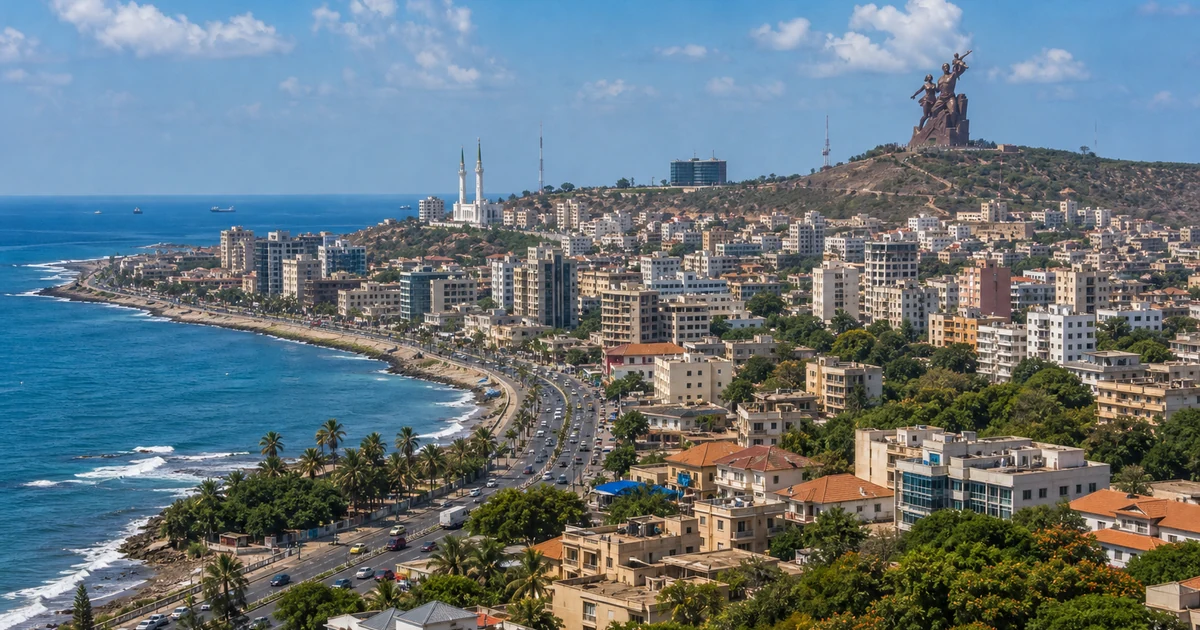
Dakar
Local time--:--
Africa/DakarWeather Forecast
Dakar, SenegalOpen-Meteo forecast.
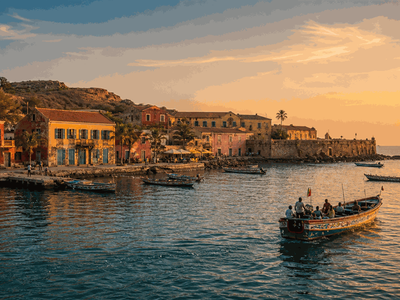
Dakar city overview
Dakar is Senegal's vibrant Atlantic capital, built on a peninsula where colonial-era streets meet surf beaches and bustling markets.

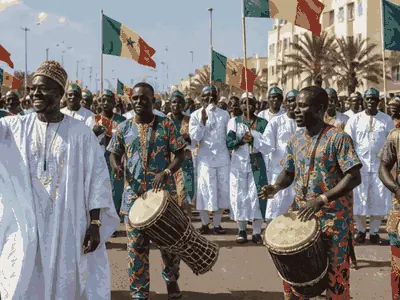
Worth seeing
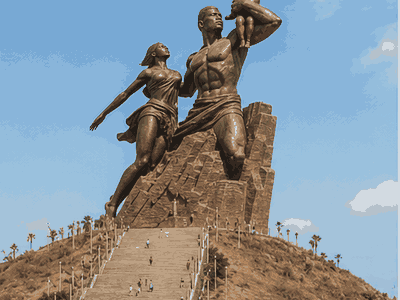
African Renaissance Monument
African Renaissance Monument is a clear heritage marker in Dakar, best used as a fixed point when grouping nearby streets, monuments and viewpoints.
View on map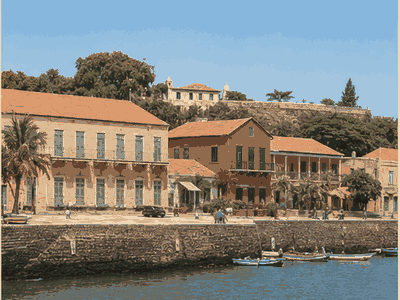
Goree Island
Goree Island adds the water-facing side of Dakar, making it a good break from museums, traffic and dense historic streets.
View on map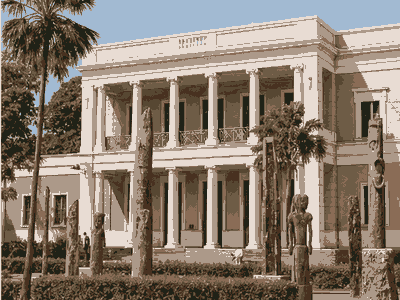
IFAN Museum of African Arts
IFAN Museum of African Arts is a key Dakar culture stop, useful for understanding local history, collections and rainy-day planning near the main sightseeing route.
View on map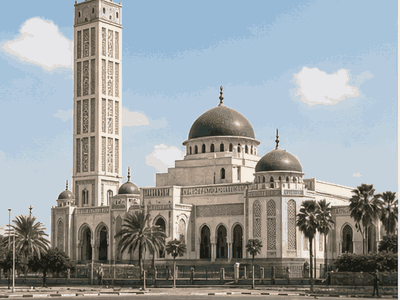
Dakar Grand Mosque
Dakar Grand Mosque anchors the historic and ceremonial side of Dakar, making it a practical stop for architecture, local memory and orientation.
View on map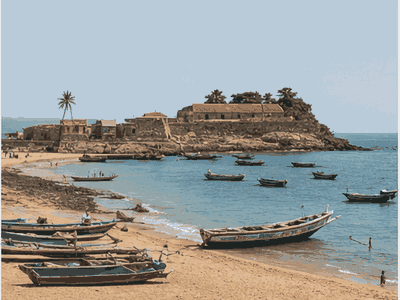
Ngor Island
Ngor Island adds the water-facing side of Dakar, making it a good break from museums, traffic and dense historic streets.
View on map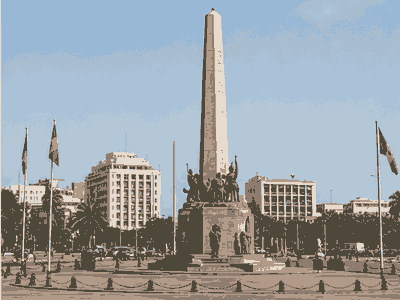
Place de l'Independance Dakar
Place de l'Independance Dakar is a named stop in Dakar worth keeping on the route when it fits the day's transport, timing and neighborhood plan.
View on mapStay overview
Base in Plateau for an easy first stay near ministries, markets and the Gorée ferry, or choose Almadies for beach clubs and Dakar's best restaurants. Ngor suits surfers and relaxed island-hopping, while Yoff offers an authentic fishing-village base near the airport road.
Hotels & areas
Dakar hotel choice depends on priorities: Plateau suits first-time visitors wanting downtown sights and the Gorée ferry within reach, Almadies suits beach and nightlife stays, and Ngor or Yoff suit travelers wanting a quieter, more local coastal base.
Plateau
Plateau is Dakar's colonial-era downtown, home to government buildings, banks and the ferry terminal for Île de Gorée, ideal for first-time visitors.
Best for: first visits, business, ferry accessSee hotel optionsAlmadies
Almadies is Dakar's upscale coastal district, lined with beach clubs, restaurants and nightlife near the continent's westernmost point.
Best for: beaches, nightlife, diningSee hotel optionsNgor
Ngor is a laid-back fishing village turned surf hangout, with a short pirogue ride to car-free Ngor Island just offshore.
Best for: surfing, relaxed staysSee hotel optionsYoff
Yoff is a traditional Lebou fishing village along a long sandy beach, offering an authentic, lower-key base close to the airport road.
Best for: local life, beach walksSee hotel optionsFlights & airports
Blaise Diagne International Airport (DSS) arrival plan
- Blaise Diagne International Airport (DSS)About 40 km from the centre
Compare airport access against hotel location, arrival time, rental car pickup, late flights and onward driving before choosing the first night base.
- Léopold Sédar Senghor International Airport (DKR)About 7 km from the centre
Compare airport access against hotel location, arrival time, rental car pickup, late flights and onward driving before choosing the first night base.
Rental cars
Dakar day-trip car use
A rental car helps for day trips to Lac Rose or the airport at Diass, though taxis and ride-hailing cover Dakar's city centre and beaches easily.
Compare rental carsTravel tips
Best base
Choose Plateau for downtown sights and the Gorée ferry, or Almadies for beach clubs and Dakar's liveliest restaurant scene.
Airport distance
Allow extra time for the roughly hour-long transfer from Blaise Diagne International Airport, which sits well outside the city centre.
Gorée ferry
Book the Île de Gorée ferry a day ahead in high season and arrive early, since queues build quickly at the Plateau terminal.
Bargaining and cash
Carry West African CFA francs for markets and negotiate prices at Marché Sandaga and Kermel, where bargaining is expected.
City history
Peaceful contact was finally opened in 1456 by Diogo Gomes, and the bay was subsequently referred to as the "Angra de Bezeguiche" (after the name of the local ruler).
The Portuguese founded a settlement on the island of Gorée (then known as the island of Bezeguiche or Palma), which by 1536 they began to use as a base for slave exportation.
The island switched hands between the Portuguese and Dutch several more times before falling to the English under Admiral Robert Holmes on January 23, 1664, and finally to the French in 1677.
The infamous "House of Slaves" was built at Gorée in 1776. Lebou Republic By the 1780s, Dakar was one of the largest towns in Cayor.
Traders from Gorée decided to move to the mainland, and a "factory" with warehouses was established in Rufisque in 1840.
In 1857, the French established a military post at Ndakaaru (which they called "Dakar") and annexed the Lebou Republic, though its institutions continued to function nominally.
The port facilities were improved with jetties, a telegraph line was established along the coast to Saint-Louis, and the Dakar-Saint-Louis railway was completed in 1885, at which point the city became an important base.
A second major railroad, the Dakar-Niger built from 1906 to 1923, linked Dakar to Bamako and consolidated the city's position at the head of France's West African empire.
In 1940, Dakar became involved in the Second World War when General de Gaulle, leader of the Free French Forces, sought to make the city the base of his resistance operations.
On 1 December 1944, French soldiers guarding the camp opened fire on the West African soldiers.
Accounts of the death toll range from around 35 (the official French account) to over 300 (army veterans active at the time). Independence Dakar was the capital of the short-lived Mali Federation from 1959.
The bay of "Bezeguiche" would go on to serve as a critical stop for the Portuguese India Armadas of the early 16th century, where large fleets would routinely stop, both on their outward and.
A new Lebou village, called Ndakaaru, was established directly across from Gorée in the 17th century to service the European trading factory with food and drinking water.
French trading firms established branch offices there, and industrial investments (mills, breweries, refineries, canneries) were attracted by its port and rail facilities.