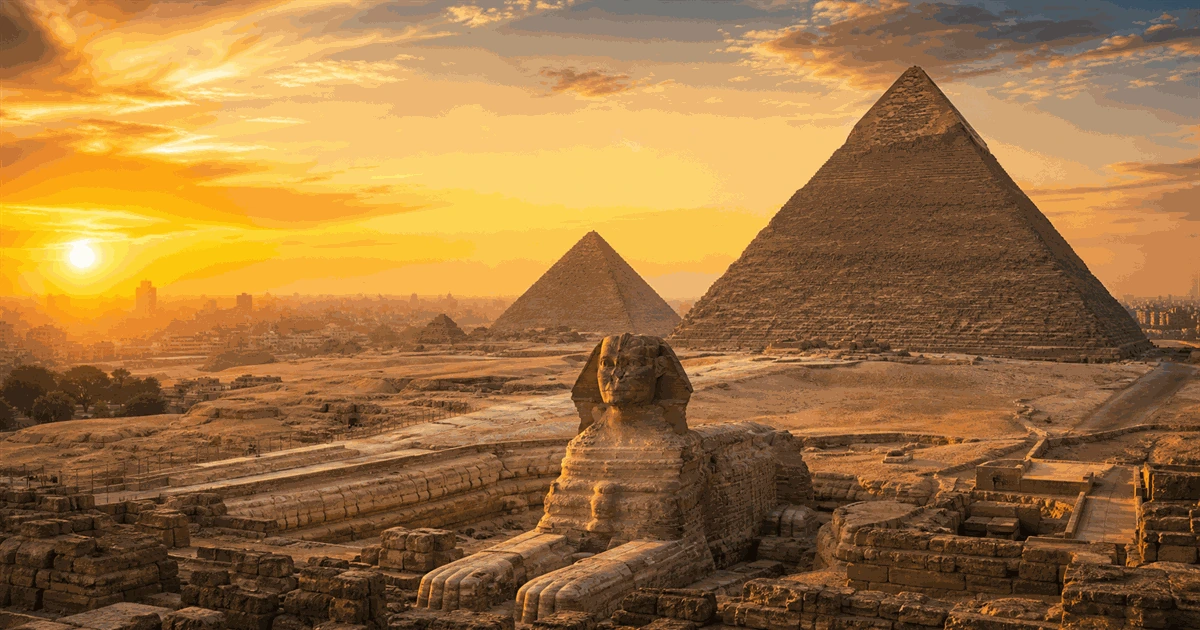

Egypt
History
Upper and Lower Egypt were unified, beginning the pharaonic state.
The Great Pyramid was built at Giza for Khufu.
Alexander the Great took Egypt; Alexandria became a Hellenistic capital.
Arab conquest brought Islam and Arabic.
The Suez Canal opened, reshaping world shipping.
The Free Officers movement ended the monarchy and declared a republic.
 Part ofAfricaMore countries, cities and routes.
Short facts
RegionNorth Africa
LanguageArabic
Time zoneEET (UTC+2)
Drives onRight
Worth seeing
- Pyramids of Giza: The last surviving wonder of the ancient world, with the Great Sphinx.
- Karnak and Luxor: Temple complexes on the Nile at ancient Thebes, opposite the Valley of the Kings.
- Abu Simbel: Ramesses II's rock temples, relocated stone by stone above Lake Nasser.
Find a city in Egypt
Showing all cities
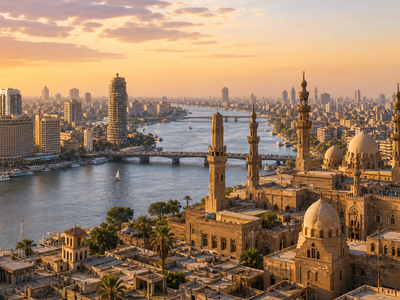 Cairo
CairoPlanning questions
What is Egypt known for?Pyramids of Giza, Karnak and Luxor, Abu Simbel.
What is the capital?Cairo.
Which language is useful?Arabic.
When is the national day?23 July.
How should I browse it here?Start with the facts, jump to linked cities, then check events and topics.
Upcoming events
Showing all 4 events
 Cairo International Film Festival4 November 2026 – 20 November 2026 — Egypt — EgyptCairo International Film FestivalNov 2026 · Egypt
 African Games20 January 2027 – 7 February 2027 — Cairo — Egypt
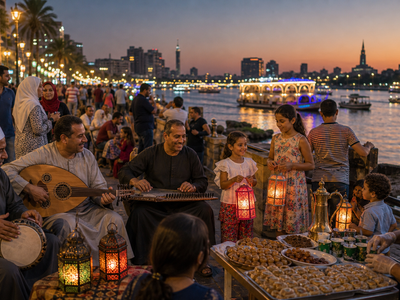 Egypt National Day23 July 2027 — Across Egypt — Egypt
Use Cairo as the first planning anchor for Egypt, then compare the city, food and worth-seeing notes on this page.
Food & drink
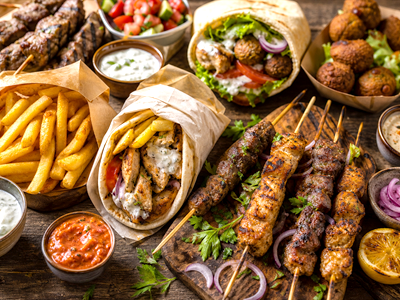 Street food
 Coffee
Known for
Pyramids of GizaKarnak and LuxorAbu SimbelCairoStreet foodCoffee
 Music & Culture