Forecast
Paramaribo
Local time--:--
America/ParamariboWeather Forecast
Paramaribo, SurinameOpen-Meteo forecast.
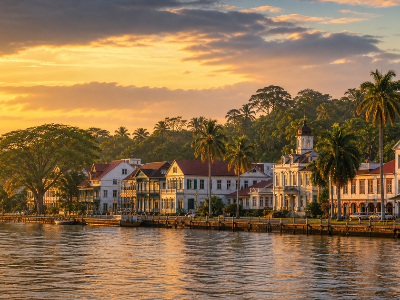
Paramaribo city overview
Paramaribo is Suriname's riverside capital, where wooden Dutch colonial buildings, mosques, synagogues, markets and Creole food sit close together. Start in the Historic Inner City of Paramaribo, visit Fort Zeelandia, then walk the Waterkant and Palmentuin for shade and river air. Johan Adolf Pengel airport is far south of town, so arrange transfers before arrival.
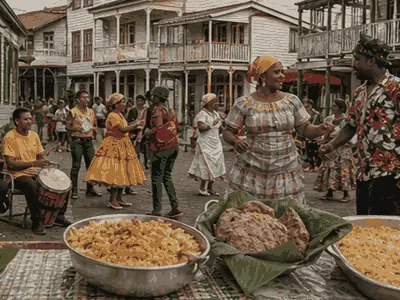
Worth seeing
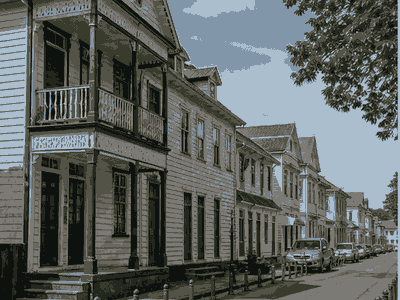
Historic Inner City of Paramaribo
Historic Inner City of Paramaribo is a named Paramaribo landmark that helps structure a real visit, adding orientation, local context and a clear route anchor.
View on map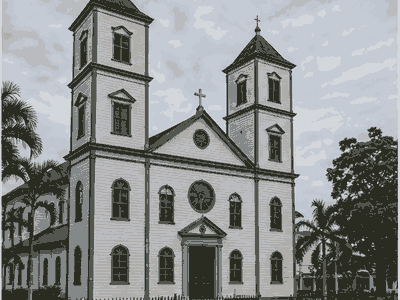
Fort Zeelandia
Fort Zeelandia is a named Paramaribo landmark that helps structure a real visit, adding orientation, local context and a clear route anchor.
View on map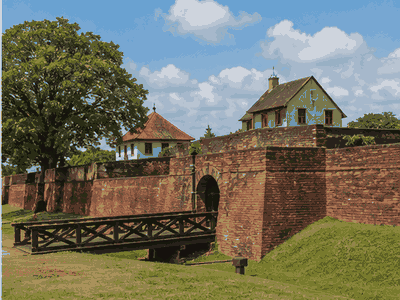
Waterkant
Waterkant is a named Paramaribo landmark that helps structure a real visit, adding orientation, local context and a clear route anchor.
View on map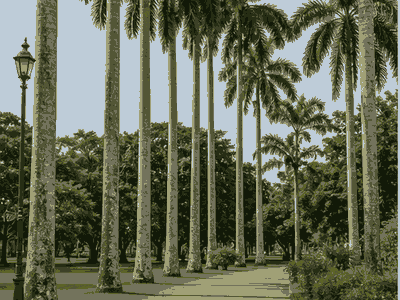
Saint Peter and Paul Cathedral
Saint Peter and Paul Cathedral anchors the historic and ceremonial side of Paramaribo, making it a practical stop for architecture, local memory and orientation.
View on map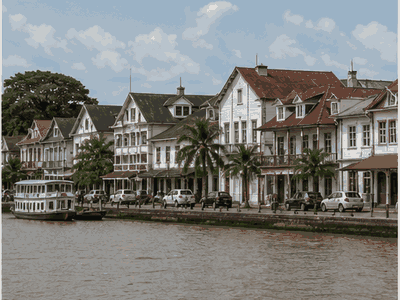
Central Market
Central Market gives Paramaribo a concrete street-life stop, with food, everyday shopping and local movement that helps visitors read the city.
View on map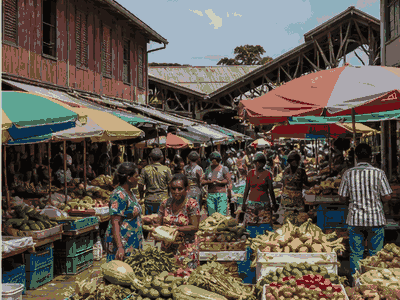
Palmentuin
Palmentuin is a named Paramaribo landmark that helps structure a real visit, adding orientation, local context and a clear route anchor.
View on mapStay overview
Stay in the Historic Inner City or near Waterkant for the easiest first Paramaribo visit. Rainville is quieter, Zorg en Hoop suits domestic-flight logistics, and Blauwgrond is useful for food-focused stays with taxi movement.
Hotels & areas
Paramaribo hotel choice should account for heat, transfers and walking: the historic centre and Waterkant are most convenient, Rainville is calmer, Zorg en Hoop is practical, and Blauwgrond works for local restaurants.
Historic Inner City
The Historic Inner City is best for architecture, Fort Zeelandia, Waterkant and short walks between central sights.
Best for: history, walking, first visitsSee hotel optionsWaterkant
Waterkant is useful for river views, food stalls, central hotels and evening atmosphere near the Suriname River.
Best for: river views, food, central accessSee hotel optionsRainville
Rainville is a quieter northern base with guesthouses, restaurants and easier taxi access to central Paramaribo.
Best for: quiet stays, restaurants, guesthousesSee hotel optionsZorg en Hoop
Zorg en Hoop works for domestic flights, practical guesthouses and trips using the smaller city airport.
Best for: domestic flights, practical stays, transfersSee hotel optionsBlauwgrond
Blauwgrond is known for Javanese food and local restaurants, best for visitors comfortable using taxis.
Best for: food, local stays, longer visitsSee hotel optionsFlights & airports
Johan Adolf Pengel International Airport (PBM) arrival plan
- Johan Adolf Pengel International Airport (PBM)About 46 km from the centre
Compare airport access against hotel location, arrival time, rental car pickup, late flights and onward driving before choosing the first night base.
Rental cars
Paramaribo day-trip car use
A rental car can help for plantations and nature trips, but taxis are easier for central Paramaribo.
Compare rental carsTravel tips
Best base
Choose the Historic Inner City for a first stay if architecture, Fort Zeelandia and Waterkant are priorities.
Airport transfers
Check the route from Johan Adolf Pengel International Airport (PBM) before choosing between a central hotel and an airport-area first night in Paramaribo.
Heat and rain
Keep the Paramaribo plan compact: group nearby sights together and leave enough time for transfers, meals and weather changes.
Food
Make time for Javanese, Creole and Hindustani food; Blauwgrond is especially useful for a casual dinner route.
City history
This was the location of the first Dutch settlement, a trading post established by Nicolaes Baliestel and Dirck Claeszoon van Sanen in 1613.
English and French traders also tried to establish settlements in Suriname, including a French post established in 1644 near present-day Paramaribo.
All earlier settlements were abandoned sometime before the arrival of English settlers in 1650 to found Surinam.
In 1662, Governor Willoughby was granted the settlement and surrounding lands (extending into Suriname's interior) by King Charles II.
Around 1665 the village of Paramaribo was expanded and quickly outranked the earlier settlement of Torarica.
In 1667, during the Second Anglo-Dutch War, Paramaribo was conquered by a squadron of ships under Abraham Crijnssen.
The old town has suffered many devastating fires over the years, notably in January 1821 (which destroyed over 400 buildings) and September 1832 (which destroyed nearly 50 buildings).
Paramaribo has remained the capital of Suriname, from its colonial days through the independence of Suriname in 1975 to the present day.
In 1987, an administrative reorganization took place in Suriname and the city was divided into 12 administrative resorts (jurisdictions).
They were sent by the English governor of Barbados, Lord Francis Willoughby, 5th Baron Willoughby of Parham, and established a town on the site of Paramaribo (though probably south of the current town center).
The town was protected by a fort, called Fort Willoughby.
Among the first British settlers were many Jews and one of the oldest synagogues in the Americas, the Neveh Shalom Synagogue, is found in Paramaribo.