Forecast
Rio de Janeiro
Local time--:--
America/Sao_PauloWeather Forecast
Rio de Janeiro, BrazilOpen-Meteo forecast.
Rio de Janeiro city overview
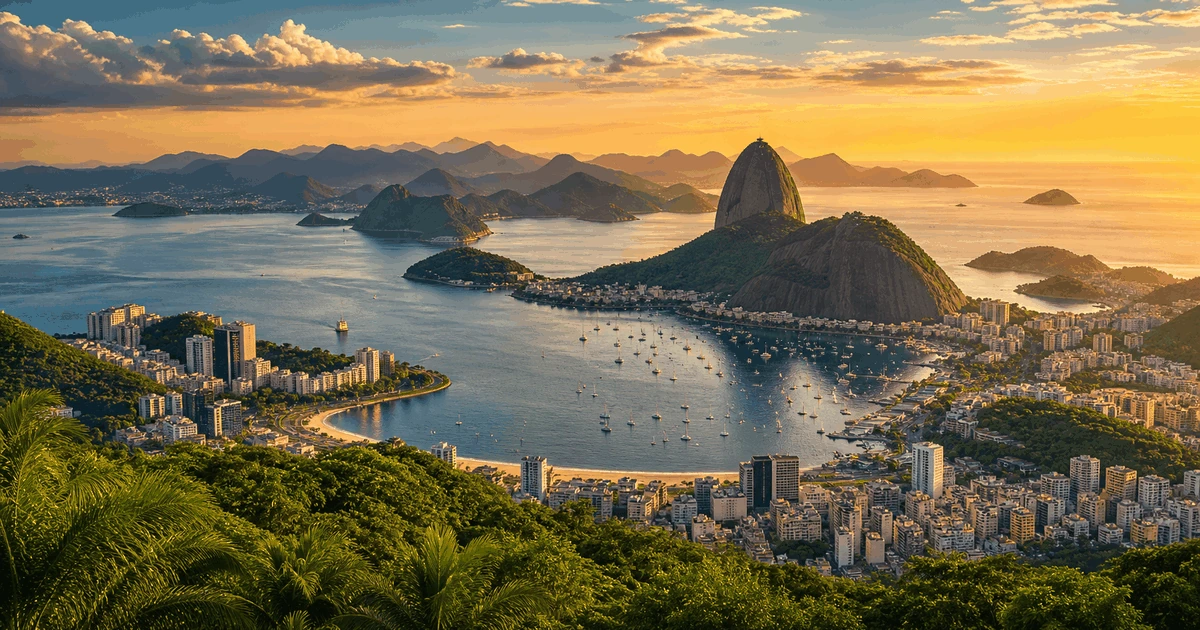
Rio de Janeiro is Brazil's beach-and-mountain icon, where city life wraps around Guanabara Bay, forested peaks and long Atlantic beaches. Ride up to Christ the Redeemer, take the cable car to Sugarloaf Mountain, then choose between Copacabana Beach and Ipanema Beach for daily rhythm. Galeao handles long-haul flights, while Santos Dumont is handy for domestic hops.

Worth seeing

Christ the Redeemer
Christ the Redeemer is a named Rio de Janeiro landmark that helps structure a real visit, adding orientation, local context and a clear route anchor.
View on map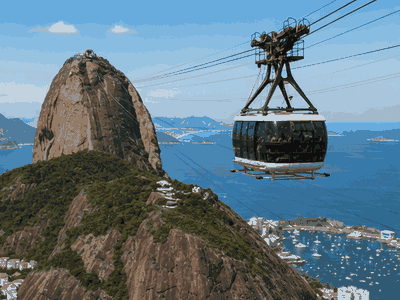
Sugarloaf Mountain
Sugarloaf Mountain adds outdoor time to a Rio de Janeiro stay, with open space, views or waterfront breathing room between denser city sights.
View on map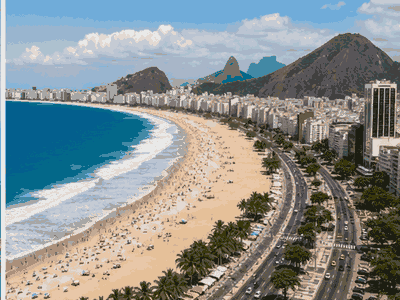
Copacabana Beach
Copacabana Beach adds outdoor time to a Rio de Janeiro stay, with open space, views or waterfront breathing room between denser city sights.
View on map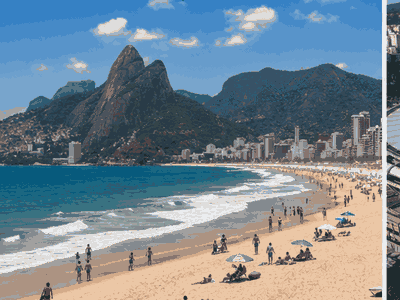
Ipanema Beach
Ipanema Beach adds outdoor time to a Rio de Janeiro stay, with open space, views or waterfront breathing room between denser city sights.
View on map
Selaron Steps
Selaron Steps is a named Rio de Janeiro landmark that helps structure a real visit, adding orientation, local context and a clear route anchor.
View on map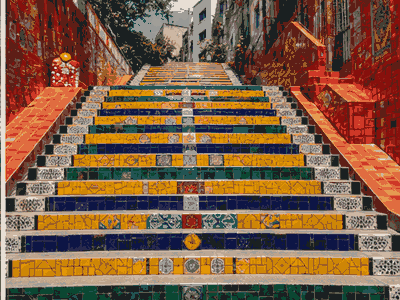
Museum of Tomorrow
Museum of Tomorrow is a key Rio de Janeiro culture stop, useful for understanding local history, collections and rainy-day planning near the main sightseeing route.
View on mapStay overview
Choose Ipanema for the easiest first Rio stay, Copacabana for hotel choice and classic beachfront value, or Leblon for a calmer upscale base. Botafogo is practical for metro and Sugarloaf, while Santa Teresa suits boutique stays with taxi use.
Hotels & areas
Rio hotel choice should balance beach access, evening safety and airport transfers: Ipanema is the strongest default, Copacabana gives range, Leblon is polished, Botafogo is practical, and Santa Teresa is scenic but less simple late at night.
Ipanema
Ipanema is the best all-round first base, with beach life, restaurants, metro access and safer evening movement than many central areas.
Best for: first visits, beach, restaurantsSee hotel optionsCopacabana
Copacabana has the deepest hotel supply and famous beachfront, useful for value, tours and classic Rio atmosphere.
Best for: beach hotels, value, toursSee hotel optionsLeblon
Leblon is upscale and calmer, with excellent restaurants, beach access and a polished base beside Ipanema.
Best for: upscale stays, dining, quiet beachSee hotel optionsBotafogo
Botafogo gives easier access to Sugarloaf, metro routes and bay views, often at better prices than the beach districts.
Best for: value, Sugarloaf, metroSee hotel optionsSanta Teresa
Santa Teresa is atmospheric and hillside, best for boutique stays, art, views and travelers comfortable using taxis at night.
Best for: boutique hotels, views, cultureSee hotel optionsFlights & airports
Santos Dumont Airport (SDU) arrival plan
- Santos Dumont Airport (SDU)About 2 km from the centre
Compare airport access against hotel location, arrival time, rental car pickup, late flights and onward driving before choosing the first night base.
- Rio de Janeiro Galeão – Tom Jobim International Airport (GIG)About 13 km from the centre
Compare airport access against hotel location, arrival time, rental car pickup, late flights and onward driving before choosing the first night base.
Rental cars
Rio de Janeiro day-trip car use
Skip a rental car in Rio; traffic, parking and security make metro, taxis, rideshare and tours easier.
Compare rental carsTravel tips
Best base
Stay in Ipanema or Leblon for a first visit if beach days, restaurants and easier evening movement matter most.
Airport timing
Leave generous time for Galeao transfers, especially before international flights or when crossing town in weekday traffic.
Safety basics
Keep phones discreet on beaches and busy streets, use taxis or rideshare late, and avoid isolated viewpoints after dark.
Weather buffer
Book Christ the Redeemer and Sugarloaf with some flexibility because cloud can hide the views even on warm days.
Nearby ideas
Town · about 25 min · ferry from Praça XV
Niterói
Niemeyer's flying-saucer art museum on a headland, and the best view back at Rio's skyline.
View on mapNature · about 40 min · car or taxi to the Alto da Boa Vista entrance
Tijuca National Park
Replanted Atlantic rainforest with waterfalls and the Pico da Tijuca climb above the city.
View on mapHeritage · about 1 h 15 min · bus from Rodoviária Novo Rio
Petrópolis
The emperor's summer capital in the mountains, cooler than the coast and built round the Imperial Museum.
View on mapCity history
Europeans first encountered Guanabara Bay on 1 January 1502 (hence Rio de Janeiro, "January River"), during a Portuguese expedition under explorer Gaspar de Lemos, captain of a ship in Pedro Álvares Cabral's fleet, or.
Eventually this French settlement became too much of a threat to the established Portuguese colony and in 1560 the order was made to get rid of them.
The city of Rio de Janeiro proper was founded on 1 March 1565 by the Portuguese, led by Estácio de Sá, including Antônio de Mariz.
On 27 January 1763, the colonial administration in Portuguese America was moved from Salvador to Rio de Janeiro.
The city remained primarily a colonial capital until 1808, when the Portuguese royal family and most of the associated Lisbon nobles, fleeing from Napoleon's invasion of Portugal, moved to Rio de Janeiro. Portuguese royal.
When Brazil was elevated to Kingdom in 1815, it became the capital of the United Kingdom of Portugal, Brazil and the Algarves until the return of the Portuguese Royal Family to Lisbon in 1821.
The Port of Rio de Janeiro was the largest port of slaves in America. Imperial period When Prince Pedro proclaimed the independence of Brazil in 1822, he decided to keep Rio de Janeiro as.
In order to separate the province from the capital of the Empire, the city was converted in Neutral Municipality in 1834, passing the province of Rio de Janeiro to have Niterói as capital.
Rio continued as the capital of Brazil after 1889, when the monarchy was replaced by a republic.
The factory was officially opened on 8 March 1893, in a complex with varying architectural styles like Italianate, Neo-Gothic and a tower in Mansard Roof style.
However, the Bangu Football Club was not formally created until 1904. Republican period At the time Brazil's Old Republic was established, the city lacked urban planning and sanitation, which helped spread several diseases, such.
Consequently, Villegagnon built Fort Coligny on the island when attempting to establish the France Antarctique colony.
The old farms became worker villages with red-bricks houses, and a neo-gothic church was created, which still exists as the Saint Sebastian and Saint Cecilia Parish Church.
Inspired by the city of Paris, Passos built the Municipal Theater, the National Museum of Fine Arts and the National Library in the city's center; brought electric power to Rio and created larger avenues.