Forecast
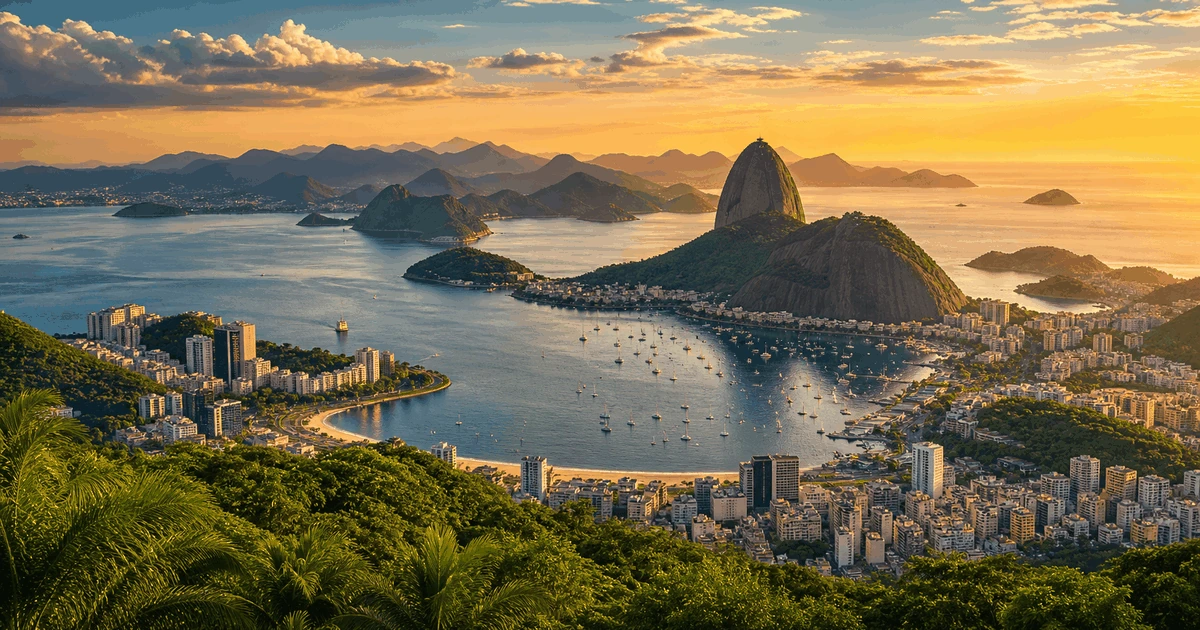
Brasilia
Local time--:--
America/Sao_PauloWeather Forecast
Brasilia, BrazilOpen-Meteo forecast.
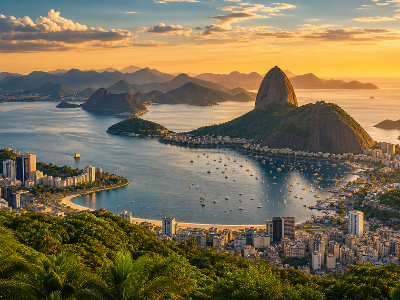
Brasilia city overview
Brasilia is Brazil's planned capital, built around sweeping avenues, monumental government buildings and Oscar Niemeyer's modernist architecture. Follow the Eixo Monumental from the Cathedral of Brasilia to the National Congress and Praca dos Tres Poderes, then cross to Pontao do Lago Sul for lake views. Brasilia airport sits close enough for straightforward transfers.
Worth seeing
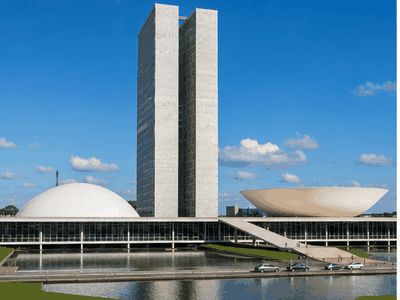
Cathedral of Brasilia
The Cathedral of Brasilia is one of Niemeyer's defining works, with sculptural concrete ribs and a striking stained-glass interior.
View on map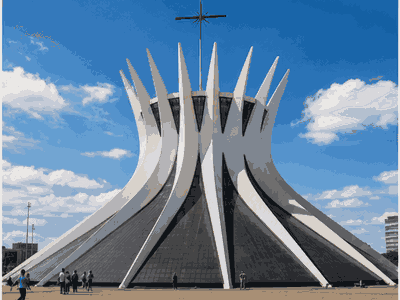
National Congress
The National Congress anchors the Eixo Monumental with twin towers and bowl-shaped chambers that define the capital's skyline.
View on map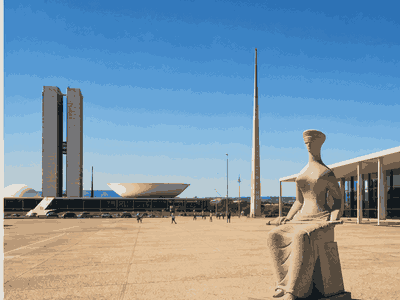
Praca dos Tres Poderes
Praca dos Tres Poderes brings the presidential palace, Supreme Court and Congress together in Brasilia's symbolic civic space.
View on map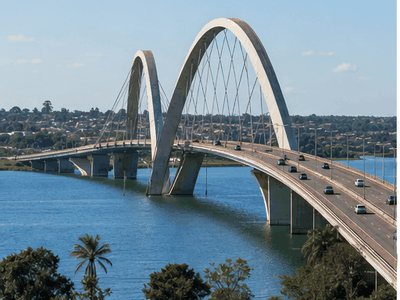
Juscelino Kubitschek Memorial
Juscelino Kubitschek Memorial is a named Brasilia landmark that helps structure a real visit, adding orientation, local context and a clear route anchor.
View on map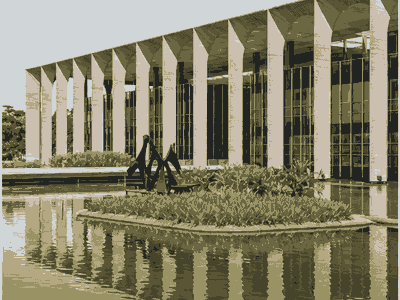
Santuario Dom Bosco
Santuario Dom Bosco is famous for its blue stained glass, a calm and memorable stop away from the main axis.
View on map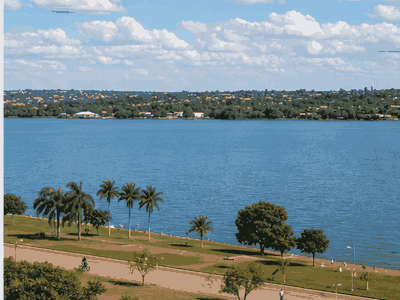
Pontao do Lago Sul
Pontao do Lago Sul is the easy lakefront dining and sunset stop, especially useful after a day of monuments.
View on mapStay overview
Use Setor Hoteleiro Sul or Norte for the easiest monument and business access, then compare Asa Sul or Asa Norte for more restaurants and local evenings. Lago Sul suits quieter, car-based stays near lake dining and embassies.
Hotels & areas
Brasilia hotel choice depends on purpose: the hotel sectors are practical but formal, Asa Sul and Asa Norte feel more lived-in, and Lago Sul works when lake views, embassies or quieter nights matter more than walking.
Setor Hoteleiro Sul
Setor Hoteleiro Sul is the classic hotel base, close to ministries, malls and the Eixo Monumental by taxi or rideshare.
Best for: business, first visits, monumentsSee hotel optionsSetor Hoteleiro Norte
Setor Hoteleiro Norte has many business hotels and quick access to shopping, convention venues and central government districts.
Best for: business hotels, meetings, central accessSee hotel optionsAsa Sul
Asa Sul feels more local and residential, with restaurants, cafes and easier evenings than the formal hotel sectors.
Best for: restaurants, longer stays, local feelSee hotel optionsAsa Norte
Asa Norte is useful for university visits, casual bars and a less formal stay while remaining close to central roads.
Best for: university, nightlife, longer staysSee hotel optionsLago Sul
Lago Sul is quieter and upscale, best for lake restaurants, embassies and car-based stays outside the monumental core.
Best for: quiet stays, embassies, lake viewsSee hotel optionsFlights & airports
Presidente Juscelino Kubitschek International Airport (BSB) arrival plan
- Presidente Juscelino Kubitschek International Airport (BSB)About 10 km from the centre
Compare airport access against hotel location, arrival time, rental car pickup, late flights and onward driving before choosing the first night base.
Rental cars
Brasilia day-trip car use
A rental car helps in Brasilia because distances are wide and many sights sit along car-oriented avenues.
Compare rental carsTravel tips
Distances
Do not judge Brasilia by map distance alone; roads are broad, crossings are limited and many routes work better by car.
Best base
Choose the hotel sectors for business or short stays, then use Asa Sul for restaurants and a more local evening routine.
Architecture route
Plan the Cathedral, National Congress and Praca dos Tres Poderes as one axis rather than scattered stops.
Dry season
The dry months can feel very dusty and bright, so carry water, sunglasses and sun protection for monument walks.
Nearby ideas
Nature · about 1 h 15 min · car north-west on DF-220
Chapada Imperial
A private reserve of cerrado with waterfalls and canyon trails, the largest near the capital.
View on mapNature · about 20 min · car east over the Juscelino Kubitschek bridge
Lago Paranoá and Ponte JK
A man-made lake with a triple-arch bridge, used for sailing and sunset bars on the far shore.
View on mapTown · about 1 h 15 min · coach north-west on BR-070 into Goiás
Pirenópolis
A colonial mining town of white houses, waterfalls in the hills and a horseback festival in May.
View on mapUpcoming events
No upcoming Brasilia events in the shared event index yet.
City history
Stating that "The Union shall own, in the central plateau of the Republic, an area of 14,400 square kilometers, which will be demarcated in due course to establish the future federal capital." The government.
The idea of relocating Brazil's capital city was conceived in 1827 by José Bonifácio, an advisor to Emperor Pedro I.
According to a legend, Italian saint Don Bosco in 1883 had a dream in which he described a futuristic city that roughly fitted Brasília's location.
After the Proclamation of the Republic, the Third Article of the new Constitution from 1891 stated that the capital should be moved from Rio de Janeiro to a place close to the country's center.
Already in 1892, the astronomer Louis Cruls, in the service of the Brazilian government, had investigated the site for the future capital.
In 1922 to celebrate the 100th anniversary of Brazil's independence, President Epitácio Pessoa ordered the construction of an obelisk in the Cruls Quadrilateral, known as the Foundation Stone of Brasília, to mark the location.
Upon taking office in January 1956, in fulfilment of his campaign pledge, he initiated the planning and construction of the new capital.
Though automobiles were invented prior to the 20th century, mass production of vehicles in the early 20th made them widely available; thus, they became a symbol of modernity.
Brasilia's geographically central location fostered a more regionally neutral federal capital.
He presented a plan to the General Assembly of Brazil for a new city called Brasília, with the idea of moving the capital westward from the heavily populated southeastern corridor.
In Brasília today, many references to Bosco, who founded the Salesian order, are found throughout the city and one church parish in the city bears his name.
But one can not ignore the bus transportation system in the city.
Additionally, the metro system in Brasília was mainly built for inhabitants of satellite cities.
However, Brasília was constructed soon after the end of World War II.