Forecast
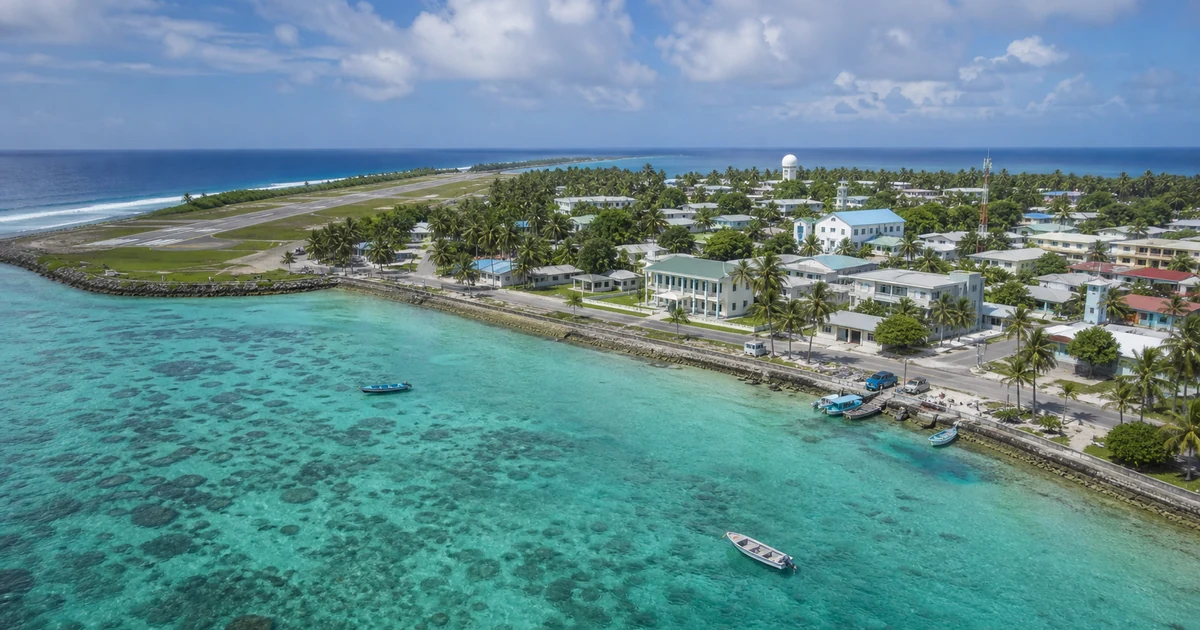
Funafuti
Local time--:--
Pacific/FunafutiWeather Forecast
Funafuti, TuvaluOpen-Meteo forecast.
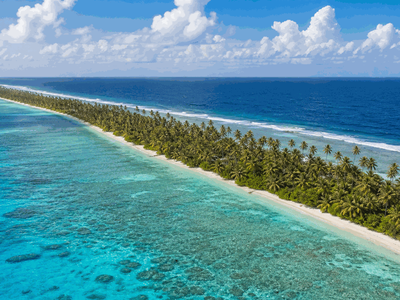
Funafuti city overview
Funafuti works best as a base in Tuvalu when you anchor days around Funafuti Conservation Area, Funafuti Lagoon and Vaiaku. Use those sights to understand the city's history, street life and visitor rhythm. Funafuti International Airport handles the main arrival flow, so hotel choice should balance the centre, transfer time and day-trip plans.
Worth seeing

Funafuti Conservation Area
Funafuti Conservation Area is a named stop in Funafuti worth keeping on the route when it fits the day's transport, timing and neighborhood plan.
View on map
Funafuti Lagoon
Funafuti Lagoon is a named stop in Funafuti worth keeping on the route when it fits the day's transport, timing and neighborhood plan.
View on map
Vaiaku
Vaiaku is a named stop in Funafuti worth keeping on the route when it fits the day's transport, timing and neighborhood plan.
View on map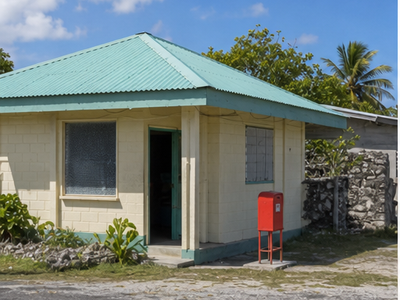
Tuvalu Philatelic Bureau
Tuvalu Philatelic Bureau is a named stop in Funafuti worth keeping on the route when it fits the day's transport, timing and neighborhood plan.
View on map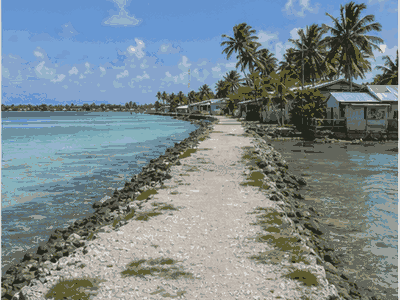
Fongafale
Fongafale is a named stop in Funafuti worth keeping on the route when it fits the day's transport, timing and neighborhood plan.
View on map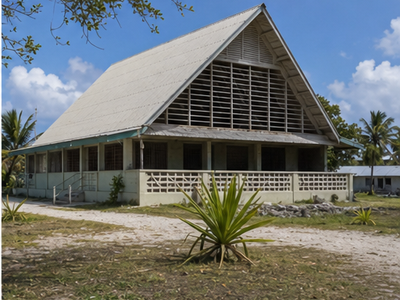
Tausoa Lima Falekaupule
Tausoa Lima Falekaupule is a named stop in Funafuti worth keeping on the route when it fits the day's transport, timing and neighborhood plan.
View on mapStay overview
Start with City centre for the easiest first Funafuti stay, then compare Old Town and Waterfront when price, nightlife, quieter evenings or transfer timing matter more than being beside every major sight.
Hotels & areas
Funafuti hotel choice is mostly about repeat journeys: use City centre for sightseeing, Old Town for a different local base, and Waterfront or Airport area when views, parking, airport timing or longer stays matter.
City centre
City centre is the most practical first base in Funafuti, keeping main sights, restaurants and short local transfers close.
Best for: first visits, sightseeing, restaurantsSee hotel optionsOld Town
Old Town is the most practical first base in Funafuti, keeping main sights, restaurants and short local transfers close.
Best for: first visits, sightseeing, restaurantsSee hotel optionsWaterfront
Waterfront suits travellers who want views, evening walks and a calmer base while still keeping central Funafuti reachable.
Best for: views, quieter evenings, walksSee hotel optionsAirport area
Airport area works mainly for early departures, late arrivals or car pickup, not for a first Funafuti sightseeing base.
Best for: early flights, late arrivals, car pickupSee hotel optionsFlights & airports
Funafuti International Airport (FUN) arrival plan
- Funafuti International Airport (FUN)About 0 km from the centre
Compare airport access against hotel location, arrival time, rental car pickup, late flights and onward driving before choosing the first night base.
Rental cars
Funafuti day-trip car use
Do not rent a car for central Funafuti unless parking and traffic are part of the plan; use one mainly for regional day trips.
Compare rental carsTravel tips
Best base
Choose City centre for a first stay because it keeps main sights, restaurants and practical local movement close.
Airport timing
Leave extra time for Funafuti International Airport, especially for early flights, late arrivals, traffic or unfamiliar transfer routes.
Local movement
Plan each day in clusters around Funafuti Conservation Area and Funafuti Lagoon so transfers do not consume the best sightseeing hours.
Day trips
Keep one flexible slot for nearby routes from Funafuti, checking weather, transport and opening hours before committing.
Upcoming events
No upcoming Funafuti events in the shared event index yet.
City history
His vessel sailed under British colors, and in May 1819, de Peyster passed through the southern waters of Tuvalu and sighted Funafuti.
In 1841, the United States Exploring Expedition, led by Charles Wilkes, visited Funafuti.
Alfred Restieaux, a native of England, lived and worked as a trader on Funafuti from July 1881 until about 1888 or 1889.
In 1882, members of the US Fish Commission visited Funafuti on the USFC Albatross to investigate the formation of coral reefs on Pacific atolls.
In 1892, Captain Edward Davis of HMS Royalist provided a report describing the traders and trading activities he observed on each of the islands he visited.
Professor Edgeworth David of the University of Sydney participated in the 1896 expedition and led the 1897 effort.
The United States claimed Funafuti, along with based on the 1856 Guano Islands Act, and maintained this claim until 1983, when a treaty of friendship, concluded in 1979, went into effect.
In June 1996, the Funafuti Conservation Area was established along the western rim of the reef, encompassing six islets.
Tuvalu's vulnerability is underscored by projections indicating that by 2050, half of Funafuti could be submerged during high tides, with up to 95% potentially flooded by 2100.
In the 1850s, John (Jack) O'Brien became the first European to settle in Tuvalu.
He became a trader on Funafuti and married Salai, the daughter of Funafuti's paramount chief; with his family name continuing on Funafuti.
The cyclone destroyed the buildings in Fongafale, including the church and the trading stores belonging to George Westbrook and Alfred Restieaux.
During the Pacific War (World War II) the Ellice Islands were used as a base to prepare for the subsequent seaborn attacks on the Gilbert Islands (Kiribati) that were occupied by Japanese forces.
This period in its history is shaped by mounting environmental pressures, efforts at socio-political resilience, and increasingly vital international partnerships. Darwin's Drill The Darwin's Drill project, conducted by the Royal Society of London in.