Forecast
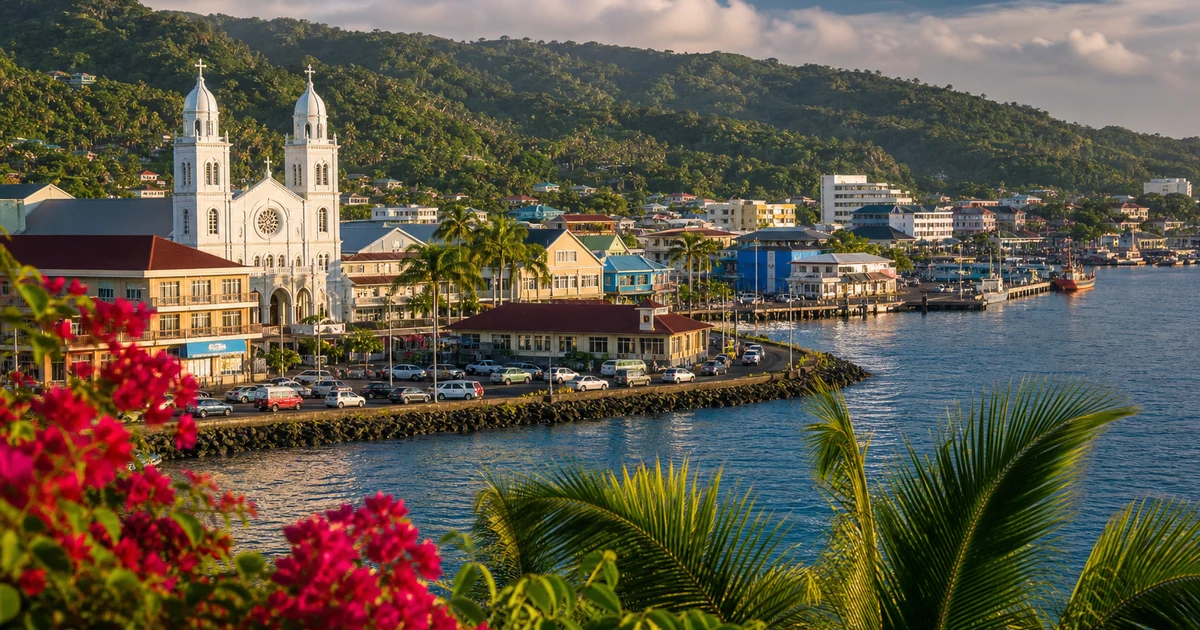
Apia
Local time--:--
Pacific/ApiaWeather Forecast
Apia, SamoaOpen-Meteo forecast.
Apia city overview
Apia works best as a base in Samoa when you anchor days around Robert Louis Stevenson Museum, Palolo Deep Marine Reserve and Apia Market. Use those sights to understand the city's history, street life and visitor rhythm. Apia International Airport handles the main arrival flow, so hotel choice should balance the centre, transfer time and day-trip plans.
Worth seeing
Robert Louis Stevenson Museum
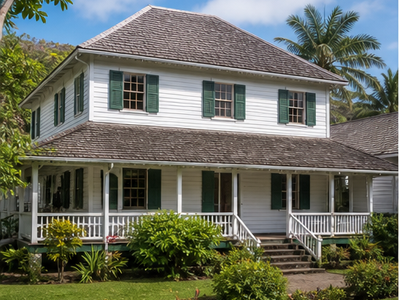
Robert Louis Stevenson Museum is a key Apia culture stop, useful for understanding local history, collections and rainy-day planning near the main sightseeing route.
View on map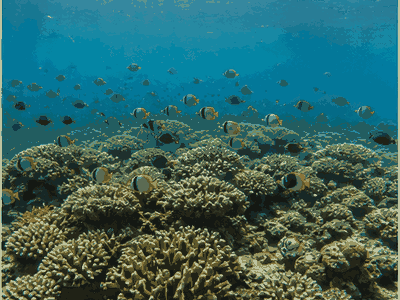
Palolo Deep Marine Reserve
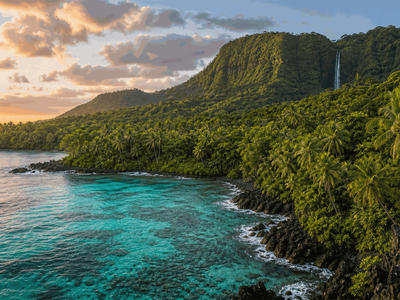
Palolo Deep Marine Reserve gives Apia a greener or more scenic stop, useful when the route needs views, shade, walking space or a slower hour.
View on map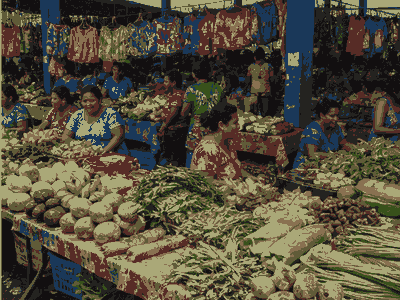
Apia Market
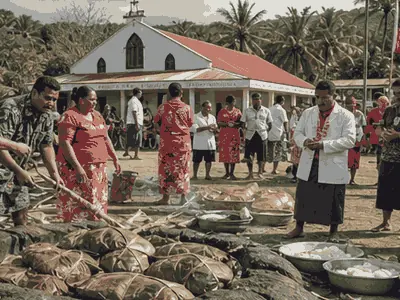
Apia Market gives Apia a concrete street-life stop, with food, everyday shopping and local movement that helps visitors read the city.
View on map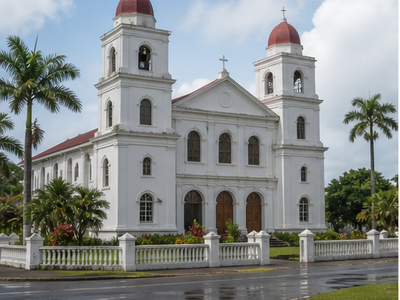
Immaculate Conception Cathedral
Immaculate Conception Cathedral anchors the historic and ceremonial side of Apia, making it a practical stop for architecture, local memory and orientation.
View on map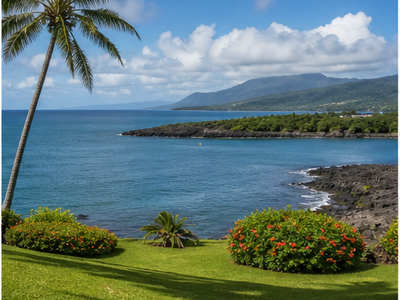
Mulinu'u Peninsula
Mulinu'u Peninsula is a named stop in Apia worth keeping on the route when it fits the day's transport, timing and neighborhood plan.
View on map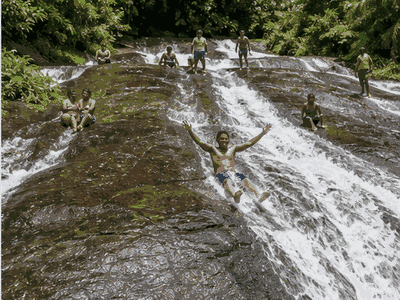
Papaseea Sliding Rocks
Papaseea Sliding Rocks gives Apia a greener or more scenic stop, useful when the route needs views, shade, walking space or a slower hour.
View on mapStay overview
Start with City centre for the easiest first Apia stay, then compare Old Town and Waterfront when price, nightlife, quieter evenings or transfer timing matter more than being beside every major sight.
Hotels & areas
Apia hotel choice is mostly about repeat journeys: use City centre for sightseeing, Old Town for a different local base, and Waterfront or Airport area when views, parking, airport timing or longer stays matter.
City centre
City centre is the most practical first base in Apia, keeping main sights, restaurants and short local transfers close.
Best for: first visits, sightseeing, restaurantsSee hotel optionsOld Town
Old Town is the most practical first base in Apia, keeping main sights, restaurants and short local transfers close.
Best for: first visits, sightseeing, restaurantsSee hotel optionsWaterfront
Waterfront suits travellers who want views, evening walks and a calmer base while still keeping central Apia reachable.
Best for: views, quieter evenings, walksSee hotel optionsAirport area
Airport area works mainly for early departures, late arrivals or car pickup, not for a first Apia sightseeing base.
Best for: early flights, late arrivals, car pickupSee hotel optionsFlights & airports
Faleolo International Airport (APW) arrival plan
- Faleolo International Airport (APW)About 26 km from the centre
Compare airport access against hotel location, arrival time, rental car pickup, late flights and onward driving before choosing the first night base.
Rental cars
Apia day-trip car use
Do not rent a car for central Apia unless parking and traffic are part of the plan; use one mainly for regional day trips.
Compare rental carsTravel tips
Best base
Choose City centre for a first stay because it keeps main sights, restaurants and practical local movement close.
Airport timing
Leave extra time for Apia International Airport, especially for early flights, late arrivals, traffic or unfamiliar transfer routes.
Local movement
Plan each day in clusters around Robert Louis Stevenson Museum and Palolo Deep Marine Reserve so transfers do not consume the best sightseeing hours.
Day trips
Keep one flexible slot for nearby routes from Apia, checking weather, transport and opening hours before committing.
Upcoming events
City history
Apia was originally a small village (the 1800 population was 304), from which the country's capital took its name.
The harbour was the site of a notorious 15 March 1889 naval standoff in which seven ships — from Germany, the US, and Britain — refused to leave the harbour, even though a typhoon.
Seumanutafa Pogai was high chief until his death in 1898.
Western Samoa was ruled by Germany as German Samoa from 1900 to 1914, with Apia as its capital.
In August 1914, the Occupation of German Samoa by an expeditionary force from New Zealand began.
New Zealand governed the islands, (as the Western Samoa Trust Territory) from 1920 until Samoan independence in 1962 – first under a League of Nations Class C Mandate and then, after 1945, as a.
On what became known as "Black Saturday" (28 December 1929), during a peaceful Mau gathering in the town, the New Zealand constabulary killed the paramount chief Tupua Tamasese Lealofi III.
During World War II the United States Navy built and operated Naval Base Upolu from 1941 to 1944.
The modern city of Apia was founded in the 1850s, and it has been the official capital of Samoa since 1959.
The country underwent a struggle for political independence in the early 1900s, organised under the aegis of the national Mau movement.
Apia Village still exists within the larger modern capital of Apia, which has grown into a sprawling urban area that encompasses many villages.
Like every other settlement in the country, Apia Village has its own matai (leaders) and fa'alupega (genealogy and customary greetings) according to fa'a Samoa.
All the ships sank or were damaged beyond repair, except for the British cruiser Calliope, which managed to leave port, travelling at a rate of one mile per hour, and was able to ride.
During this period, the streets of Apia were the site of non-violent protests and marches, in the course of which many Samoans were arrested.