Forecast
Washington DC
Local time--:--
tbaWeather Forecast
Washington DC, USAOpen-Meteo forecast.
Washington DC city overview
tba

Worth seeing
National Mall
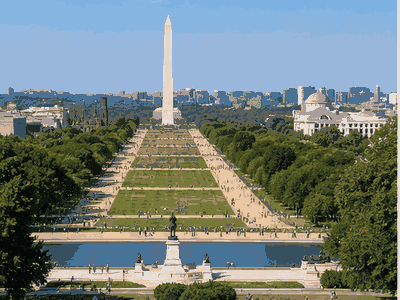
National Mall is useful for reading Washington DC's daily rhythm through food stalls, craft sellers, local errands and short stops between bigger sights.
View on map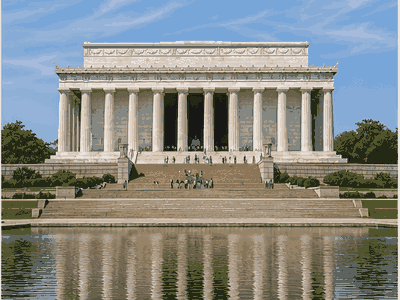
U.S. Capitol
U.S. Capitol is a named stop in Washington DC worth keeping on the route when it fits the day's transport, timing and neighborhood plan.
View on map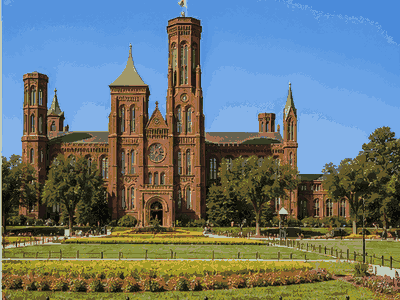
White House
White House is a named stop in Washington DC worth keeping on the route when it fits the day's transport, timing and neighborhood plan.
View on map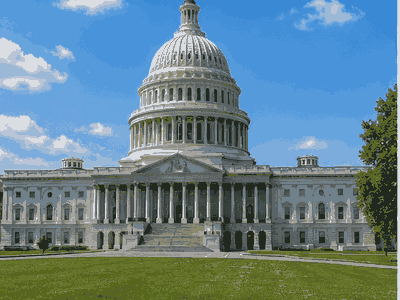
Smithsonian Museums
Smithsonian Museums is a key Washington DC culture stop, useful for understanding local history, collections and rainy-day planning near the main sightseeing route.
View on map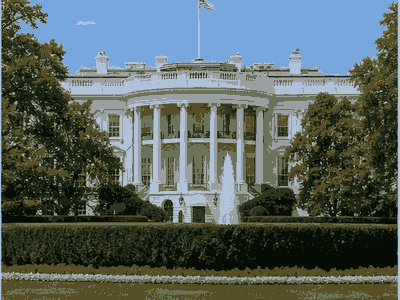
Lincoln Memorial
Lincoln Memorial is a clear heritage marker in Washington DC, best used as a fixed point when grouping nearby streets, monuments and viewpoints.
View on map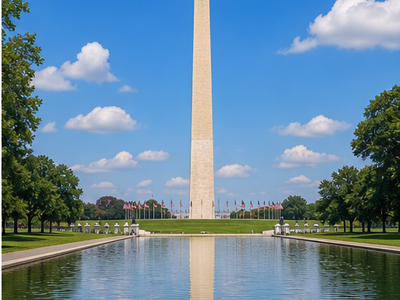
Georgetown
Georgetown is a named stop in Washington DC worth keeping on the route when it fits the day's transport, timing and neighborhood plan.
View on mapStay overview
Start with City centre for the easiest first Washington DC stay, then compare Old Town and Waterfront when price, nightlife, quieter evenings or transfer timing matter more than being beside every major sight.
Hotels & areas
Washington DC hotel choice is mostly about repeat journeys: use City centre for sightseeing, Old Town for a different local base, and Waterfront or Airport area when views, parking, airport timing or longer stays matter.
City centre
City centre is the most practical first base in Washington DC, keeping main sights, restaurants and short local transfers close.
Best for: first visits, sightseeing, restaurantsSee hotel optionsOld Town
Old Town is the most practical first base in Washington DC, keeping main sights, restaurants and short local transfers close.
Best for: first visits, sightseeing, restaurantsSee hotel optionsWaterfront
Waterfront suits travellers who want views, evening walks and a calmer base while still keeping central Washington DC reachable.
Best for: views, quieter evenings, walksSee hotel optionsAirport area
Airport area works mainly for early departures, late arrivals or car pickup, not for a first Washington DC sightseeing base.
Best for: early flights, late arrivals, car pickupSee hotel optionsFlights & airports
Ronald Reagan Washington National Airport (DCA) arrival plan
- Ronald Reagan Washington National Airport (DCA)About 6 km from the centre
Compare airport access against hotel location, arrival time, rental car pickup, late flights and onward driving before choosing the first night base.
- Washington Dulles International Airport (IAD)About 36 km from the centre
Compare airport access against hotel location, arrival time, rental car pickup, late flights and onward driving before choosing the first night base.
- Baltimore/Washington International Thurgood Marshall Airport (BWI)About 44 km from the centre
Compare airport access against hotel location, arrival time, rental car pickup, late flights and onward driving before choosing the first night base.
Rental cars
Washington DC day-trip car use
Do not rent a car for central Washington DC unless parking and traffic are part of the plan; use one mainly for regional day trips.
Compare rental carsTravel tips
Best base
Choose City centre for a first stay because it keeps main sights, restaurants and practical local movement close.
Airport timing
Leave extra time for Washington DC International Airport, especially for early flights, late arrivals, traffic or unfamiliar transfer routes.
Local movement
Plan each day in clusters around Washington DC and Washington DC so transfers do not consume the best sightseeing hours.
Day trips
Keep one flexible slot for nearby routes from Washington DC, checking weather, transport and opening hours before committing.
Nearby ideas
Heritage · about 40 min · Metro Yellow line to Huntington, then bus 101
Mount Vernon
Washington's estate above the Potomac, with the slave quarters and burial ground interpreted.
View on mapNature · about 35 min · car north-west on the George Washington Parkway
Great Falls Park
The Potomac drops 23 metres through Mather Gorge; three overlooks reach it in minutes.
View on mapTown · about 50 min · car east on US-50
Annapolis
A colonial capital of brick streets and the Naval Academy, with crab houses on the dock.
View on mapHeritage · about 1 h 15 min · MARC Brunswick line from Union Station
Harpers Ferry
John Brown's raid site where two rivers and three states meet, with the Appalachian Trail through it.
View on mapCity history
Conflicts with European colonists and neighboring tribes ultimately displaced the Piscataway people, some of whom established a new settlement in 1699 near Point of Rocks, Maryland.
Two pre-existing settlements were included in the territory, the port of Georgetown, founded in 1751, and the port city of Alexandria, Virginia, founded in 1749.
On October 6, 1783, after the Pennsylvania Mutiny of 1783 forced the capital to move briefly from Philadelphia to present-day Princeton University in Princeton, New Jersey, Congress resolved to consider a new location for.
43, published on January 23, 1788, James Madison argued that the new federal government would need authority over a national capital to provide for its own maintenance and safety.
Following independence, New York City served briefly as the first capital following adoption of the Constitution before the capital returned to Philadelphia, where it remained from 1790 to 1800.
On September 9, 1791, three commissioners overseeing the capital's construction named the city in honor of President Washington.
Most federal buildings were repaired quickly, but the Capitol, which was then still under construction, was not completed in its current form until 1868. Retrocession and the Civil War In the 1830s, the district's.
In the Organic Act of 1871, Congress repealed the individual charters of the cities of Washington and Georgetown, abolished Washington County, and created a new territorial government for the whole District of Columbia.
In 1975, Walter Washington became the district's first elected and first black mayor. Statehood movement Since the 1980s, the D.C. statehood movement has grown in prominence.
In 2016, a referendum on D.C. statehood resulted in an 85% support among Washington, D.C., voters for it to become the nation's 51st state.
The Algonquian-speaking Piscataway people inhabited present-day Washington, D.C. and lands around the Potomac River when Europeans first arrived and colonized the region in the early 17th century.
The Nacotchtank, also called the Nacostines by Catholic missionaries, maintained settlements around the Anacostia River in present-day Washington, D.C.
During the American Revolution and Revolutionary War, nine cities served as capitals to the Continental Congress and under the Articles of Confederation.
The city became an important slave market and a center of the nation's internal slave trade.