Forecast
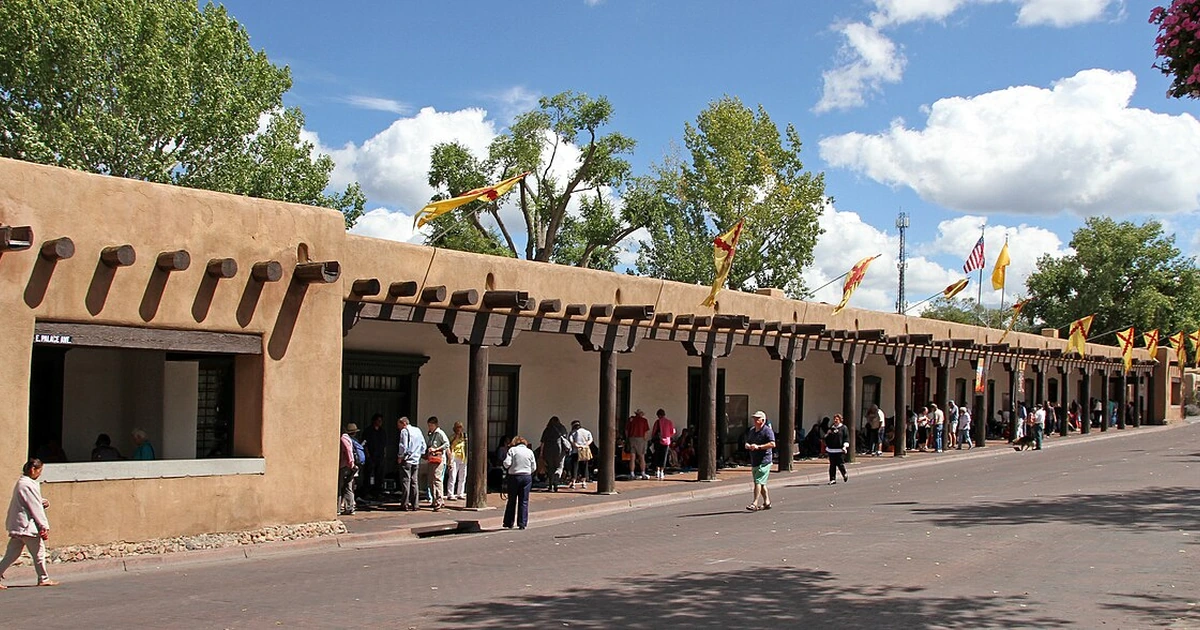
Santa Fe
Local time--:--
America/DenverWeather Forecast
Santa Fe, USAOpen-Meteo forecast.
Santa Fe city overview
tba
Worth seeing
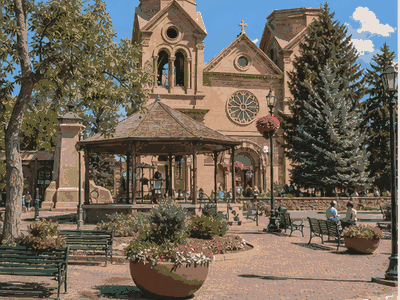
Santa Fe Plaza
Santa Fe Plaza is a clear heritage marker in Santa Fe, best used as a fixed point when grouping nearby streets, monuments and viewpoints.
View on map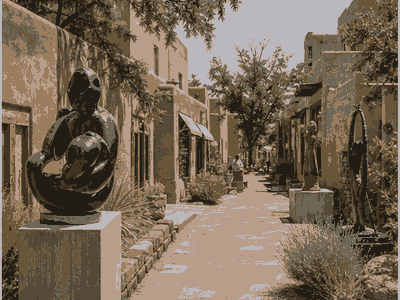
Canyon Road
Canyon Road is a named stop in Santa Fe worth keeping on the route when it fits the day's transport, timing and neighborhood plan.
View on map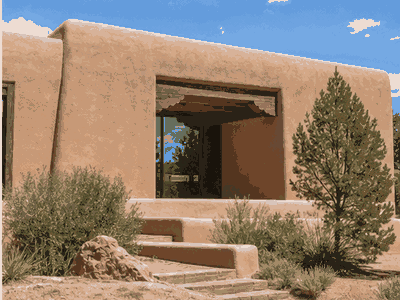
Georgia O'Keeffe Museum
Georgia O'Keeffe Museum is a key Santa Fe culture stop, useful for understanding local history, collections and rainy-day planning near the main sightseeing route.
View on map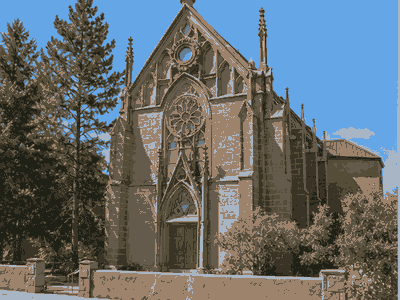
Loretto Chapel
Loretto Chapel is a named stop in Santa Fe worth keeping on the route when it fits the day's transport, timing and neighborhood plan.
View on map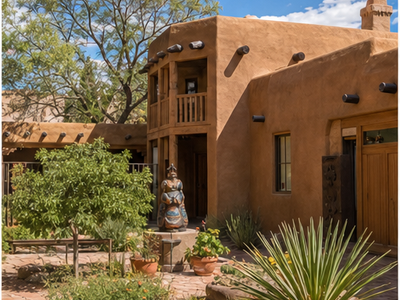
Museum Hill
Museum Hill is a key Santa Fe culture stop, useful for understanding local history, collections and rainy-day planning near the main sightseeing route.
View on map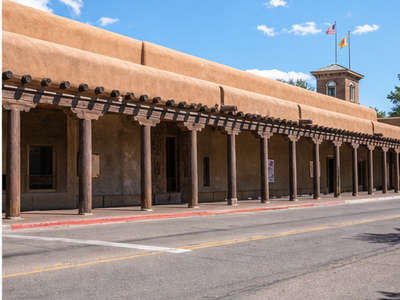
Meow Wolf Santa Fe
Meow Wolf Santa Fe is a named stop in Santa Fe worth keeping on the route when it fits the day's transport, timing and neighborhood plan.
View on mapStay overview
Start with City centre for the easiest first Santa Fe stay, then compare Old Town and Waterfront when price, nightlife, quieter evenings or transfer timing matter more than being beside every major sight.
Hotels & areas
Santa Fe hotel choice is mostly about repeat journeys: use City centre for sightseeing, Old Town for a different local base, and Waterfront or Airport area when views, parking, airport timing or longer stays matter.
City centre
City centre is the most practical first base in Santa Fe, keeping main sights, restaurants and short local transfers close.
Best for: first visits, sightseeing, restaurantsSee hotel optionsOld Town
Old Town is the most practical first base in Santa Fe, keeping main sights, restaurants and short local transfers close.
Best for: first visits, sightseeing, restaurantsSee hotel optionsWaterfront
Waterfront suits travellers who want views, evening walks and a calmer base while still keeping central Santa Fe reachable.
Best for: views, quieter evenings, walksSee hotel optionsAirport area
Airport area works mainly for early departures, late arrivals or car pickup, not for a first Santa Fe sightseeing base.
Best for: early flights, late arrivals, car pickupSee hotel optionsFlights & airports
Albuquerque International Sunport (ABQ) arrival plan
- Albuquerque International Sunport (ABQ)About 94 km from the centre
Compare airport access against hotel location, arrival time, rental car pickup, late flights and onward driving before choosing the first night base.
- Santa Fe Municipal Airport (SAF)About 16 km from the centre
Compare airport access against hotel location, arrival time, rental car pickup, late flights and onward driving before choosing the first night base.
- Taos Regional Airport (TSM)About 88 km from the centre
Compare airport access against hotel location, arrival time, rental car pickup, late flights and onward driving before choosing the first night base.
Rental cars
Santa Fe day-trip car use
Do not rent a car for central Santa Fe unless parking and traffic are part of the plan; use one mainly for regional day trips.
Compare rental carsTravel tips
Best base
Choose City centre for a first stay because it keeps main sights, restaurants and practical local movement close.
Airport timing
Leave extra time for Santa Fe International Airport, especially for early flights, late arrivals, traffic or unfamiliar transfer routes.
Local movement
Plan each day in clusters around Santa Fe and Santa Fe so transfers do not consume the best sightseeing hours.
Day trips
Keep one flexible slot for nearby routes from Santa Fe, checking weather, transport and opening hours before committing.
Nearby ideas
Heritage · about 50 min · car north-west on US-285 then NM-4
Bandelier National Monument
Ancestral Pueblo cliff dwellings you climb ladders into, in a canyon of volcanic tuff.
View on mapHeritage · about 1 h 15 min · car north on the High Road or NM-68
Taos Pueblo
Adobe houses continuously inhabited for over a thousand years, still without power or plumbing.
View on mapSpa · about 50 min · car north on US-285
Ojo Caliente
Four kinds of mineral water in open-air pools, used since long before the 1868 resort.
View on mapNature · about 1 h 15 min · car north-west on US-84 to Abiquiú
Ghost Ranch
The red and yellow cliffs Georgia O'Keeffe painted, with dinosaur quarries on the same land.
View on mapCity history
One of the earliest known settlements in what is known as downtown Santa Fe today came sometime after 900 AD.
In 1598, Juan de Oñate established the area as Santa Fe de Nuevo México, a province of New Spain.
New Mexico's second Spanish governor, Don Pedro de Peralta, however, founded a new city at the foot of the Sangre de Cristo Mountains in 1607, which he called La Villa Real de la Santa.
In 1610, he designated it as the capital of the province, which it has almost constantly remained, making it the oldest state capital in the United States.
The Pueblo people continued running New Mexico from the Palace of the Governors in Santa Fe from 1680 to 1692.
The city's status as the capital of the Mexican territory of Santa Fe de Nuevo México was formalized in the 1824 Constitution after Mexico achieved independence from Spain.
During that period, it was the site designated for the operation of the District Court of the Territory of New Mexico (Juzgado de Distrito del Territorio de Nuevo México), which existed from 1832, when.
When the Republic of Texas seceded from Mexico in 1836, it attempted to claim Santa Fe and other parts of Nuevo México as part of the western portion of Texas along the Río Grande.
These territorial disputes were finally resolved by the Compromise of 1850, which designated the 103rd meridian west as Texas's western border and resulted in California's statehood, and the establishment of the land claims of.
He built the Santa Fe Saint Francis Cathedral and shaped Catholicism in the region until his death in 1888.
In November 2025, Santa Fe became the first city in the United States to pass an ordinance that directly links wages to housing affordability, in an effort to address high rents and housing prices.
Under Juan de Oñate and his son, the capital of the province was the settlement of San Juan de los Caballeros north of Santa Fe near modern Ohkay Owingeh Pueblo.
As railroads were extended into the West, Santa Fe was originally envisioned as an important stop on the Atchison, Topeka and Santa Fe Railway.
During World War II, the federal government ordered a Japanese-American internment camp to be established.