Forecast
Charleston
Local time--:--
America/New_YorkWeather Forecast
Charleston, USAOpen-Meteo forecast.

Charleston city overview
tba

Worth seeing

Historic Charleston City Market
Historic Charleston City Market gives Charleston a concrete street-life stop, with food, everyday shopping and local movement that helps visitors read the city.
View on map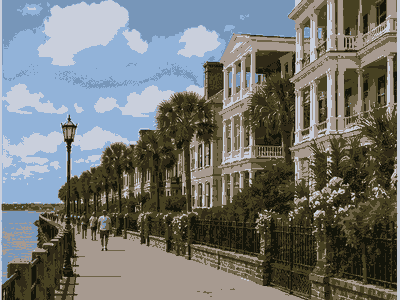
Rainbow Row
Rainbow Row is a named stop in Charleston worth keeping on the route when it fits the day's transport, timing and neighborhood plan.
View on map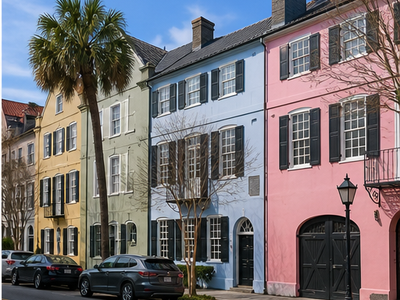
Waterfront Park Charleston
Waterfront Park Charleston adds outdoor time to a Charleston stay, with open space, views or waterfront breathing room between denser city sights.
View on map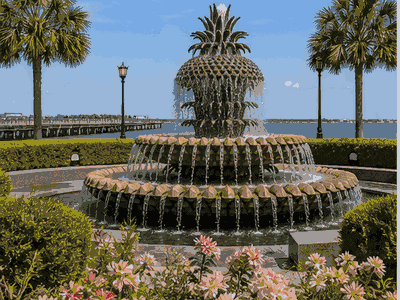
The Battery
The Battery is a named stop in Charleston worth keeping on the route when it fits the day's transport, timing and neighborhood plan.
View on map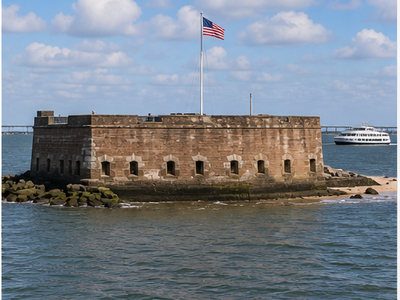
Fort Sumter
Fort Sumter is a clear heritage marker in Charleston, best used as a fixed point when grouping nearby streets, monuments and viewpoints.
View on map
King Street Charleston
King Street Charleston is a named stop in Charleston worth keeping on the route when it fits the day's transport, timing and neighborhood plan.
View on mapStay overview
Start with City centre for the easiest first Charleston stay, then compare Old Town and Waterfront when price, nightlife, quieter evenings or transfer timing matter more than being beside every major sight.
Hotels & areas
Charleston hotel choice is mostly about repeat journeys: use City centre for sightseeing, Old Town for a different local base, and Waterfront or Airport area when views, parking, airport timing or longer stays matter.
City centre
City centre is the most practical first base in Charleston, keeping main sights, restaurants and short local transfers close.
Best for: first visits, sightseeing, restaurantsSee hotel optionsOld Town
Old Town is the most practical first base in Charleston, keeping main sights, restaurants and short local transfers close.
Best for: first visits, sightseeing, restaurantsSee hotel optionsWaterfront
Waterfront suits travellers who want views, evening walks and a calmer base while still keeping central Charleston reachable.
Best for: views, quieter evenings, walksSee hotel optionsAirport area
Airport area works mainly for early departures, late arrivals or car pickup, not for a first Charleston sightseeing base.
Best for: early flights, late arrivals, car pickupSee hotel optionsFlights & airports
Charleston International Airport (CHS) arrival plan
- Charleston International Airport (CHS)About 17 km from the centre
Compare airport access against hotel location, arrival time, rental car pickup, late flights and onward driving before choosing the first night base.
Rental cars
Charleston day-trip car use
Do not rent a car for central Charleston unless parking and traffic are part of the plan; use one mainly for regional day trips.
Compare rental carsTravel tips
Best base
Choose City centre for a first stay because it keeps main sights, restaurants and practical local movement close.
Airport timing
Leave extra time for Charleston International Airport, especially for early flights, late arrivals, traffic or unfamiliar transfer routes.
Local movement
Plan each day in clusters around Charleston and Charleston so transfers do not consume the best sightseeing hours.
Day trips
Keep one flexible slot for nearby routes from Charleston, checking weather, transport and opening hours before committing.
Nearby ideas
Park · about 30 min · car north-west on Ashley River Road
Middleton Place
America's oldest landscaped garden, terraced down to butterfly lakes, with the stable yards worked.
View on mapBeach · about 30 min · car east over the Ravenel Bridge
Sullivan's Island
A quiet barrier-island beach beside Fort Moultrie, where many enslaved Africans first landed.
View on mapNature · about 40 min · car south-west to Johns Island
Angel Oak
A live oak estimated at 400 years old, its limbs resting on the ground and running back up.
View on mapCity history
King Charles II granted the chartered Province of Carolina to eight of his loyal friends, known as the Lords Proprietors, on March 24, 1663.
At the time of European colonization, the area was inhabited by the indigenous Cusabo, on whom the settlers declared war in October 1671.
The initial settlement quickly dwindled and disappeared while another village—established by the settlers on Oyster Point at the confluence of the Ashley and Cooper rivers around 1672—thrived.
In 1680, this second settlement formally replaced the original Charles Town, which today is commemorated as Charles Towne Landing.
A smallpox outbreak erupted in 1698, followed by an earthquake in February 1699.
Although Columbia had replaced it as the state capital in 1788, Charleston became even more prosperous as Eli Whitney's 1793 invention of the cotton gin sped the processing of the crop over 50 times.
On January 9, 1861, Citadel cadets opened fire on the USS Star of the West as it entered Charleston Harbor.
Native American settlement The unified Cusabo people (including sub tribes such as Kiawah) and the Ittiwan people inhabited the area prior to colonial settlement.
Britain's Industrial Revolution—initially built upon its textile industry—took up the extra production ravenously and cotton became Charleston's major export commodity in the 19th century.
Because the Carolina's Fundamental Constitutions were never ratified, however, Charles Town was never incorporated during the colonial period.
The latter caused a fire that destroyed about a third of the town.
Much of Charles Town was flooded as "the Ashley and Cooper rivers became one." At least seventy people died in the disaster.
More than one million enslaved people were transported from the Upper South to the Deep South in the antebellum years, as cotton plantations were widely developed through what became known as the Black Belt.
Beauregard fired upon the US Army-held Fort Sumter in Charleston Harbor.