Forecast

Augusta
Local time--:--
America/New_YorkWeather Forecast
Augusta, USAOpen-Meteo forecast.

Augusta city overview
tba


Worth seeing

Augusta National Golf Club
Augusta National Golf Club is a named stop in Augusta worth keeping on the route when it fits the day's transport, timing and neighborhood plan.
View on map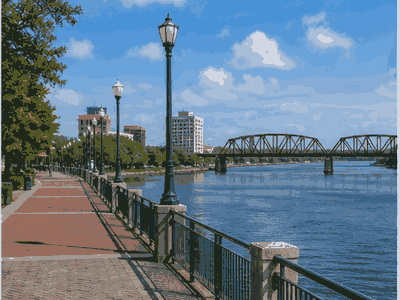
Augusta Riverwalk
Augusta Riverwalk adds outdoor time to a Augusta stay, with open space, views or waterfront breathing room between denser city sights.
View on map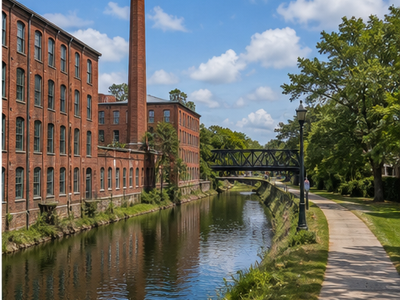
Augusta Museum of History
Augusta Museum of History is a key Augusta culture stop, useful for understanding local history, collections and rainy-day planning near the main sightseeing route.
View on map
Sacred Heart Cultural Center
Sacred Heart Cultural Center gives Augusta a strong culture stop for museums, exhibitions or local collections, and works best as an indoor anchor in the day's route.
View on map
Phinizy Swamp Nature Park
Phinizy Swamp Nature Park adds outdoor time to a Augusta stay, with open space, views or waterfront breathing room between denser city sights.
View on map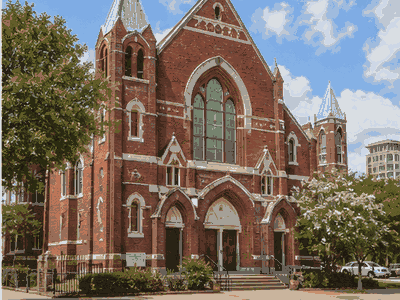
Morris Museum of Art
Morris Museum of Art is a key Augusta culture stop, useful for understanding local history, collections and rainy-day planning near the main sightseeing route.
View on mapStay overview
Start with City centre for the easiest first Augusta stay, then compare Old Town and Waterfront when price, nightlife, quieter evenings or transfer timing matter more than being beside every major sight.
Hotels & areas
Augusta hotel choice is mostly about repeat journeys: use City centre for sightseeing, Old Town for a different local base, and Waterfront or Airport area when views, parking, airport timing or longer stays matter.
City centre
City centre is the most practical first base in Augusta, keeping main sights, restaurants and short local transfers close.
Best for: first visits, sightseeing, restaurantsSee hotel optionsOld Town
Old Town is the most practical first base in Augusta, keeping main sights, restaurants and short local transfers close.
Best for: first visits, sightseeing, restaurantsSee hotel optionsWaterfront
Waterfront suits travellers who want views, evening walks and a calmer base while still keeping central Augusta reachable.
Best for: views, quieter evenings, walksSee hotel optionsAirport area
Airport area works mainly for early departures, late arrivals or car pickup, not for a first Augusta sightseeing base.
Best for: early flights, late arrivals, car pickupSee hotel optionsFlights & airports
Augusta Regional At Bush Field (AGS) arrival plan
- Augusta Regional At Bush Field (AGS)About 12 km from the centre
Compare airport access against hotel location, arrival time, rental car pickup, late flights and onward driving before choosing the first night base.
- Columbia Metropolitan Airport (CAE)About 97 km from the centre
Compare airport access against hotel location, arrival time, rental car pickup, late flights and onward driving before choosing the first night base.
Rental cars
Augusta day-trip car use
Do not rent a car for central Augusta unless parking and traffic are part of the plan; use one mainly for regional day trips.
Compare rental carsTravel tips
Best base
Choose City centre for a first stay because it keeps main sights, restaurants and practical local movement close.
Airport timing
Leave extra time for Augusta International Airport, especially for early flights, late arrivals, traffic or unfamiliar transfer routes.
Local movement
Plan each day in clusters around Augusta and Augusta so transfers do not consume the best sightseeing hours.
Day trips
Keep one flexible slot for nearby routes from Augusta, checking weather, transport and opening hours before committing.
Nearby ideas
Nature · about 25 min · car north-west on Evans to Locks Road
Savannah River Rapids
A shoal stretch of the river below the headgates, with a park and trails on both banks.
View on mapTown · about 35 min · car east on I-20 into South Carolina
Aiken
A winter colony town built round horses, with sand training tracks still in daily use.
View on mapNature · about 50 min · car north-west on I-20 to Appling
Mistletoe State Park
Lakeside camping and bass fishing on Clarks Hill Lake, with a swimming beach.
View on mapCity history
There, he had met with a convention of 7,000 Native American warriors and concluded a peace treaty with them in their territories in northern and western Georgia.
A protest against his death broke out into a riot involving some 500 people; during the unrest, six Black men were killed by police, each found to have been shot in the back.
Establishment In 1735, two years after James Oglethorpe founded Savannah, he sent a detachment of troops to explore the upper Savannah River.
Oglethorpe visited Augusta in September 1739 on his return to Savannah from a perilous visit to Coweta Town, near present-day Phenix City, Alabama.
A historical marker in Augusta reads:Augusta served as the capital of Georgia from 1785 until 1795 when the seat of government was moved to the new capital, Louisville.
In Augusta on January 2, 1788, Georgia became the fourth state to ratify the United States Constitution.
In 1789 the General Assembly, meeting here, adopted a new state constitution creating today's bicameral (two-house) state legislature consisting of the Senate and House of Representatives. Development Augusta developed rapidly as a market town.
The devastating Augusta fire of 1916 damaged 25 blocks of the city's downtown and wiped out many buildings of historical significance, some dating back to the 18th century.
In 1970, Charles Oatman, a mentally disabled teenager, was killed by his cellmates in an Augusta jail.
The noted singer and entertainer James Brown, a native of Augusta, was called in to help quell lingering tensions, which he succeeded in doing. Hyde Park contamination In 1993, an area known as Hyde.
In the mid-20th century, it was a site of civil rights demonstrations.
He gave them an order to build a fort at the head of the navigable part of the river.
The expedition was led by Noble Jones, who the following year created a settlement as a first line of defense for coastal areas against potential Spanish or French invasion from the interior.
Oglethorpe named the town in honor of Princess Augusta, the mother of King George III and the wife of Frederick, Prince of Wales.