Forecast
Santo Domingo
Local time--:--
America/Santo_DomingoWeather Forecast
Santo Domingo, Dominican RepublicOpen-Meteo forecast.
Santo Domingo city overview
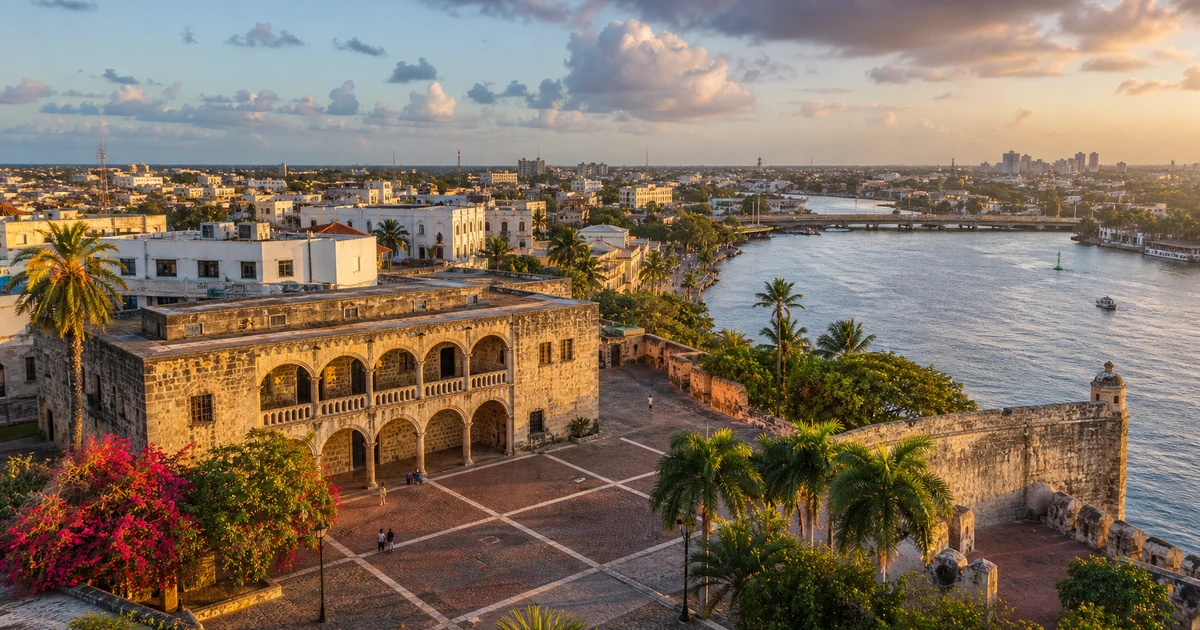
Santo Domingo works best as a base in Dominican Republic when you anchor days around Colonial Zone Santo Domingo, Alcazar de Colon and Catedral Primada de America. Use those sights to understand the city's history, street life and visitor rhythm. Las Americas International Airport handles the main arrival flow, so hotel choice should balance the centre, transfer time and day-trip plans.
Worth seeing
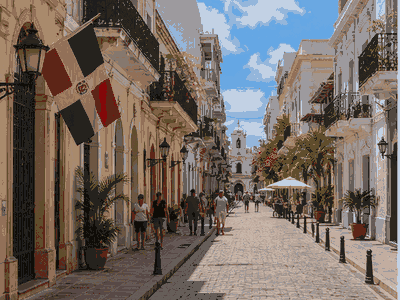
Colonial Zone Santo Domingo
Colonial Zone Santo Domingo is a named stop in Santo Domingo worth keeping on the route when it fits the day's transport, timing and neighborhood plan.
View on map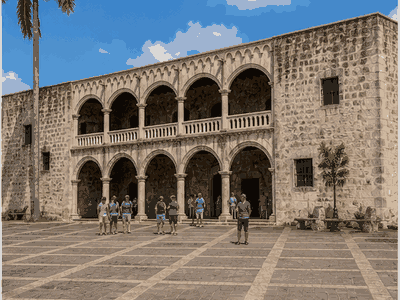
Alcazar de Colon
Alcazar de Colon is a named stop in Santo Domingo worth keeping on the route when it fits the day's transport, timing and neighborhood plan.
View on map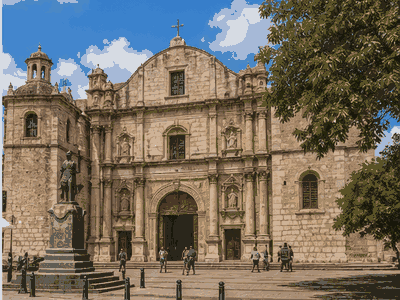
Catedral Primada de America
Catedral Primada de America is a named stop in Santo Domingo worth keeping on the route when it fits the day's transport, timing and neighborhood plan.
View on map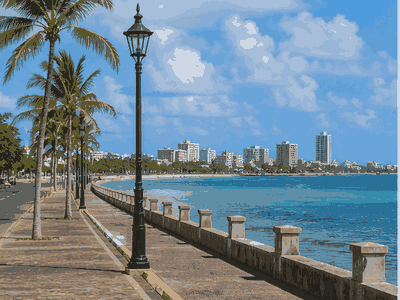
Malecon Santo Domingo
Malecon Santo Domingo is a named stop in Santo Domingo worth keeping on the route when it fits the day's transport, timing and neighborhood plan.
View on map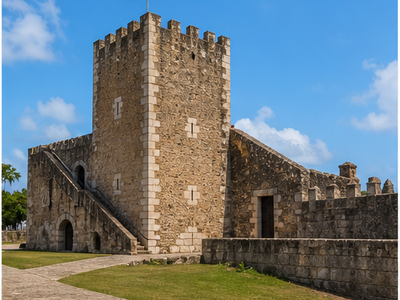
Fortaleza Ozama
Fortaleza Ozama is a clear heritage marker in Santo Domingo, best used as a fixed point when grouping nearby streets, monuments and viewpoints.
View on map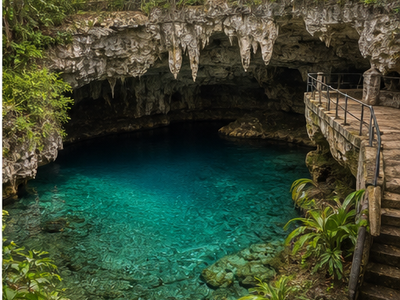
Los Tres Ojos
Los Tres Ojos is a named stop in Santo Domingo worth keeping on the route when it fits the day's transport, timing and neighborhood plan.
View on mapStay overview
Start with City centre for the easiest first Santo Domingo stay, then compare Old Town and Waterfront when price, nightlife, quieter evenings or transfer timing matter more than being beside every major sight.
Hotels & areas
Santo Domingo hotel choice is mostly about repeat journeys: use City centre for sightseeing, Old Town for a different local base, and Waterfront or Airport area when views, parking, airport timing or longer stays matter.
City centre
City centre is the most practical first base in Santo Domingo, keeping main sights, restaurants and short local transfers close.
Best for: first visits, sightseeing, restaurantsSee hotel optionsOld Town
Old Town is the most practical first base in Santo Domingo, keeping main sights, restaurants and short local transfers close.
Best for: first visits, sightseeing, restaurantsSee hotel optionsWaterfront
Waterfront suits travellers who want views, evening walks and a calmer base while still keeping central Santo Domingo reachable.
Best for: views, quieter evenings, walksSee hotel optionsAirport area
Airport area works mainly for early departures, late arrivals or car pickup, not for a first Santo Domingo sightseeing base.
Best for: early flights, late arrivals, car pickupSee hotel optionsFlights & airports
Las Américas International Airport (SDQ) arrival plan
- Las Américas International Airport (SDQ)About 24 km from the centre
Compare airport access against hotel location, arrival time, rental car pickup, late flights and onward driving before choosing the first night base.
Rental cars
Santo Domingo day-trip car use
Do not rent a car for central Santo Domingo unless parking and traffic are part of the plan; use one mainly for regional day trips.
Compare rental carsTravel tips
Best base
Choose City centre for a first stay because it keeps main sights, restaurants and practical local movement close.
Airport timing
Leave extra time for Las Americas International Airport, especially for early flights, late arrivals, traffic or unfamiliar transfer routes.
Local movement
Plan each day in clusters around Colonial Zone Santo Domingo and Alcazar de Colon so transfers do not consume the best sightseeing hours.
Day trips
Keep one flexible slot for nearby routes from Santo Domingo, checking weather, transport and opening hours before committing.
Nearby ideas
Beach · about 40 min · guagua east on the Las Américas highway
Boca Chica
A reef-sheltered lagoon so shallow you can wade a long way out.
View on mapHeritage · about 50 min · guagua west on the Sánchez highway
San Cristóbal and the Nigua caves
Taíno pictographs in the Pomier caves, the largest rock-art site in the Caribbean.
View on mapCity history
Dating from 1493, when the Spanish settled on the island, and officially from 5 August 1498, Santo Domingo became the oldest European city in the Americas.
In 1495 it was renamed "Santo Domingo", in honor of Saint Dominic.
In June 1502, Santo Domingo was destroyed by a major hurricane, and the new Governor Nicolás de Ovando had it rebuilt on a different site on the other side of the Ozama River.
In 1512, Ferdinand established a Real Audiencia with Juan Ortiz de Matienzo, Marcelo de Villalobos, and Lucas Vázquez de Ayllón appointed as judges of appeal.
A report which reached the English government in May 1586 states that from Santo Domingo he took away 1,200 Englishmen, Frenchmen, Flemings, and "Provincials out of prison, besides 800 of the countrey people".
In 1821, Santo Domingo became the capital of an independent nation called the Republic of Spanish Haiti after the Criollo bourgeois within the country, led by José Núñez de Cáceres, overthrew the Spanish crown.
On 27 February 1844, Santo Domingo was again the capital of a free nation, when it gained its independence from Haiti, led by Dominican nationalist Juan Pablo Duarte.
Following his assassination in 1961 the city was once again renamed to Santo Domingo.
Bartholomew Columbus founded the settlement and named it La Nueva Isabela, after La Isabela, an earlier settlement in the north named after the Queen of Spain Isabella I.
The original layout of the city and a large portion of its defensive wall can still be appreciated today throughout the Colonial Zone, declared a World Heritage Site by UNESCO.
The nation was annexed by Haiti just two months later.
Dominican victory in these engagements thwarted the advance of the Haitian army towards Santo Domingo during the Dominican War of Independence.
He was overthrown seven months later, resulting in a civil war in the capital.
Heavy fire from U.S. guns across the Ozama River ringed rebel headquarters on El Conde Street, shattered buildings and started huge fires.