Forecast
Gothenburg
Local time--:--
Europe/StockholmWeather Forecast
Gothenburg, SwedenOpen-Meteo forecast.
Gothenburg city overview
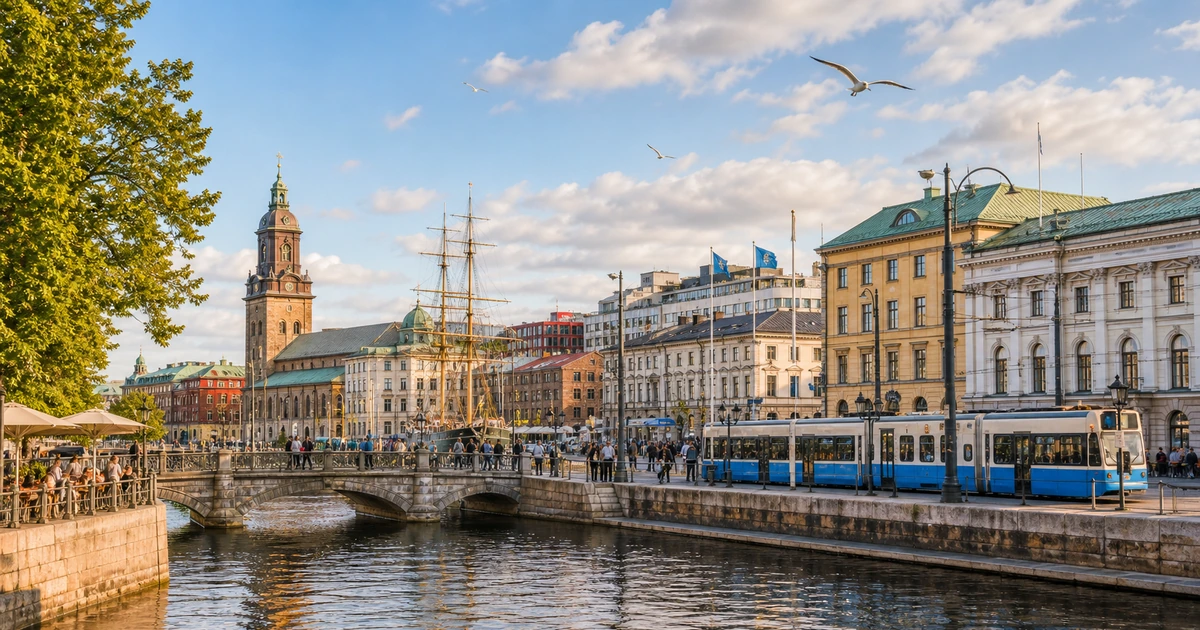
Gothenburg is Sweden's second-largest city, a west-coast port shaped by Dutch-designed canals and shipping history. First-time visitors should ride the trams to Liseberg, Scandinavia's biggest amusement park, wander the cafe streets of Haga, and catch the fish market at Feskekôrka. Home to Volvo, the city links via Landvetter airport to ferries reaching the archipelago's fishing villages and beaches - a half-day trip worth building into any stay.
Worth seeing
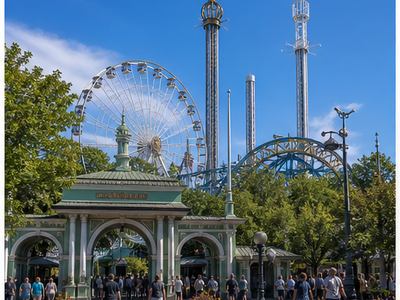
Liseberg
Liseberg is Gothenburg's central amusement park and concert draw, useful to plan around when evening crowds or family trips shape the hotel choice.
View on map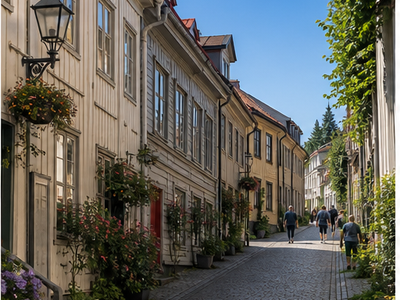
Haga
Haga is the older cafe-and-shop district west of the centre, a good slow stop when the trip needs streets, fika and short walks rather than only big sights.
View on map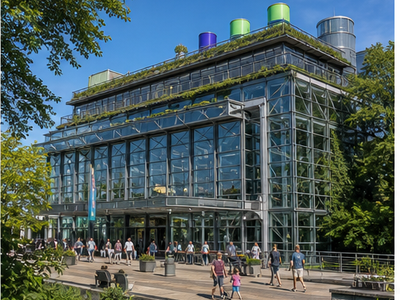
Universeum
Universeum is the science centre beside Korsvagen, close to Liseberg and useful for family trips or rainy-day planning.
View on map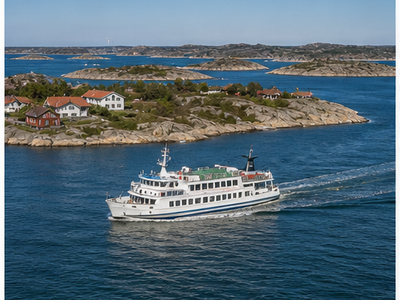
Gothenburg archipelago
The Gothenburg archipelago is the island day-trip angle of the city; ferry timing matters more than distance when choosing a base.
View on map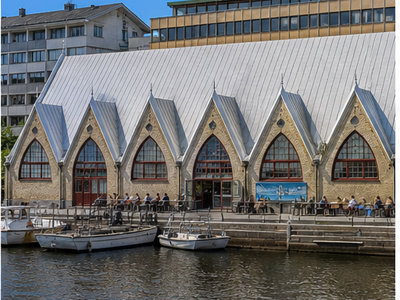
Feskekôrka
Feskekôrka is the fish-market landmark near the canal, a clear seafood stop for visitors staying around Centrum, Haga or Linnestaden.
View on map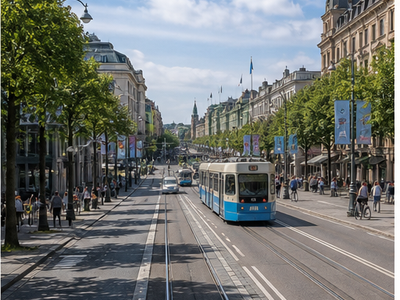
Avenyn
Avenyn is Gothenburg's main boulevard for nightlife, hotels and the route toward Gotaplatsen, making it a practical base for late evenings.
View on mapStay overview
Start with Centrum if this is a first Gothenburg stay, then compare Haga, Linnestaden, Avenyn, Eriksberg and Landvetter airport depending on tram routes, nightlife, waterfront preference and flight timing.
Hotels & areas
Gothenburg hotel choice is mostly about tram convenience and evening base: Centrum is easiest for arrivals, Haga and Linnestaden suit cafes and restaurants, Avenyn suits nightlife, Eriksberg suits waterfront stays, and Landvetter is for airport timing.
Centrum
Centrum is the most practical first base for tram links, the central station, canals, shopping streets and short transfers across the city core.
Best for: first visits, rail arrivals, central tram accessSee hotel optionsHaga
Haga works well for older streets, cafes, small shops and a slower stay close to both central Gothenburg and Linnestaden.
Best for: cafes, historic streets, walkable weekendsSee hotel optionsLinnestaden
Linnestaden is useful when restaurants, bars and access toward Slottsskogen matter more than being beside the central station.
Best for: restaurants, nightlife, Slottsskogen accessSee hotel optionsAvenyn
Avenyn is the main boulevard choice for nightlife, culture stops and quick movement between central Gothenburg and Gotaplatsen.
Best for: nightlife, culture, boulevard hotelsSee hotel optionsEriksberg
Eriksberg puts the stay on the north-bank waterfront, with river views and ferry links back toward the centre.
Best for: waterfront hotels, river ferries, quieter eveningsSee hotel optionsLandvetter airport area
The Landvetter airport area is mainly useful for early departures, late arrivals or car-based onward travel outside the city.
Best for: early flights, late arrivals, rental car pickupSee hotel optionsFlights & airports
Göteborg Landvetter Airport (GOT) arrival plan
- Göteborg Landvetter Airport (GOT)About 19 km from the centre
Compare airport access against hotel location, arrival time, rental car pickup, late flights and onward driving before choosing the first night base.
- Trollhättan-Vänersborg Airport (THN)About 71 km from the centre
Compare airport access against hotel location, arrival time, rental car pickup, late flights and onward driving before choosing the first night base.
Rental cars
Gothenburg day-trip car use
A rental car is useful for airport-based travel, coastal stops and wider West Sweden routes, but it is not the simplest way to move between central Gothenburg, Haga, Avenyn and Liseberg.
Compare rental carsTravel tips
Best base
Choose Centrum for the simplest first stay; it keeps the central station, trams, canals and most cross-city routes close.
Late evenings
Avenyn and Linnestaden are better than the airport area when restaurants, bars and short late-night trips matter.
Airport timing
Use a Landvetter-area hotel only when early flights, late arrivals or rental car pickup outweigh city-centre convenience.
Island trips
For the Gothenburg archipelago, check ferry timing before booking a hotel far from the tram or ferry route you need.
Nearby ideas
Island · about 45 min · tram 11 to Saltholmen, then Styrsöbolaget ferry
Southern Gothenburg Archipelago
Car-free islands reached on a city transit ticket; Vrångö has the best bathing rocks.
View on mapIsland · about 1 h · bus from Nils Ericson Terminalen, then the Marstrand ferry
Marstrand
A sailing town under the Carlsten fortress, busiest during the match-racing week in July.
View on mapHeritage · about 30 min · tram 4 to Mölndal, then local bus
Gunnebo House
A 1700s wooden summer villa with kitchen gardens that supply its own café.
View on mapCity history
The church was built in 1603 and destroyed in 1611.
After several failed attempts, Gothenburg was successfully founded in 1621 by King Gustavus Adolphus (Gustaf II Adolf).
The Dutchmen initially won political power, and it was not until 1652, when the last Dutch politician in the city's council died, that Swedes acquired political power over Gothenburg.
However, in 1731, the Swedish East India Company was founded, and the city flourished due to its foreign trade with highly profitable commercial expeditions to China.
In 1807, a decision was made to tear down most of the city's wall.
The work started in 1810 and was carried out by 150 soldiers from the Bohus regiment.
In 1841, the Scotsman Alexander Keiller founded the Götaverken shipbuilding company that was in business until 1989.
His son James Keiller donated Keiller Park to the city in 1906.
In the 18th century, fishing was the most important industry.
The site of the first church built in Gothenburg, subsequently destroyed by Danish invaders, is marked by a stone near the north end of the Älvsborg Bridge in the Färjenäs Park.
The planning of the streets and canals of Gothenburg closely resembled that of Jakarta, which was built by the Dutch around the same time.
William Chalmers, the son of a Scottish immigrant, donated his fortunes to set up what later became the Chalmers University of Technology.
Gothenburg grew into a significant port and trade centre on the west coast, because it was the only city on the west coast that, along with Marstrand, was granted the rights to trade with.
The impact of Gothenburg as a main port of embarkation for Swedish emigrants is reflected by Gothenburg, Nebraska, a small Swedish settlement in the United States.