Forecast
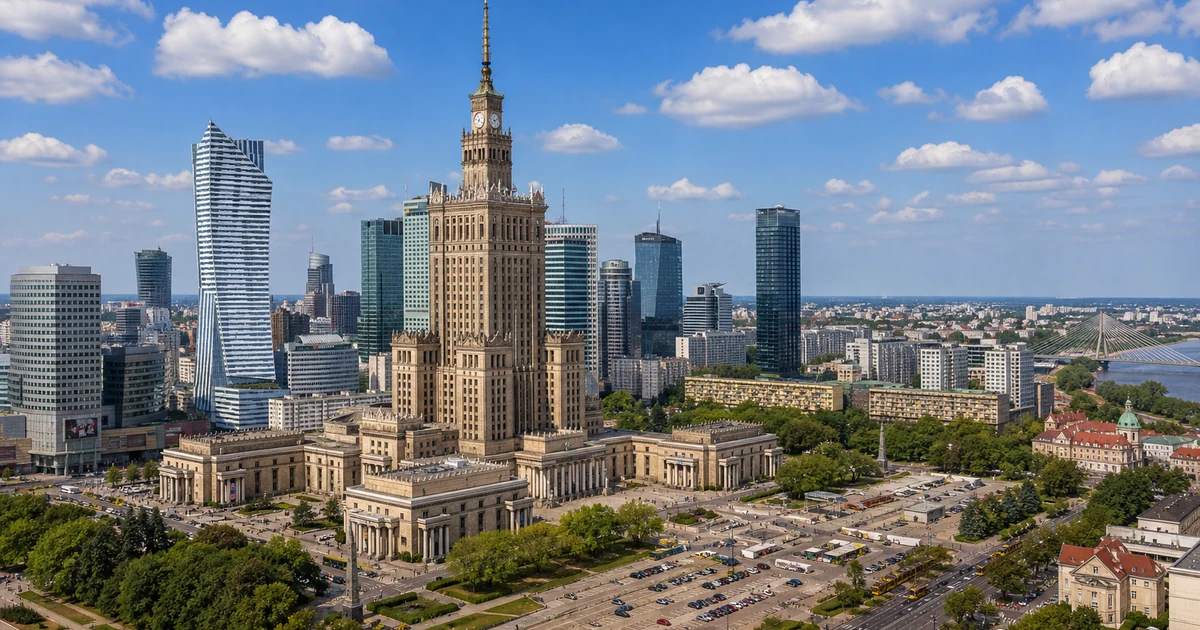
Warsaw
Local time--:--
Europe/WarsawWeather Forecast
Warsaw, PolandOpen-Meteo forecast.
Warsaw city overview
Warsaw works best as a base in Poland when you anchor days around Old Town Warsaw, Royal Castle Warsaw and Lazienki Park. Use those sights to understand the city's history, street life and visitor rhythm. Warsaw Chopin handles the main arrival flow, so hotel choice should balance the centre, transfer time and day-trip plans.
Worth seeing
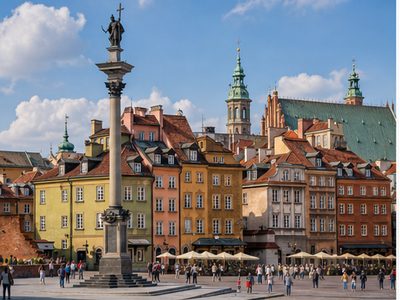
Old Town Warsaw
Old Town Warsaw is a named stop in Warsaw worth keeping on the route when it fits the day's transport, timing and neighborhood plan.
View on map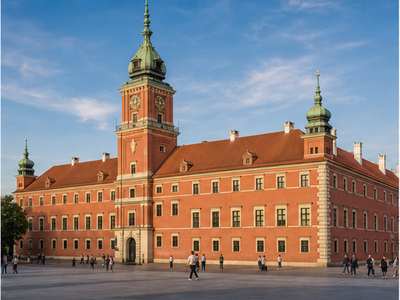
Royal Castle Warsaw
Royal Castle Warsaw is a clear heritage marker in Warsaw, best used as a fixed point when grouping nearby streets, monuments and viewpoints.
View on map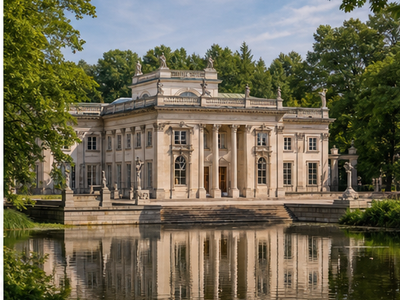
Lazienki Park
Lazienki Park adds outdoor time to a Warsaw stay, with open space, views or waterfront breathing room between denser city sights.
View on map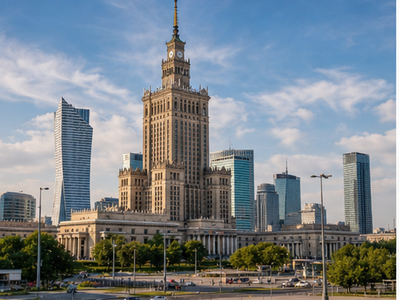
Palace of Culture and Science
Palace of Culture and Science anchors the historic and ceremonial side of Warsaw, making it a practical stop for architecture, local memory and orientation.
View on map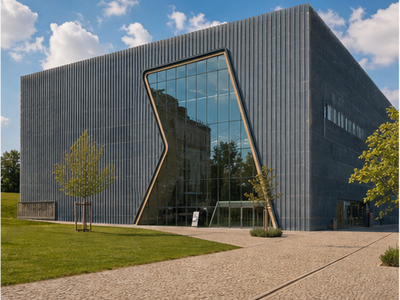
POLIN Museum
POLIN Museum is a key Warsaw culture stop, useful for understanding local history, collections and rainy-day planning near the main sightseeing route.
View on map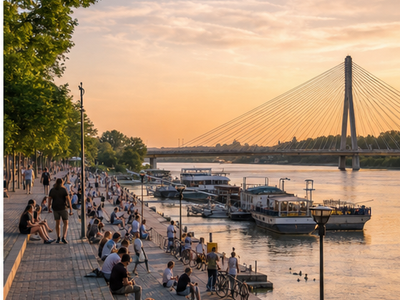
Wilanow Palace
Wilanow Palace anchors the historic and ceremonial side of Warsaw, making it a practical stop for architecture, local memory and orientation.
View on mapStay overview
Start with Srodmiescie for the easiest first Warsaw stay, then compare Old Town and Wola when price, nightlife, quieter evenings or transfer timing matter more than being beside every major sight.
Hotels & areas
Warsaw hotel choice is mostly about repeat journeys: use Srodmiescie for sightseeing, Old Town for a different local base, and Wola or Praga when views, parking, airport timing or longer stays matter.
Srodmiescie
Srodmiescie is useful when a Warsaw stay needs more local restaurants, apartment options or quieter nights outside the busiest core.
Best for: local stays, restaurants, quieter nightsSee hotel optionsOld Town
Old Town is the most practical first base in Warsaw, keeping main sights, restaurants and short local transfers close.
Best for: first visits, sightseeing, restaurantsSee hotel optionsWola
Wola is useful when a Warsaw stay needs more local restaurants, apartment options or quieter nights outside the busiest core.
Best for: local stays, restaurants, quieter nightsSee hotel optionsPraga
Praga is useful when a Warsaw stay needs more local restaurants, apartment options or quieter nights outside the busiest core.
Best for: local stays, restaurants, quieter nightsSee hotel optionsFlights & airports
Warsaw Chopin Airport (WAW) arrival plan
- Warsaw Chopin Airport (WAW)About 8 km from the centre
Compare airport access against hotel location, arrival time, rental car pickup, late flights and onward driving before choosing the first night base.
- Warsaw Modlin Airport (WMI)About 35 km from the centre
Compare airport access against hotel location, arrival time, rental car pickup, late flights and onward driving before choosing the first night base.
Rental cars
Warsaw day-trip car use
Do not rent a car for central Warsaw unless parking and traffic are part of the plan; use one mainly for regional day trips.
Compare rental carsTravel tips
Best base
Choose Srodmiescie for a first stay because it keeps main sights, restaurants and practical local movement close.
Airport timing
Leave extra time for Warsaw Chopin, especially for early flights, late arrivals, traffic or unfamiliar transfer routes.
Local movement
Plan each day in clusters around Old Town Warsaw and Royal Castle Warsaw so transfers do not consume the best sightseeing hours.
Day trips
Keep one flexible slot for nearby routes from Warsaw, checking weather, transport and opening hours before committing.
Nearby ideas
Heritage · about 1 h · bus from Warszawa Zachodnia to Sochaczew
Żelazowa Wola
Chopin's birthplace manor in a park, with piano recitals in the house on summer weekends.
View on mapNature · about 45 min · bus from Metro Młociny to Izabelin
Kampinos National Park
Inland dunes and marsh forest on the city's edge, with 360 kilometres of marked trails.
View on mapTown · about 1 h 15 min · train from Warszawa Centralna
Łódź
A textile boomtown of red-brick mills, with Piotrkowska Street running four kilometres through it.
View on mapHeritage · about 45 min · train from Warszawa Centralna to Modlin
Modlin Fortress
A Napoleonic fortress with the longest barracks building in Europe, at the meeting of the Vistula and Narew.
View on mapCity history
The 237-metre Palace of Culture and Science resembling New York's Empire State Building was built as a gift from the Soviet Union.
The Prince of Płock, Bolesław II of Masovia, established the modern-day city in about 1300 and the first historical document attesting to the existence of a castellany dates to 1313.
1300–1800 The first fortified settlements on the site of today's Warsaw were located in Bródno (9th/10th century) and Jazdów (12th/13th century).
With the completion of St John's Cathedral in 1390, Warsaw became one of the seats of the Dukes of Masovia and was officially made capital of the Masovian Duchy in 1413.
Following the sudden death of Janusz III and the extinction of the local ducal line, Masovia was incorporated into the Kingdom of Poland in 1526.
In 1529, Warsaw for the first time became the seat of a General Sejm and held that privilege permanently from 1569.
In 1573, the city gave its name to the Warsaw Confederation which formally established religious freedom in the Polish–Lithuanian Commonwealth.
The Załuski Library, the first Polish public library and the largest at the time, was founded in 1747.
Warsaw remained the capital of the Polish–Lithuanian Commonwealth until 1795 when it was annexed by the Kingdom of Prussia in the third and final partition of Poland; it subsequently became the capital of the.
During this time, Louis XVIII of France spent his exile in Warsaw under the pseudonym Comte de Lille. 1800–1939 Warsaw was made the capital of a newly created French client state, known as the.
Warszawa Główna railway station (1932–1939) was not completed due to the outbreak of the Second World War.
After Jazdów was raided by nearby clans and dukes, a new fortified settlement was established on the site of a small fishing village called "Warszowa".
The existing older settlement became eventually known as the Old Town.
Due to its central location between the capitals of the Commonwealth's two component parts, Poland and Lithuania, which were Kraków and Vilnius respectively, Warsaw became the capital of the Commonwealth and the Polish Crown.