Forecast
Trondheim
Local time--:--
Europe/OsloWeather Forecast
Trondheim, NorwayOpen-Meteo forecast.
Trondheim city overview
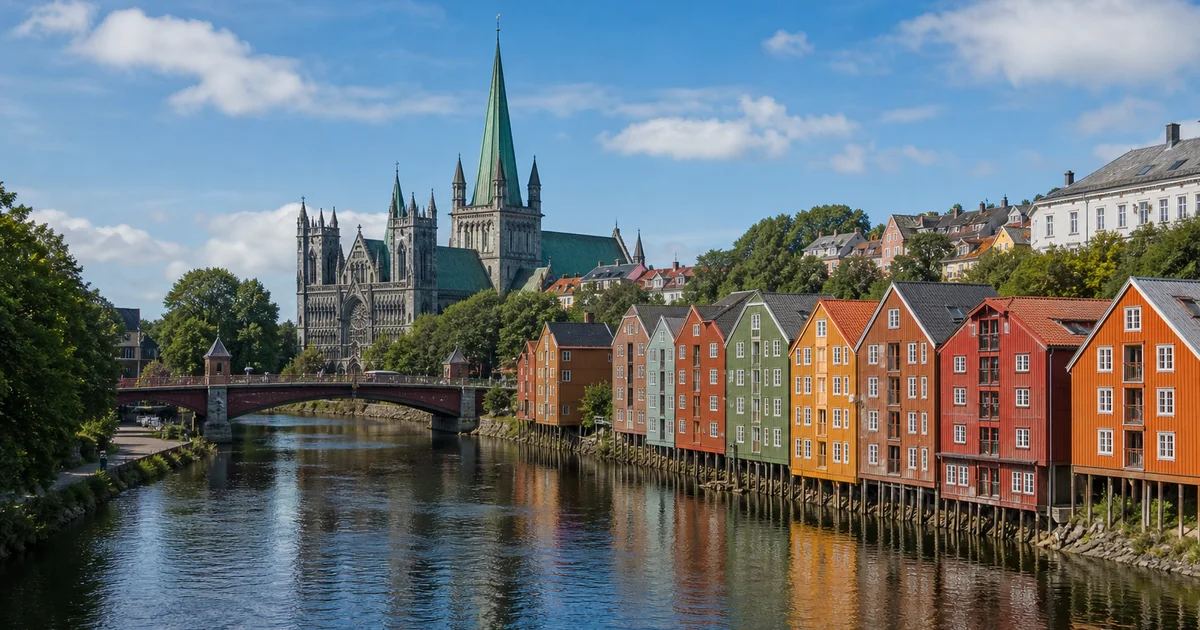
Trondheim works best as a base in Norway when you anchor days around Nidaros Cathedral, Bakklandet and Old Town Bridge. Use those sights to understand the city's history, street life and visitor rhythm. Trondheim Værnes handles the main arrival flow, so hotel choice should balance the centre, transfer time and day-trip plans.

Worth seeing
Nidaros Cathedral
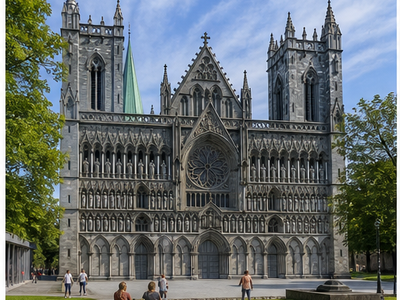
Nidaros Cathedral anchors the historic and ceremonial side of Trondheim, making it a practical stop for architecture, local memory and orientation.
View on map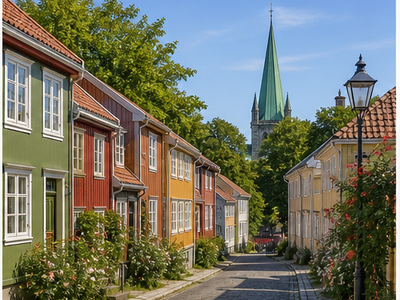
Bakklandet
Bakklandet is a named stop in Trondheim worth keeping on the route when it fits the day's transport, timing and neighborhood plan.
View on map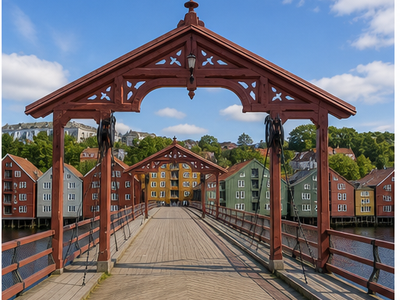
Old Town Bridge
Old Town Bridge is a clear heritage marker in Trondheim, best used as a fixed point when grouping nearby streets, monuments and viewpoints.
View on map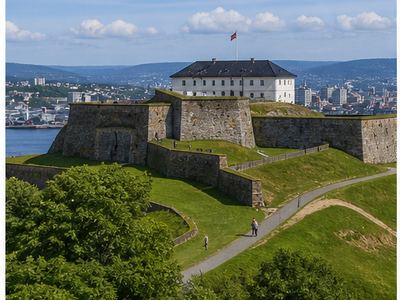
Kristiansten Fortress
Kristiansten Fortress is a clear heritage marker in Trondheim, best used as a fixed point when grouping nearby streets, monuments and viewpoints.
View on map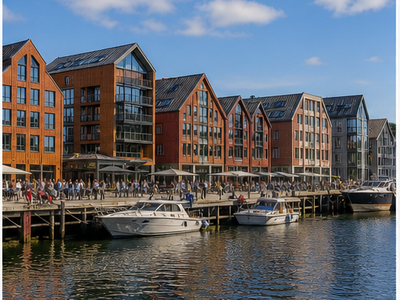
Solsiden
Solsiden is a named stop in Trondheim worth keeping on the route when it fits the day's transport, timing and neighborhood plan.
View on map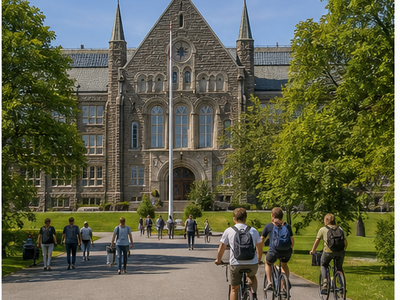
NTNU campus
NTNU campus is a named stop in Trondheim worth keeping on the route when it fits the day's transport, timing and neighborhood plan.
View on mapStay overview
Start with City centre for the easiest first Trondheim stay, then compare Old Town and Waterfront when price, nightlife, quieter evenings or transfer timing matter more than being beside every major sight.
Hotels & areas
Trondheim hotel choice is mostly about repeat journeys: use City centre for sightseeing, Old Town for a different local base, and Waterfront or Airport area when views, parking, airport timing or longer stays matter.
City centre
City centre is the most practical first base in Trondheim, keeping main sights, restaurants and short local transfers close.
Best for: first visits, sightseeing, restaurantsSee hotel optionsOld Town
Old Town is the most practical first base in Trondheim, keeping main sights, restaurants and short local transfers close.
Best for: first visits, sightseeing, restaurantsSee hotel optionsWaterfront
Waterfront suits travellers who want views, evening walks and a calmer base while still keeping central Trondheim reachable.
Best for: views, quieter evenings, walksSee hotel optionsAirport area
Airport area works mainly for early departures, late arrivals or car pickup, not for a first Trondheim sightseeing base.
Best for: early flights, late arrivals, car pickupSee hotel optionsFlights & airports
Trondheim Airport, Værnes (TRD) arrival plan
- Trondheim Airport, Værnes (TRD)About 26 km from the centre
Compare airport access against hotel location, arrival time, rental car pickup, late flights and onward driving before choosing the first night base.
- Ørland Airport (OLA)About 49 km from the centre
Compare airport access against hotel location, arrival time, rental car pickup, late flights and onward driving before choosing the first night base.
Rental cars
Trondheim day-trip car use
Do not rent a car for central Trondheim unless parking and traffic are part of the plan; use one mainly for regional day trips.
Compare rental carsTravel tips
Best base
Choose City centre for a first stay because it keeps main sights, restaurants and practical local movement close.
Airport timing
Leave extra time for Trondheim Værnes, especially for early flights, late arrivals, traffic or unfamiliar transfer routes.
Local movement
Plan each day in clusters around Nidaros Cathedral and Bakklandet so transfers do not consume the best sightseeing hours.
Day trips
Keep one flexible slot for nearby routes from Trondheim, checking weather, transport and opening hours before committing.
Nearby ideas
Island · about 25 min · boat from Ravnkloa, running in summer
Munkholmen
A fortress islet that has been a monastery, a prison and a customs house, with a swimming jetty.
View on mapPark · about 25 min · bus 3 or 4 towards Lade
Ringve Botanical Garden
A music museum in a manor house, surrounded by a botanical garden on the fjord slope.
View on mapNature · about 25 min · Gråkallbanen tram line 1 to Lian
Bymarka
Eighty square kilometres of forest and lakes reached on the world's northernmost tramway.
View on mapCity history
The city was established in 997 by Olav Tryggvason and it was originally named Nidaros (Old Norse: Niðaróss).
From 1152, Trondheim was the seat of the Archbishop of Nidaros for Norway, which operated from the Archbishop's Palace.
It was also frequently used as the king's seat and was Norway's capital until 1217.
The 1651 fire destroyed 90% of all buildings within the city limits.
After the Treaty of Roskilde on 26 February 1658, Trondheim and the rest of Trøndelag became Swedish territory briefly.
After the "Horneman Fire" in 1681, there was an almost total reconstruction of the city, overseen by General Johan Caspar von Cicignon, originally from Luxembourg.
The city of Trondheim was established on 1 January 1838 (see formannskapsdistrikt law).
In 1924, the name of the Norwegian capital city was changed from Kristiania to Oslo, removing the name referencing a Danish King in favor of the very old name Oslo.
The Trondhjem Cathedral would be changed to Nidaros Cathedral effective on 1 July 1929 and the name of the city would change to Nidaros starting on 1 January 1930.
During the Second World War, Trondheim was occupied by Nazi Germany from 9 April 1940, the first day of the invasion of Norway, until the end of the war in Europe, 8 May 1945.
The scales symbolise justice and the motif is based on the political philosophy of the 13th century, where the balance of power between king and church was an important issue.
During the late Middle Ages, the city name was commonly shortened to Þróndheimr, dropping the kaupanger part, and over time the name became Trondhjem, using the Dano-Norwegian spelling rather than the Old Norse spelling.
Some scholars believe that the famous Lewis chessmen, 12th-century chess pieces carved from walrus ivory that were found in the Hebrides and are now at the British Museum, may have been made in Trondheim.
Broad avenues, such as Munkegata, were created, without regard for private property rights, to limit the damage from future fires.