Forecast
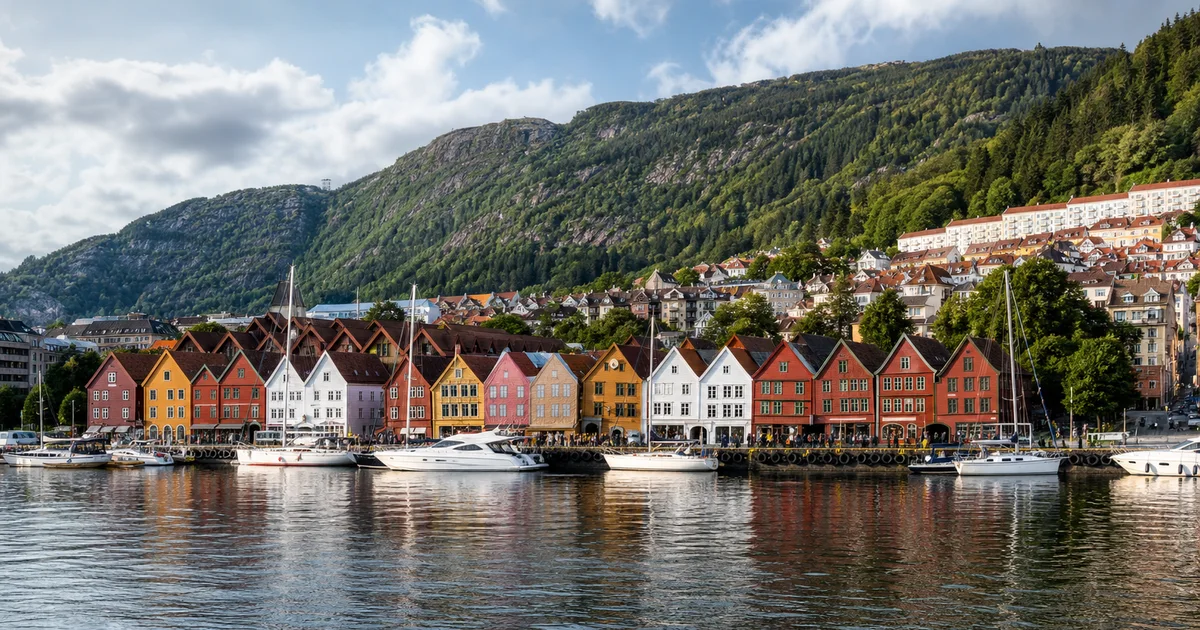
Bergen
Local time--:--
Europe/OsloWeather Forecast
Bergen, NorwayOpen-Meteo forecast.
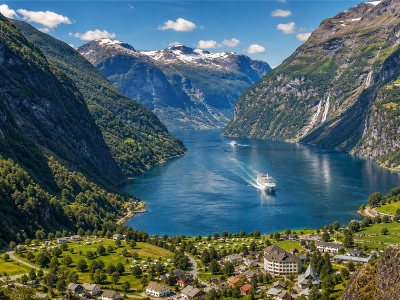
Bergen city overview
Bergen works best as a base in Norway when you anchor days around Bryggen, Floyen and Ulriken. Use those sights to understand the city's history, street life and visitor rhythm. Bergen Flesland handles the main arrival flow, so hotel choice should balance the centre, transfer time and day-trip plans.

Worth seeing
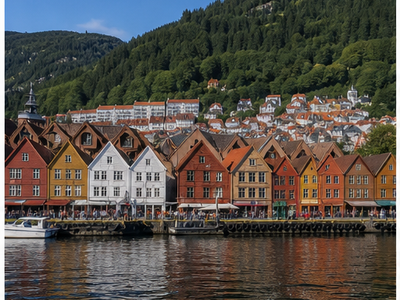
Bryggen
Bryggen is a named stop in Bergen worth keeping on the route when it fits the day's transport, timing and neighborhood plan.
View on map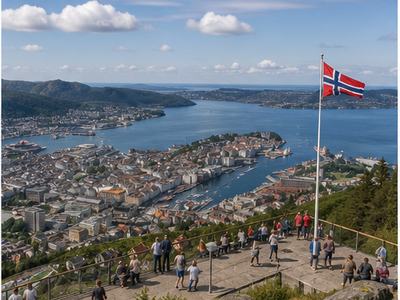
Floyen
Floyen is a named stop in Bergen worth keeping on the route when it fits the day's transport, timing and neighborhood plan.
View on map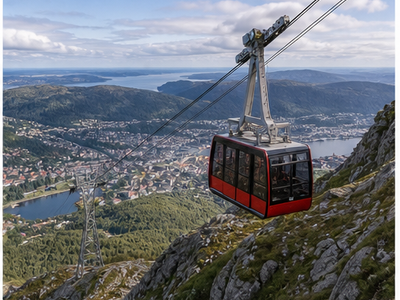
Ulriken
Ulriken is a named stop in Bergen worth keeping on the route when it fits the day's transport, timing and neighborhood plan.
View on map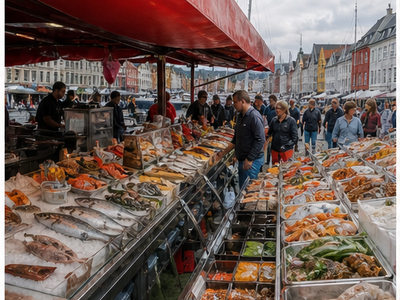
Fish Market
Fish Market gives Bergen a concrete street-life stop, with food, everyday shopping and local movement that helps visitors read the city.
View on map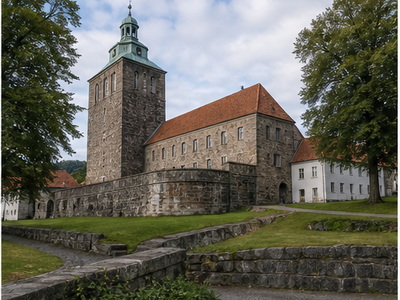
Bergenhus Fortress
Bergenhus Fortress is a clear heritage marker in Bergen, best used as a fixed point when grouping nearby streets, monuments and viewpoints.
View on map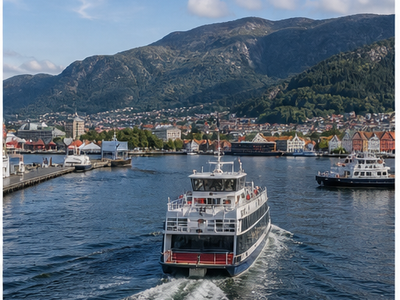
Fjord cruises
Fjord cruises is a named stop in Bergen worth keeping on the route when it fits the day's transport, timing and neighborhood plan.
View on mapStay overview
Start with City centre for the easiest first Bergen stay, then compare Old Town and Waterfront when price, nightlife, quieter evenings or transfer timing matter more than being beside every major sight.
Hotels & areas
Bergen hotel choice is mostly about repeat journeys: use City centre for sightseeing, Old Town for a different local base, and Waterfront or Airport area when views, parking, airport timing or longer stays matter.
City centre
City centre is the most practical first base in Bergen, keeping main sights, restaurants and short local transfers close.
Best for: first visits, sightseeing, restaurantsSee hotel optionsOld Town
Old Town is the most practical first base in Bergen, keeping main sights, restaurants and short local transfers close.
Best for: first visits, sightseeing, restaurantsSee hotel optionsWaterfront
Waterfront suits travellers who want views, evening walks and a calmer base while still keeping central Bergen reachable.
Best for: views, quieter evenings, walksSee hotel optionsAirport area
Airport area works mainly for early departures, late arrivals or car pickup, not for a first Bergen sightseeing base.
Best for: early flights, late arrivals, car pickupSee hotel optionsFlights & airports
Bergen Airport, Flesland (BGO) arrival plan
- Bergen Airport, Flesland (BGO)About 13 km from the centre
Compare airport access against hotel location, arrival time, rental car pickup, late flights and onward driving before choosing the first night base.
- Stord Airport, Sørstokken (SRP)About 67 km from the centre
Compare airport access against hotel location, arrival time, rental car pickup, late flights and onward driving before choosing the first night base.
Rental cars
Bergen day-trip car use
Do not rent a car for central Bergen unless parking and traffic are part of the plan; use one mainly for regional day trips.
Compare rental carsTravel tips
Best base
Choose City centre for a first stay because it keeps main sights, restaurants and practical local movement close.
Airport timing
Leave extra time for Bergen Flesland, especially for early flights, late arrivals, traffic or unfamiliar transfer routes.
Local movement
Plan each day in clusters around Bryggen and Floyen so transfers do not consume the best sightseeing hours.
Day trips
Keep one flexible slot for nearby routes from Bergen, checking weather, transport and opening hours before committing.
Nearby ideas
Heritage · about 30 min · Bybanen light rail to Hop, then a 20-minute walk
Troldhaugen
Grieg's villa and the hut where he composed, with lunchtime recitals through the summer.
View on mapIsland · about 45 min · bus from Bergen bus station over the Osterøy bridge
Osterøy
Norway's largest inland island, with the Havrå farm cluster kept as it was worked for centuries.
View on mapCity history
The city of Bergen was traditionally thought to have been founded by king Olav Kyrre, son of Harald Hardråde in 1070 AD, four years after the Viking Age in England ended with the Battle.
In 1198, the Bagler faction set fire to the city in connection with a battle against the Birkebeiner faction during the civil war.
The functions of the capital city were lost to Oslo during the reign of King Haakon V (1299–1319).
In 1413 another fire struck the city, and 14 churches were destroyed.
In 1665, the city's harbour was the site of the Battle of Vågen, when an English naval flotilla attacked a Dutch merchant and treasure fleet supported by the city's garrison.
Accidental fires sometimes got out of control, and one in 1702 reduced most of the town to ashes.
The Bergen stock exchange, the Bergen børs, was established in 1813.
It was established as a municipality on 1 January 1838 (see formannskapsdistrikt).
During World War II, Bergen was occupied on the first day of the German invasion on 9 April 1940, after a brief fight between German ships and the Norwegian coastal artillery.
On 20 April 1944, during the German occupation, the Dutch cargo ship Voorbode anchored off the Bergenhus Fortress, loaded with over 120 tons of explosives, and blew up, killing at least 150 people and.
Today, Bergen is part of Vestland county, which was created in 2020 after the merger of Hordaland and Sogn og Fjordane. Fires The city's history is marked by numerous great fires.
Modern research has, however, discovered that a trading settlement had already been established in the 1020s or 1030s.
Bergen gradually assumed the function of capital of Norway in the early 13th century, as the first city where a rudimentary central administration was established.
During the 14th century, North German merchants, who had already been present in substantial numbers since the 13th century, founded one of the four Kontore of the Hanseatic League at Bryggen in Bergen.