Forecast
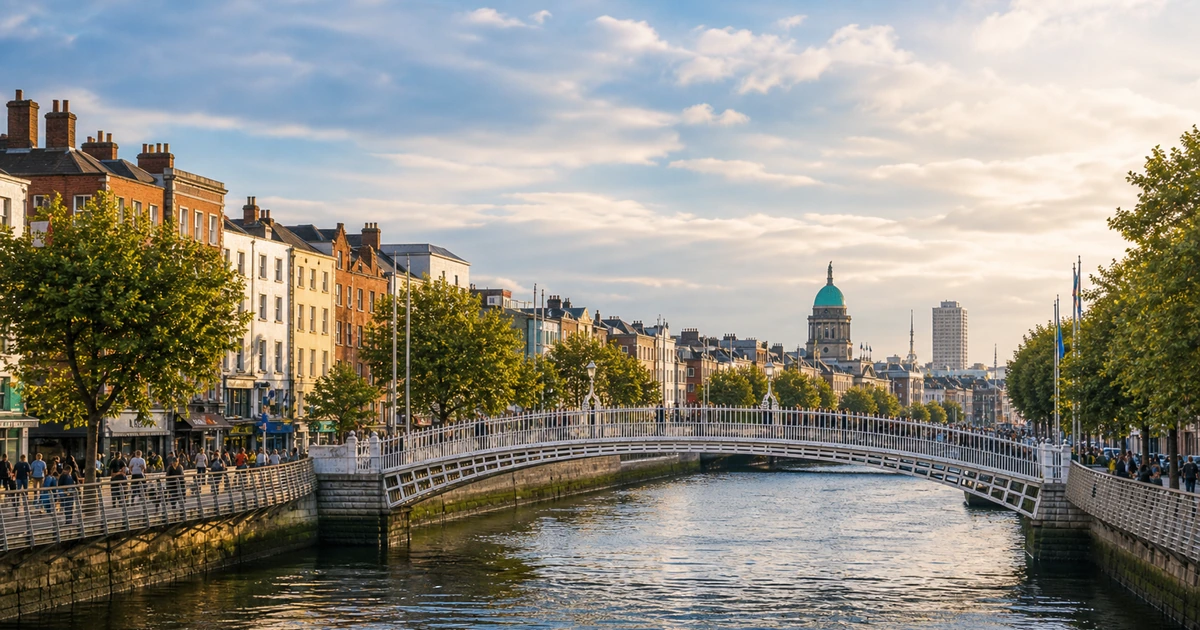
Dublin
Local time--:--
Europe/DublinWeather Forecast
Dublin, IrelandOpen-Meteo forecast.
Dublin city overview
Dublin works best as a base in Ireland when you anchor days around Trinity College Dublin, Temple Bar and Dublin Castle. Use those sights to understand the city's history, street life and visitor rhythm. Dublin Airport handles the main arrival flow, so hotel choice should balance the centre, transfer time and day-trip plans.

Worth seeing
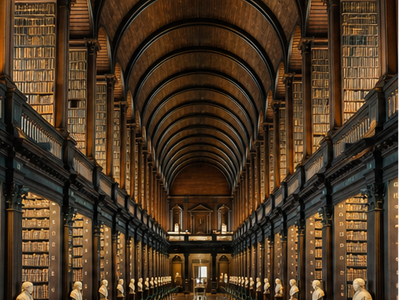
Trinity College Dublin
Trinity College Dublin is a named stop in Dublin worth keeping on the route when it fits the day's transport, timing and neighborhood plan.
View on map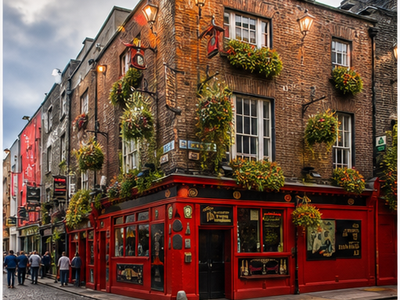
Temple Bar
Temple Bar anchors the historic and ceremonial side of Dublin, making it a practical stop for architecture, local memory and orientation.
View on map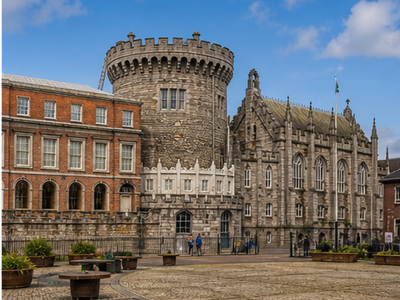
Dublin Castle
Dublin Castle is a clear heritage marker in Dublin, best used as a fixed point when grouping nearby streets, monuments and viewpoints.
View on map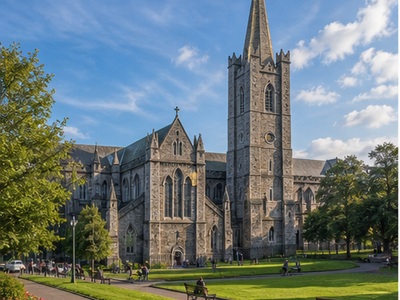
St. Patrick's Cathedral Dublin
St. Patrick's Cathedral Dublin anchors the historic and ceremonial side of Dublin, making it a practical stop for architecture, local memory and orientation.
View on map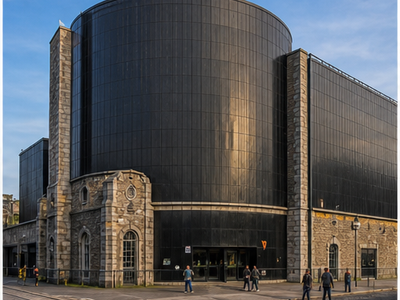
Guinness Storehouse
Guinness Storehouse is a named stop in Dublin worth keeping on the route when it fits the day's transport, timing and neighborhood plan.
View on map
Phoenix Park
Phoenix Park adds outdoor time to a Dublin stay, with open space, views or waterfront breathing room between denser city sights.
View on mapStay overview
Start with Temple Bar for the easiest first Dublin stay, then compare St Stephen's Green and The Liberties when price, nightlife, quieter evenings or transfer timing matter more than being beside every major sight.
Hotels & areas
Dublin hotel choice is mostly about repeat journeys: use Temple Bar for sightseeing, St Stephen's Green for a different local base, and The Liberties or Docklands when views, parking, airport timing or longer stays matter.
Temple Bar
Temple Bar is useful when a Dublin stay needs more local restaurants, apartment options or quieter nights outside the busiest core.
Best for: local stays, restaurants, quieter nightsSee hotel optionsSt Stephen's Green
St Stephen's Green is useful when a Dublin stay needs more local restaurants, apartment options or quieter nights outside the busiest core.
Best for: local stays, restaurants, quieter nightsSee hotel optionsThe Liberties
The Liberties is useful when a Dublin stay needs more local restaurants, apartment options or quieter nights outside the busiest core.
Best for: local stays, restaurants, quieter nightsSee hotel optionsDocklands
Docklands suits travellers who want views, evening walks and a calmer base while still keeping central Dublin reachable.
Best for: views, quieter evenings, walksSee hotel optionsFlights & airports
Dublin Airport (DUB) arrival plan
- Dublin Airport (DUB)About 11 km from the centre
Compare airport access against hotel location, arrival time, rental car pickup, late flights and onward driving before choosing the first night base.
Rental cars
Dublin day-trip car use
Do not rent a car for central Dublin unless parking and traffic are part of the plan; use one mainly for regional day trips.
Compare rental carsTravel tips
Best base
Choose Temple Bar for a first stay because it keeps main sights, restaurants and practical local movement close.
Airport timing
Leave extra time for Dublin Airport, especially for early flights, late arrivals, traffic or unfamiliar transfer routes.
Local movement
Plan each day in clusters around Trinity College Dublin and Temple Bar so transfers do not consume the best sightseeing hours.
Day trips
Keep one flexible slot for nearby routes from Dublin, checking weather, transport and opening hours before committing.
Nearby ideas
Town · about 30 min · DART train north from Dublin Connolly
Howth
A fishing harbour with seal-watched piers and a cliff loop round the head.
View on mapNature · about 1 h 15 min · St Kevin's Bus from St Stephen's Green
Glendalough
A sixth-century monastic city with a round tower, between two lakes in the Wicklow Mountains.
View on mapHeritage · about 35 min · DART or commuter train to Malahide
Malahide Castle
Eight hundred years of the same family, with a walled botanical garden and a butterfly house.
View on mapHeritage · about 1 h · car north on the M1 to the Brú na Bóinne visitor centre
Newgrange
A passage tomb older than the pyramids, aligned so the winter solstice sun reaches the chamber.
View on mapCity history
In 841, the Vikings established a fortified base in Dublin.
Since the beginning of Norman rule in the 12th century, the city has functioned as the capital in varying geopolitical entities: Lordship of Ireland (1171–1541), Kingdom of Ireland (1541–1800), as part of the United.
Dublin Castle, which became the centre of Anglo-Norman power in Ireland, was founded in 1204 as a major defensive work on the orders of King John of England.
Determined to make Dublin a Protestant city, Queen Elizabeth I established Trinity College in 1592 as a solely Protestant university and ordered that the Catholic St.
By 1698 the manufacture of wool employed 12,000 people. Early modern As the city continued to prosper during the 18th century, Georgian Dublin became, for a short period, the second-largest city of the British.
Over 1.5 million yards of linen were exported from Ireland in 1710, rising to almost 19 million yards by 1779. Late modern and contemporary Dublin suffered a period of political and economic decline during.
The Wide Streets Commission was established in 1757 at the request of Dublin Corporation to govern architectural standards on the layout of streets, bridges, and buildings.
In 1759, the Guinness brewery was founded, and would eventually grow to become the largest brewery in the world and the largest employer in Dublin.
The Easter Rising of 1916, the Irish War of Independence, and the subsequent Irish Civil War resulted in significant physical destruction in central Dublin.
Following the partition of Ireland in 1922, it became the capital of the Irish Free State (1922–1937) and is now the capital of Ireland.
The Irish government recognised 988 as the year in which the city was settled and that this first settlement would later become the city of Dublin; Dublin celebrated its 'official' millennium in 1988.
During the 1700s, linen was not subject to the same trade restrictions with England as wool, and became the most important Irish export.
Beginning in the 9th and 10th centuries, two settlements later became modern Dublin.
The Government of the Irish Free State rebuilt the city centre and located the new parliament, the Oireachtas, in Leinster House.