Forecast
Berlin
Local time--:--
Europe/BerlinWeather Forecast
Berlin, GermanyOpen-Meteo forecast.
Berlin city overview
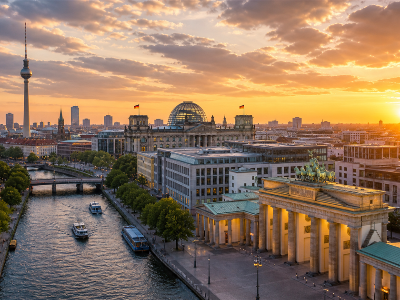
Berlin is a sprawling capital of museums, memorials, nightlife and neighbourhood contrasts. Start at Brandenburg Gate, walk the Berlin Wall Memorial, then choose Museum Island, Kreuzberg or Prenzlauer Berg depending on the day. Berlin Brandenburg Airport is the single main airport, connected by rail to the city.
Worth seeing
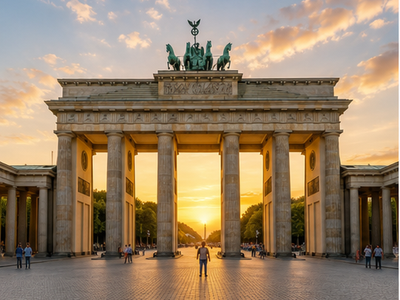
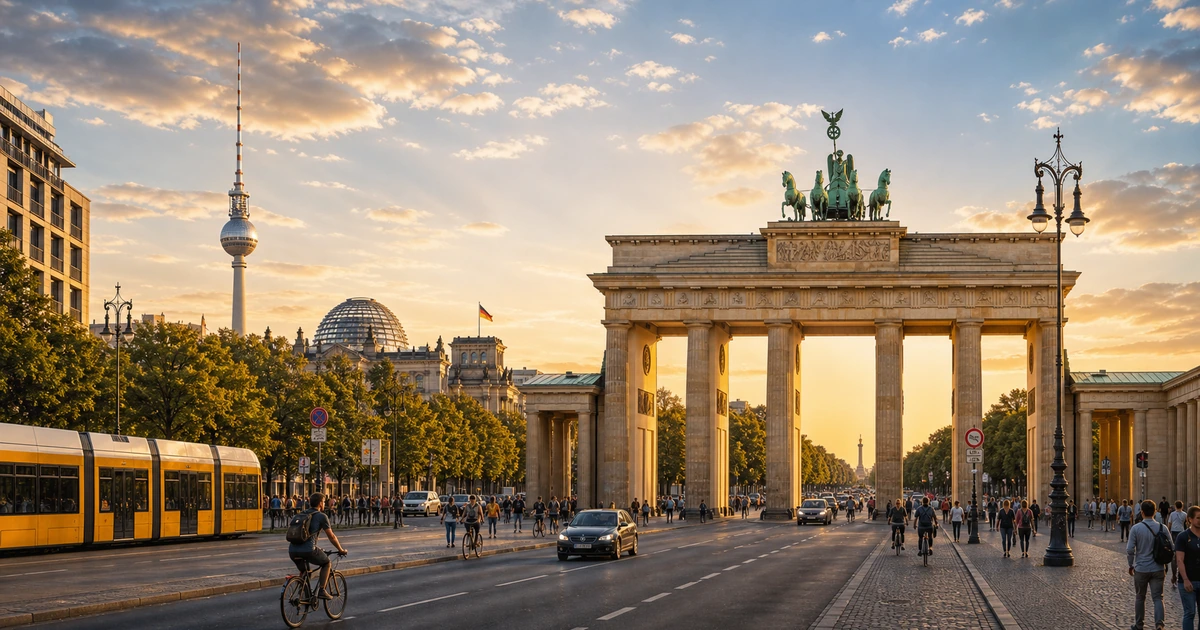
Brandenburg Gate
Brandenburg Gate is a clear heritage marker in Berlin, best used as a fixed point when grouping nearby streets, monuments and viewpoints.
View on map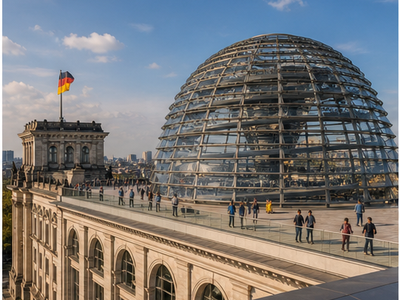
Berlin Wall Memorial
Berlin Wall Memorial is a clear heritage marker in Berlin, best used as a fixed point when grouping nearby streets, monuments and viewpoints.
View on map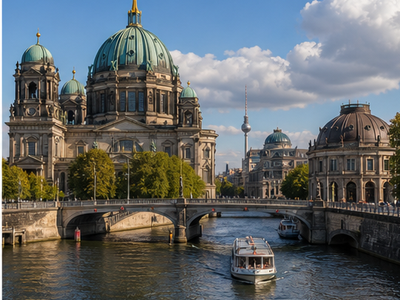
Museum Island
Museum Island gives Berlin a strong culture stop for museums, exhibitions or local collections, and works best as an indoor anchor in the day's route.
View on map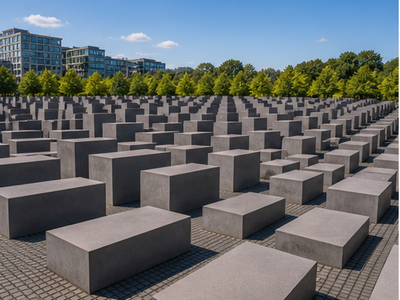
Reichstag
Reichstag is a named stop in Berlin worth keeping on the route when it fits the day's transport, timing and neighborhood plan.
View on map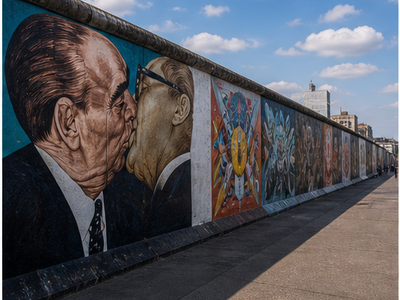
Kreuzberg
Kreuzberg is a named stop in Berlin worth keeping on the route when it fits the day's transport, timing and neighborhood plan.
View on map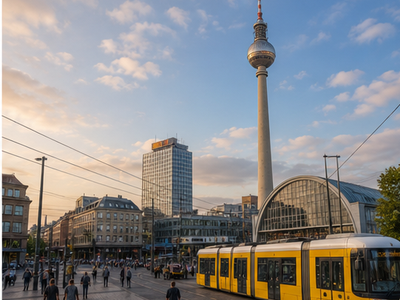
Tempelhofer Feld
Tempelhofer Feld is a named stop in Berlin worth keeping on the route when it fits the day's transport, timing and neighborhood plan.
View on mapStay overview
Mitte is the easiest first base, Kreuzberg works for nightlife and food, Prenzlauer Berg suits longer cafe-led stays, and Charlottenburg is practical for classic hotels, shopping and western museums.
Hotels & areas
Berlin is large, so transit matters. Pick a district that matches your evenings, then check U-Bahn, S-Bahn and tram links rather than assuming all central addresses feel close.
Mitte
Mitte is best for first stays, with museums, memorials, government sights and strong transit links.
Best for: first visits, museums, landmarksSee hotel optionsKreuzberg
Kreuzberg suits nightlife, casual food, canal walks and visitors wanting less polished Berlin energy.
Best for: nightlife, food, canalsSee hotel optionsPrenzlauer Berg
Prenzlauer Berg is calmer, with cafes, apartments, parks and family-friendly streets north of Mitte.
Best for: cafes, families, longer staysSee hotel optionsCharlottenburg
Charlottenburg offers classic hotels, shopping, museums and easier access to western Berlin sights.
Best for: shopping, classic hotels, museumsSee hotel optionsFlights & airports
Berlin Brandenburg Airport (BER) arrival plan
- Berlin Brandenburg Airport (BER)About 19 km from the centre
To the centre: Airport Express FEX or RE7/RB14 to Hauptbahnhof; S9/S45 every 20 min, about 30 min (ABC-zone ticket (airport is zone C)).
Public transport
- S-Bahn, U-Bahn, bus and tram (BVG)Tickets in the BVG app; most S- and U-Bahn lines run all night Fri–Sat at 15-min intervals
- Taxitaxi.eu app — Base fare €4.30 + €2.10–2.80/km; Kurzstrecke up to 2 km for €6 when flagged down on the street
Rental cars
Berlin day-trip car use
Do not rent for Berlin; public transport and trains are better unless leaving for rural Brandenburg.
Compare rental carsTravel tips
Best base
Choose Mitte for a first visit, or Kreuzberg if food, nightlife and canal walks matter more.
Transit
Use BVG and VBB tickets correctly across U-Bahn, S-Bahn, trams and buses; zones matter for the airport.
Museums
Keep one indoor culture stop in the Berlin plan so rain, heat or short winter daylight do not break the day.
Day trip
Keep one side-trip day flexible from Berlin, then choose it only after checking transport frequency and opening hours.
Nearby ideas
Heritage · about 40 min · S-Bahn S7 or regional train to Potsdam Hauptbahnhof
Potsdam and Sanssouci
Frederick the Great's terraced vineyard palace and a park big enough to spend the whole day in.
View on mapNature · about 1 h · regional train RE2 to Lübben or Lübbenau
Spreewald
A maze of canals you cross by punt, with gherkins sold at every landing stage.
View on mapHeritage · about 45 min · S1 to Oranienburg, then a 20-minute walk or bus 804
Sachsenhausen Memorial
The camp the SS used as its model and training ground, kept as a memorial with free entry.
View on mapTown · about 50 min · regional train RE1 to Werder (Havel)
Werder (Havel)
An island old town among orchards; the fruit-blossom festival fills it at the end of April.
View on map
City history
In 1443, Frederick II of Brandenburg initiated the construction of a new royal palace in the twin city of Berlin-Cölln.
Officially, the Berlin-Cölln palace became the permanent residence of the Brandenburg electors of the Hohenzollern dynasty in 1486, when John Cicero took power.
In 1539, the electors and the city officially became Lutheran. 17th to 19th centuries The Thirty Years' War between 1618 and 1648 devastated Berlin.
In 1815, the city became part of the new Province of Brandenburg.
In 1861, neighboring suburbs including Wedding, Moabit and several others were incorporated into Berlin.
In 1871, Berlin became capital of the newly founded German Empire.
In 1881, it became a city district separate from Brandenburg. 20th to 21st centuries In the early 20th century, Berlin had become a fertile ground for the German Expressionist movement.
At the end of World War I, during the German Revolution, the Weimar Republic was proclaimed by Philipp Scheidemann at the Reichstag building on November 9, 1918.
In 1920, the Greater Berlin Act incorporated dozens of suburban cities, villages, and estates around Berlin into an expanded city.
On 20 June 1991, the Bundestag (German Parliament) voted to move the seat of the German capital from Bonn to Berlin, which was completed in 1999.
The traffic infrastructure of Berlin became another post unification priority, leading to the closure of Tempelhof Airport in 2008, the opening of a new Berlin Hauptbahnhof in 2006, and finally the long delayed opening.
The Industrial Revolution transformed Berlin during the 19th century; the city's economy and population expanded dramatically, and it became the main railway hub and economic center of Germany.
German merchants founded two settlements in today's city center – Berlin (or Alt-Berlin; at the site of today's Nikolaiviertel) and Cölln (on the island in the Spree now known as Museum Island).
Berlin became the capital of the new Kingdom, replacing Königsberg.