Forecast
Tbilisi
Local time--:--
Asia/TbilisiWeather Forecast
Tbilisi, GeorgiaOpen-Meteo forecast.
Tbilisi city overview
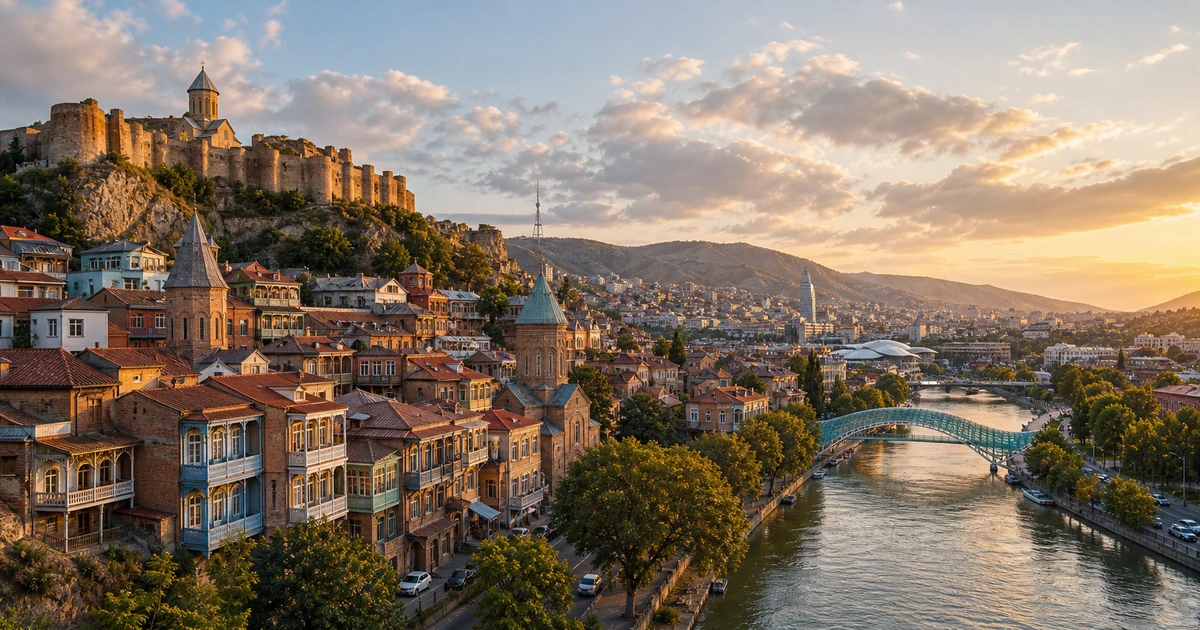
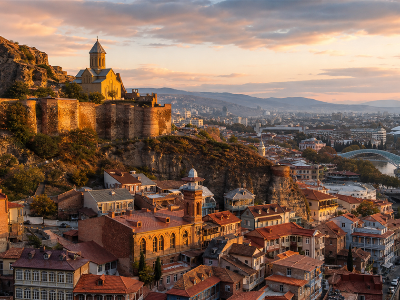
Tbilisi is a dramatic capital of balconies, sulphur baths, hilltop forts and a fast-changing food scene. Start in Old Tbilisi, climb or ride to Narikala Fortress, then cross the Bridge of Peace toward Rike Park and modern river views. Tbilisi International Airport is the main gateway, with transfers east of the centre.
Worth seeing
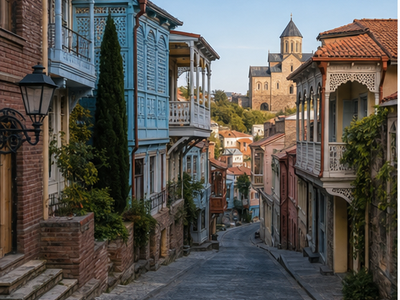
Old Tbilisi
Old Tbilisi is a named stop in Tbilisi worth keeping on the route when it fits the day's transport, timing and neighborhood plan.
View on map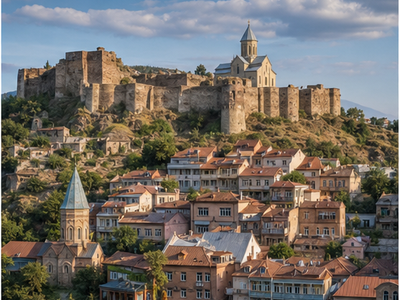
Narikala Fortress
Narikala Fortress is a clear heritage marker in Tbilisi, best used as a fixed point when grouping nearby streets, monuments and viewpoints.
View on map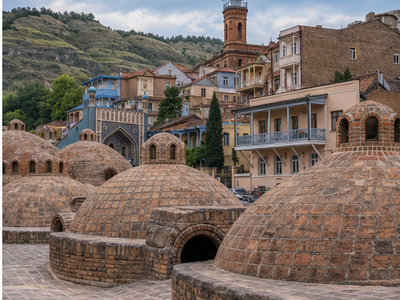
Sulphur baths
Sulphur baths is a named stop in Tbilisi worth keeping on the route when it fits the day's transport, timing and neighborhood plan.
View on map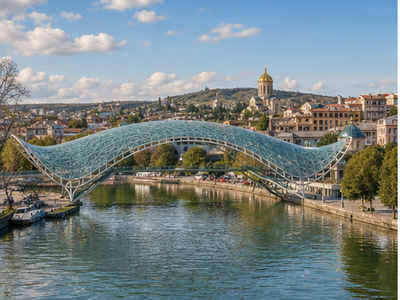
Bridge of Peace
Bridge of Peace links Old Tbilisi to Rike Park with a modern glass-and-steel crossing over the Mtkvari River.
View on map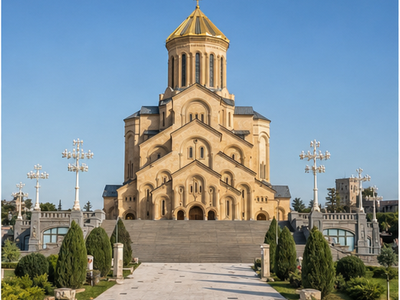
Rustaveli Avenue
Rustaveli Avenue is a named stop in Tbilisi worth keeping on the route when it fits the day's transport, timing and neighborhood plan.
View on map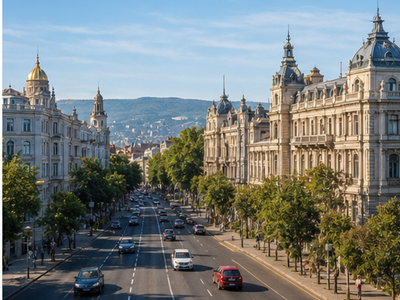
Mtatsminda Park
Mtatsminda Park gives Tbilisi a greener or more scenic stop, useful when the route needs views, shade, walking space or a slower hour.
View on mapStay overview
Old Tbilisi is the easiest first base, Sololaki adds boutique character, Vera is calmer and cafe-led, and Vake works for longer upscale stays with park access and less tourist traffic.
Hotels & areas
Tbilisi rewards staying central because hills and traffic affect short distances. Old Tbilisi and Sololaki suit sightseeing, while Vera and Vake are better for quieter evenings and longer stays.
Old Tbilisi
Old Tbilisi is best for first stays, sulphur baths, balcony streets, restaurants and walks to Narikala.
Best for: first visits, baths, restaurantsSee hotel optionsSololaki
Sololaki has historic houses, wine bars and boutique hotels close to Freedom Square and the old town.
Best for: boutique stays, wine bars, walkingSee hotel optionsVera
Vera is a leafy central district with cafes, small hotels and a calmer local rhythm.
Best for: cafes, quiet stays, local feelSee hotel optionsVake
Vake is upscale and residential, useful for longer stays, parks and restaurants away from the tourist core.
Best for: longer stays, parks, restaurantsSee hotel optionsFlights & airports
Tbilisi International Airport (TBS) arrival plan
- Tbilisi International Airport (TBS)About 10 km from the centre
Compare airport access against hotel location, arrival time, rental car pickup, late flights and onward driving before choosing the first night base.
Rental cars
Tbilisi day-trip car use
Do not rent for central Tbilisi; hire a driver or car only for wine regions, mountains and monastery trips.
Compare rental carsTravel tips
Best base
Choose the Tbilisi base by repeat journeys: sights, evening food, station access and the airport transfer should all still work.
Hills
Keep the Tbilisi plan compact: group nearby sights together and leave enough time for transfers, meals and weather changes.
Wine
Use taxis after wine bars and tastings, since Georgia's wine culture is central to evenings out.
Day trip
Keep one side-trip day flexible from Tbilisi, then choose it only after checking transport frequency and opening hours.
Nearby ideas
Heritage · about 30 min · marshrutka from Didube station
Mtskheta
Georgia's ancient capital, where Svetitskhoveli cathedral stands over the robe of Christ.
View on mapWine · about 1 h 15 min · marshrutka east from Isani towards Telavi
Kakheti wine country
Qvevri wine fermented in buried clay jars, a method used here for 8,000 years.
View on mapHeritage · about 1 h 15 min · car south-east towards the Azerbaijani border
Davit Gareja
Cave monasteries cut into a desert ridge in the sixth century, with frescoes still on the walls.
View on mapCity history
522–534), the successor of Vakhtang I, moved the capital of Iberia from Mtskheta to Tbilisi and began construction of the fortress wall that lined the city's new boundaries.
In 1065, the Seljuk Sultan Alp Arslan campaigned against the Kingdom of Georgia, subjugated Tbilisi, and built a mosque in the city. Capital of Georgia In 1121, after the Battle of Didgori against the.
Following the establishment of the Tiflis Governorate (Gubernia) in 1846, Tbilisi became its capital.
Under the national government, Tbilisi turned into the first Caucasian University City after the Tbilisi State University was founded in 1918.
In June 2015, a flood killed at least twenty people and caused animals from the city's zoo to be released into the streets. Politics and administration The status of Tbilisi, as the nation's capital.
In the 1320s, the Mongols retreated from Georgia, and Tbilisi became the capital of an independent Georgian state, once again.
Arabic dirhams were brought to Georgia following the Arab conquest in the seventh century, and a mint was founded in Tbilisi that produced coins with inscriptions in both Arabic and Georgian.
David moved his residence from Kutaisi to Tbilisi, making it the capital of a unified Georgian State, thus inaugurating the Georgian Golden Age.
The city also became an important literary and cultural center, not only for Georgia, but also for the Eastern Orthodox world of the time.
The nation itself maintained a form of "semi-independence" and did not lose its statehood, but Tbilisi would be strongly influenced by the Mongols for the next century, both politically and culturally.
During this period, many parts of Tbilisi were reconstructed and rebuilt.
Russian Imperial administrators implemented a new Western-style city plan and commissioned new buildings and infrastructure, including roads and railroads connecting Tbilisi to other important cities in the Russian Empire, such as Batumi and Poti.
The main new artery built under Russian administration was Golovin Avenue (present-day Rustaveli Avenue), on which the Viceroys of the Caucasus established their residence.
It was in the former Viceroy of the Caucasus's palace where the independence of three Transcaucasus nations – Georgia, Armenia and Azerbaijan – was declared by their respective national councils on 26 to 28.