Forecast
Aarhus
Local time--:--
Europe/CopenhagenWeather Forecast
Aarhus, DenmarkOpen-Meteo forecast.
Aarhus city overview
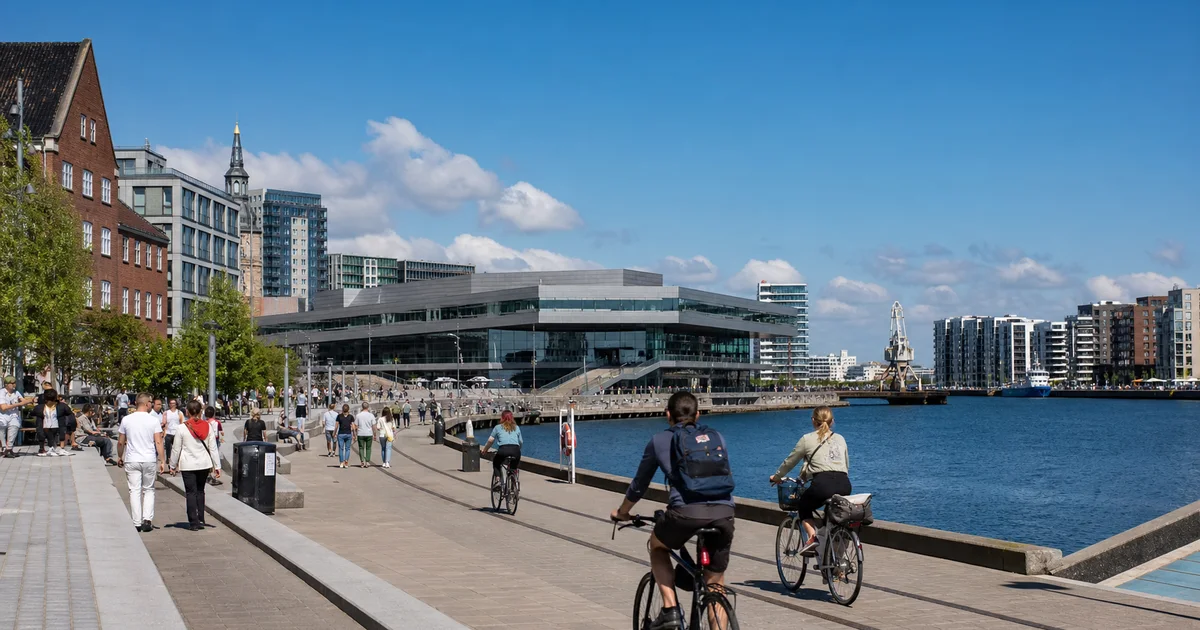
Aarhus is Denmark's second city, balancing harbour architecture, university life and strong museums on the east Jutland coast. Start at ARoS for the rainbow panorama, step into Den Gamle By for urban history, then visit Moesgaard Museum south of town. Aarhus Airport and Billund Airport both serve the region, depending on route.
Worth seeing
ARoS
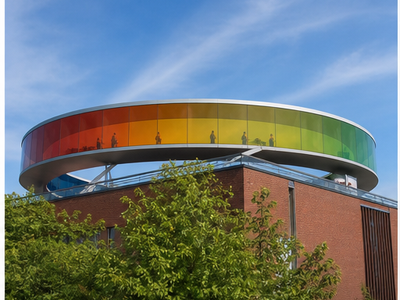
ARoS is a named stop in Aarhus worth keeping on the route when it fits the day's transport, timing and neighborhood plan.
View on map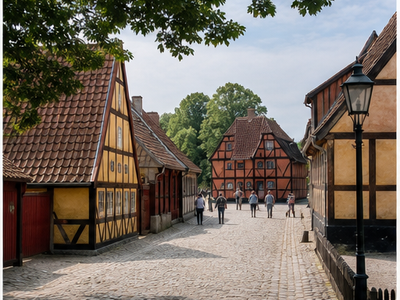
Den Gamle By
Den Gamle By is a named stop in Aarhus worth keeping on the route when it fits the day's transport, timing and neighborhood plan.
View on map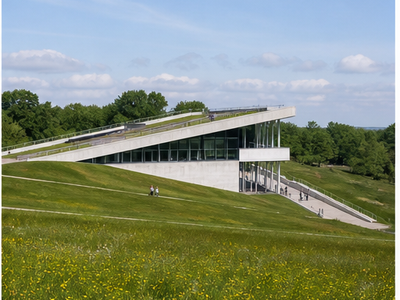
Moesgaard Museum
Moesgaard Museum gives Aarhus a strong culture stop for museums, exhibitions or local collections, and works best as an indoor anchor in the day's route.
View on map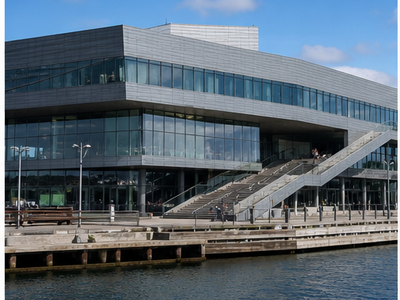
Dokk1
Dokk1 is a named stop in Aarhus worth keeping on the route when it fits the day's transport, timing and neighborhood plan.
View on map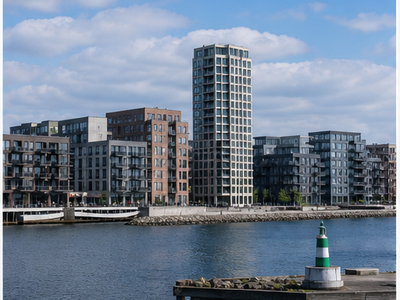
Aarhus O
Aarhus O is a named stop in Aarhus worth keeping on the route when it fits the day's transport, timing and neighborhood plan.
View on map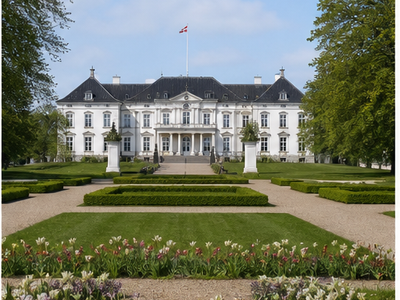
Marselisborg Palace
Marselisborg Palace is a clear heritage marker in Aarhus, best used as a fixed point when grouping nearby streets, monuments and viewpoints.
View on mapStay overview
Indre By is the safest first base, the Latin Quarter adds charm, Aarhus Ø suits waterfront architecture stays, and Frederiksbjerg works well for food-focused and longer visits near the station.
Hotels & areas
Aarhus hotel choice is pleasantly compact. Central and Latin Quarter stays are easiest for museums, Aarhus Ø gives modern harbour views, and Frederiksbjerg balances local food streets with station convenience.
Indre By
Indre By is the central base for shops, restaurants, ARoS, the Latin Quarter and easy station access.
Best for: first visits, restaurants, stationSee hotel optionsLatin Quarter
The Latin Quarter has older streets, cafes and boutiques, suited to atmospheric stays close to the centre.
Best for: cafes, boutiques, atmosphereSee hotel optionsAarhus Ø
Aarhus Ø is the modern harbour district, good for waterfront apartments, architecture and sea-bath access.
Best for: waterfront, architecture, apartmentsSee hotel optionsFrederiksbjerg
Frederiksbjerg sits south of the station with food shops, local restaurants and a calmer residential feel.
Best for: food, longer stays, local baseSee hotel optionsFlights & airports
Aarhus Airport (AAR) arrival plan
- Aarhus Airport (AAR)About 30 km from the centre
Compare airport access against hotel location, arrival time, rental car pickup, late flights and onward driving before choosing the first night base.
- Odense Hans Christian Andersen Airport (ODE)About 76 km from the centre
Compare airport access against hotel location, arrival time, rental car pickup, late flights and onward driving before choosing the first night base.
- Billund Airport (BLL)About 80 km from the centre
Compare airport access against hotel location, arrival time, rental car pickup, late flights and onward driving before choosing the first night base.
Rental cars
Aarhus day-trip car use
Skip a car inside Aarhus; rent one only for Moesgaard, Djursland or wider Jutland exploring.
Compare rental carsTravel tips
Best base
Stay in Indre By or the Latin Quarter if you want ARoS, restaurants and the station close together.
Airport choice
Compare Aarhus and Billund airports before booking; the better flight may involve a longer ground transfer.
Museum timing
Give Moesgaard Museum enough time, as it sits outside the centre and deserves more than a quick stop.
Waterfront
Bring swimwear in warm months if you plan to use the harbour baths around Aarhus Ø.
Nearby ideas
Nature · about 50 min · bus 123 north-east towards Ebeltoft
Mols Bjerge National Park
Hills left by the ice sheet, with heath, burial mounds and the Kalø castle ruin on its causeway.
View on mapTown · about 1 h · bus 123 north-east from Aarhus
Ebeltoft
Cobbled lanes and a half-timbered town hall, with the frigate Jylland in dry dock at the harbour.
View on mapNature · about 50 min · train west from Aarhus to Silkeborg
Silkeborg lakes
Denmark's lake district, with the Hjejlen paddle steamer running to the Himmelbjerget hill since 1861.
View on mapCity history
His company became an important local employer, with factory employees increasing from 100 in 1896 to 1,000 in 1931, partaking in the effective transformation of the city from a regional trade hub to an.
The early town was fortified with defensive earthen ramparts in the first part of the 900s, possibly in the year 934 on order from king Gorm the Old.
The bishopric of Aarhus dates back to at least 948 when Adam of Bremen reported that the missionary bishop Reginbrand of Aros attended the synod of Ingelheim in Germany, but the late Viking Age.
Many public and religious buildings were built in and around the town; notably Aarhus Cathedral was initiated in the late 12th century by the influential bishop Peder Vognsen, and around 1200, Aros had a.
The spelling "Aarhus" is first found in 1406 and gradually became the norm in the 17th century.
Regular steamship links with Copenhagen had begun with the Jylland in 1825–26 and the Dania (1827–36), and in 1862 Jutland's first railway was established between Aarhus and Randers.
In 1840, the harbour was moved to the coast, north of the river, where it became the largest industrial harbour outside Copenhagen over the following 15 years.
Otto Mønsted created the Danish Preserved Butter Company in 1874, focusing on butter export to England, China and Africa and later founded the Aarhus Butterine Company in 1883, the first Danish margarine factory.
Many of its cultural institutions were also established at this time such as Aarhus Theatre (1900), the original State Library (1902), Aarhus University (1928) and several hospitals. Second World War On 9 April 1940.
Discoveries after a 2003 archaeological dig included half-buried longhouses, firepits, glass pearls and a road dated to the late 700s.
The fortifications were later improved and expanded by his son Harald Bluetooth, encircling the settlement much like the defence structures found at Viking ring fortresses elsewhere.
Together with the town's geographical placement, this suggests that Aros became an important military centre in the Viking Age.
Aarhus became the largest provincial city in the country by the turn of the century and the city marketed itself as the "Capital of Jutland".
The Port of Aarhus became a hub for supplies to the Baltics and Norway, while the surrounding rail network supplied the Atlantic Wall in west Jutland and cargo headed for Germany.