Forecast
Sofia
Local time--:--
Europe/SofiaWeather Forecast
Sofia, BulgariaOpen-Meteo forecast.
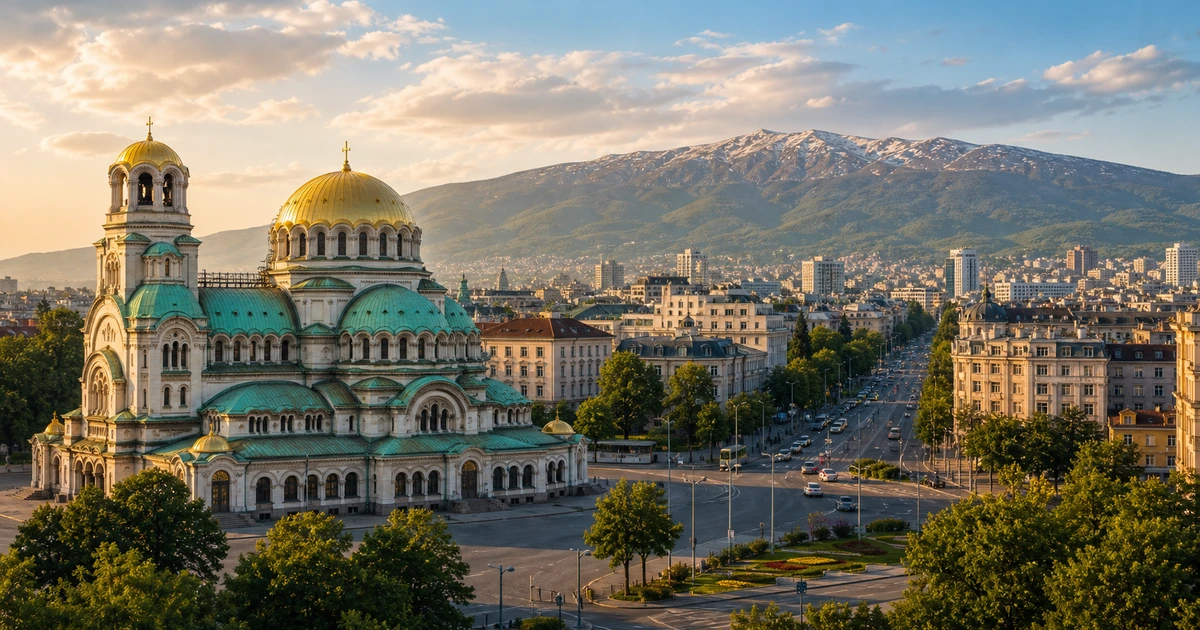
Sofia city overview
Sofia is a layered Balkan capital where Roman ruins, Orthodox churches and mountain views sit inside a working city. Start at Alexander Nevsky Cathedral, follow the Serdica ruins through the centre, then plan a half-day to Boyana Church or Vitosha Mountain. Sofia Airport is metro-linked, making arrivals unusually easy.
Worth seeing
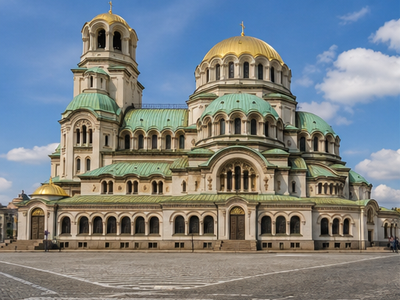
Alexander Nevsky Cathedral
Alexander Nevsky Cathedral is one of Sofia's religious landmarks; check visiting hours and dress expectations before building the route around it.
View on map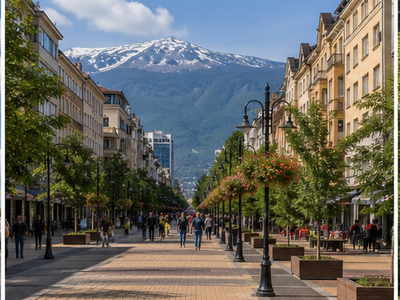
Serdica ruins
Serdica ruins is a named stop in Sofia worth keeping on the route when it fits the day's transport, timing and neighborhood plan.
View on map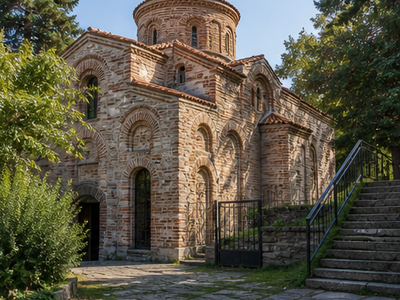
Vitosha Boulevard
Vitosha Boulevard is a named stop in Sofia worth keeping on the route when it fits the day's transport, timing and neighborhood plan.
View on map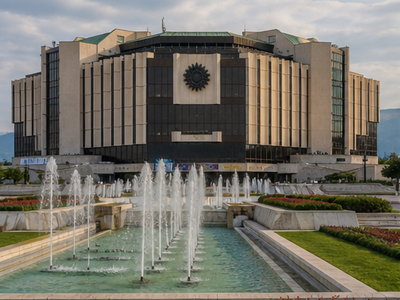
Boyana Church
Boyana Church is one of Sofia's religious landmarks; check visiting hours and dress expectations before building the route around it.
View on map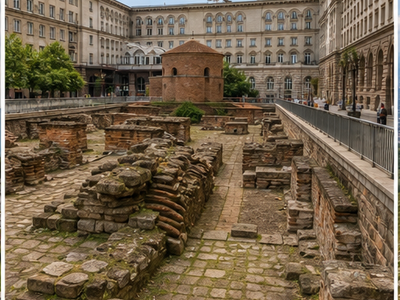
Vitosha Mountain
Vitosha Mountain gives Sofia a greener or more scenic stop, useful when the route needs views, shade, walking space or a slower hour.
View on map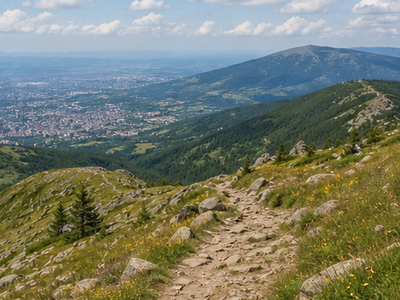
National Palace of Culture
The National Palace of Culture anchors a large park and event area south of the central shopping streets.
View on mapStay overview
Use the City Centre for the easiest first Sofia stay, Oborishte for quieter culture-focused hotels, Lozenets for business and park access, or Studentski Grad for lower prices and nightlife outside the core.
Hotels & areas
Sofia is practical by metro, so central hotels are not the only option. Still, first-time visitors usually do best near Serdica, Vitosha Boulevard or Oborishte for walkable food and sights.
City Centre
The central area around Serdica and Vitosha Boulevard is best for first stays, museums, restaurants and metro access.
Best for: first visits, metro, restaurantsSee hotel optionsOborishte
Oborishte is leafy and central, close to Alexander Nevsky Cathedral, embassies and quieter boutique hotels.
Best for: quiet stays, culture, walkingSee hotel optionsLozenets
Lozenets offers residential streets, business hotels and quick access toward South Park and Vitosha routes.
Best for: business, parks, longer staysSee hotel optionsStudentski Grad
Studentski Grad is farther out but useful for budget stays, nightlife and access to university areas.
Best for: budget, nightlife, studentsSee hotel optionsFlights & airports
Sofia Airport (SOF) arrival plan
- Sofia Airport (SOF)About 8 km from the centre
Compare airport access against hotel location, arrival time, rental car pickup, late flights and onward driving before choosing the first night base.
Rental cars
Sofia day-trip car use
Skip a car in Sofia; rent only for Rila Monastery, Plovdiv or mountain routes beyond the city.
Compare rental carsTravel tips
Best base
Stay near Serdica or Vitosha Boulevard if you want restaurants, Roman ruins and metro lines close together.
Airport metro
The airport metro is straightforward, but taxis are useful for late arrivals or hotels away from stations.
Mountain weather
Vitosha can be much cooler than central Sofia, so take a layer even on warm city days.
Day trip
Rila Monastery is the classic long day trip, while Boyana Church is easier for a shorter outing.
Nearby ideas
Heritage · about 1 h 15 min · car or coach south on the A3 motorway
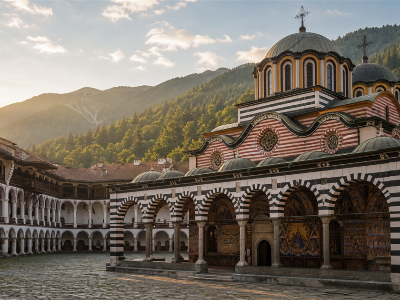
Rila Monastery
Striped arcades and painted porches in a mountain valley; Bulgaria's most important monastery.
View on mapTown · about 1 h 15 min · train or coach east from Sofia
Plovdiv
A Roman theatre still used for performances, under a revival-era old town on three hills.
View on mapSpa · about 35 min · suburban train or bus 42 west from Sofia
Bankya
A mineral spa town where the water comes out of the tap warm; the baths date from the 1900s.
View on mapUpcoming events
No upcoming Sofia events in the shared event index yet.
City history
It became a municipium during the reign of Emperor Trajan (98–117).
In 339 BC Philip II of Macedon destroyed and ravaged the town for the first time.
In 343 AD, the Council of Sardica was held in the city, in a church located where the current 6th century Church of Saint Sophia was later built.
The city was destroyed in the 447 invasion of the Huns and laid in ruins for a century.
Serdica became part of the First Bulgarian Empire during the reign of Khan Krum in 809, after a long siege.
It was once again incorporated into the restored Bulgarian Empire in 1194 at the time of Emperor Ivan Asen I and became a major administrative and cultural centre.
In 1530 Sofia became the capital of the Ottoman province (beylerbeylik) of Rumelia for about three centuries.
Since the 18th century the beylerbeys of Rumelia often stayed in Bitola, which became the official capital of the province in 1826.
In the 3rd century, it became the capital of Dacia Aureliana, and when Emperor Diocletian divided the province of Dacia Aureliana into Dacia Ripensis (at the banks of the Danube) and Dacia Mediterranea, Serdica.
Another neolithic settlement was founded in the 3rd–4th millennium BC near the site of the modern National Art Gallery, which has been the traditional centre of the city ever since.
It gradually became the most important Roman city of the region.
It grew into an important fortress and administrative centre under Krum's successor Khan Omurtag, who made it a centre of Sredets province (Sredetski komitat, Средецки комитат).
It became the capital of the beylerbeylik of Rumelia (Rumelia Eyalet), the province that administered the Ottoman lands in Europe (the Balkans), one of the two together with the beylerbeylik of Anatolia.
Thus, Sofia became the first capital on the world to be overflown by enemy aircraft.