Forecast
Tirana
Local time--:--
Europe/TiraneWeather Forecast
Tirana, AlbaniaOpen-Meteo forecast.
Tirana city overview
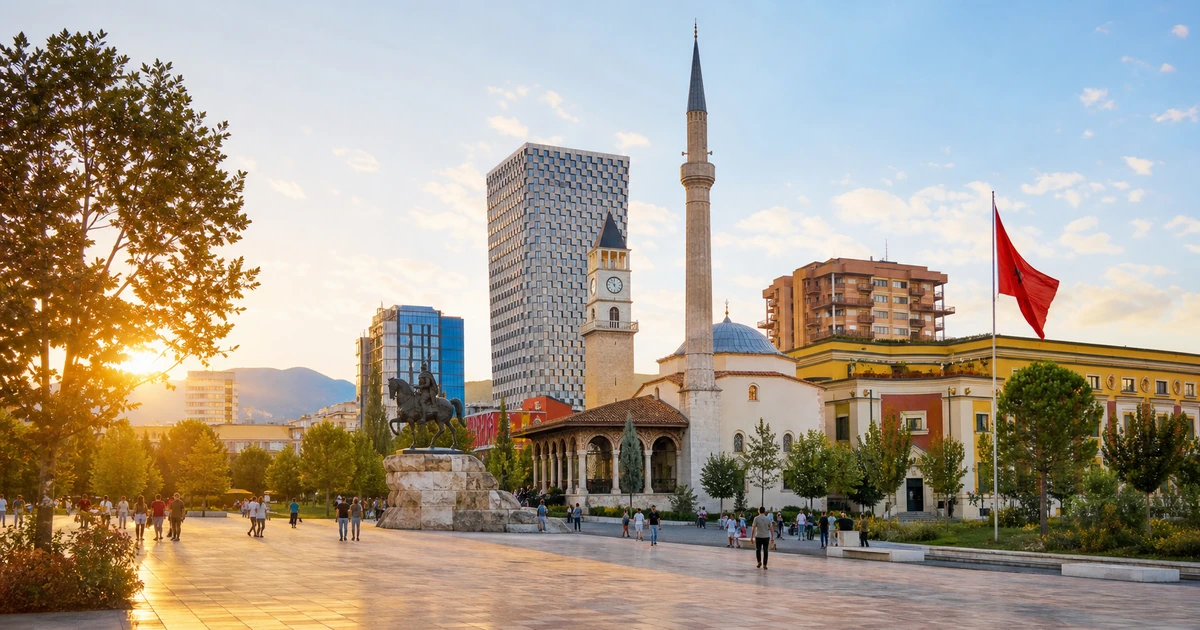
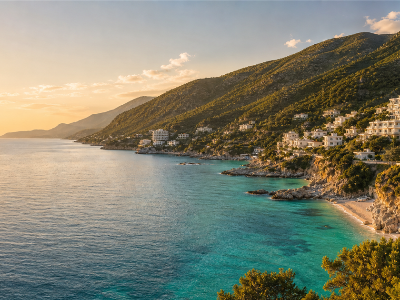
Tirana is Albania's energetic capital, where Ottoman lanes, Italian-era boulevards and post-communist color meet around Skanderbeg Square. First-timers should start at Skanderbeg Square, visit Bunk'Art 2 for recent history, then ride the Dajti Ekspres cable car for mountain views. Tirana International Airport makes the city the natural first base for Albanian trips.
Worth seeing
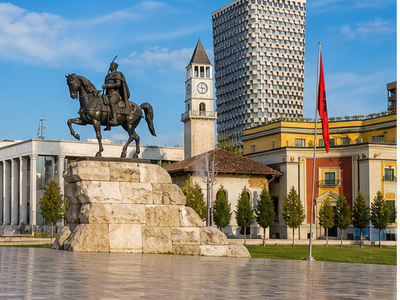
Skanderbeg Square
Skanderbeg Square is Tirana's main orientation point, bordered by museums, civic buildings and broad pedestrian space in the city centre.
View on map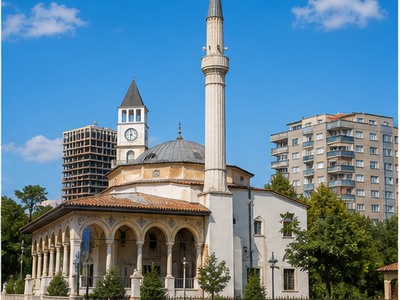
Bunk'Art 2
Bunk'Art 2 turns a Cold War bunker near the centre into a compact museum on surveillance, policing and communist-era Albania.
View on map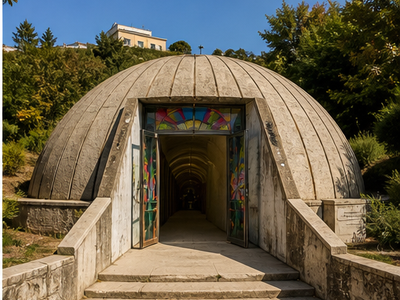
Dajti Ekspres
Dajti Ekspres climbs from the edge of Tirana to Mount Dajti, giving wide views and an easy break from the city.
View on map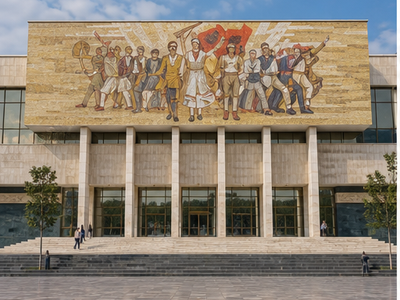
Pazari i Ri
Pazari i Ri is the renovated New Bazaar area, good for produce stalls, casual meals and evening streets close to the centre.
View on map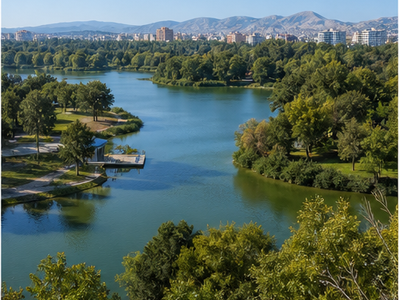
Grand Park of Tirana
Grand Park of Tirana wraps around the artificial lake, useful for walks, running and a quieter afternoon outside the traffic.
View on map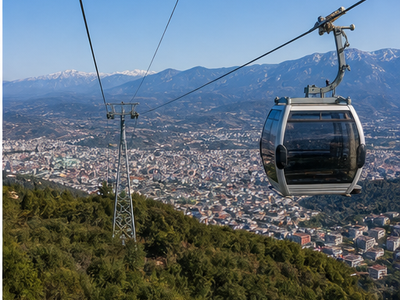
National Historical Museum
The National Historical Museum on Skanderbeg Square gives a broad introduction to Albanian history before travelling elsewhere in the country.
View on mapStay overview
Choose Blloku for restaurants and nightlife, Skanderbeg Square for a short sightseeing stay, Pazari i Ri for food-market atmosphere, or Komuna e Parisit for apartments and easier access toward the Grand Park of Tirana.
Hotels & areas
Tirana hotels are most convenient around Blloku and Skanderbeg Square, while Pazari i Ri gives more local evenings and Komuna e Parisit works better for apartment stays, drivers and trips toward the lake.
Blloku
Blloku is the lively restaurant and nightlife district, close to cafes, boutiques and many mid-range hotels for first visits.
Best for: nightlife, restaurants, first visitsSee hotel optionsSkanderbeg Square
The central square area keeps museums, bus links and main sights within easy walking distance, useful for short stays.
Best for: sightseeing, short stays, museumsSee hotel optionsPazari i Ri
Pazari i Ri has a market-led food scene and guesthouses near older streets east of the main square.
Best for: food, markets, local staysSee hotel optionsKomuna e Parisit
Komuna e Parisit is a practical residential base with apartments, local restaurants and fast access toward the lake park.
Best for: apartments, longer stays, quieter nightsSee hotel optionsFlights & airports
Tirana International Airport Mother Teresa (TIA) arrival plan
- Tirana International Airport Mother Teresa (TIA)About 13 km from the centre
Compare airport access against hotel location, arrival time, rental car pickup, late flights and onward driving before choosing the first night base.
- Ohrid St. Paul the Apostle Airport (OHD)About 79 km from the centre
Compare airport access against hotel location, arrival time, rental car pickup, late flights and onward driving before choosing the first night base.
Rental cars
Tirana day-trip car use
Skip a car inside Tirana; rent one only for onward Albanian road trips to Berat, the coast or mountain areas.
Compare rental carsTravel tips
Best base
Stay in Blloku for evenings out, or near Skanderbeg Square if museum visits and airport buses matter more.
Airport timing
Traffic on the Rinas road can slow at peak times, so leave extra time for departures.
Cash and cards
Cards work in many hotels and restaurants, but carry lek for markets, taxis and smaller cafes.
Day trip
Kruje is an easy heritage day trip for the castle, bazaar and mountain views north of Tirana.
Nearby ideas
Heritage · about 50 min · furgon minibus north from Tirana
Krujë
Skanderbeg's castle above a cobbled Ottoman bazaar still selling carpets and silver.
View on mapMountain · about 40 min · bus to Porcelan, then the Dajti Ekspres cable car
Mount Dajti
A fifteen-minute cable car to 1,100 metres, with the whole plain spread out below.
View on mapBeach · about 45 min · train or furgon west to the coast
Durrës
A Roman amphitheatre inside the town, and a long sandy bay that fills in August.
View on mapCity history
Records of the first land registrations under the Ottomans in 1431–32 show that Tirana consisted of 60 inhabited areas, with nearly 2,028 houses and 7,300 inhabitants.
According to Hahn, the settlement had already started to develop as a bazaar and included several watermills, even before 1614, when Sulejman Bargjini, a local ruler, built the Old Mosque, a small commercial centre.
In 1800, the first newcomers arrived in the settlement, the so-called ortodoksit.
In 1807, Tirana became the centre of the Subprefecture of Krujë-Tirana.
It employed the best artisans in the country and was completed in 1821 by Molla's son Etëhem, who was also Sulejman Bargjini's great-nephew.
On 8 February 1920, the Congress of Lushnjë proclaimed Tirana as the temporary capital of Albania, which had gained independence in 1912.
In November 1941, two emissaries of the Communist Party of Yugoslavia (KPJ), Miladin Popović and Dušan Mugoša, called a meeting of three Albanian communist groups and founded the Communist Party of Albania, and Enver.
On 4 February 1944, the Gestapo, supported by the forces of Xhafer Deva, executed 86 anti-fascists in Tirana.
In 1999, following the Kosovo War, Tirana Airport became a NATO airbase, serving its mission in the former Yugoslavia. Contemporary During his term from 2000 to 2011, the former mayor of Tirana, Edi Rama.
The same month, Tirana was announced as the European Youth Capital for 2022 with a planned program including events of cultural and social importance.
A castle, possibly known as Tirkan, was built by the Byzantine Emperor Justinian I between the 4th and 6th century and later restored by Ahmed Pasha Toptani in the 18th century.
Later, Tirana became a sub-prefecture of the newly created Vilayet of Shkodër and the Sanjak of Durrës.
For instance, Tirana's former Old Bazaar and the Orthodox Cathedral were razed to the ground in order to build the Soviet-styled Palace of Culture.
The northern portion of the main boulevard was renamed Stalin Boulevard and his statue was erected in the city square.