Forecast
Hanoi
Local time--:--
Asia/BangkokWeather Forecast
Hanoi, VietnamOpen-Meteo forecast.

Hanoi city overview
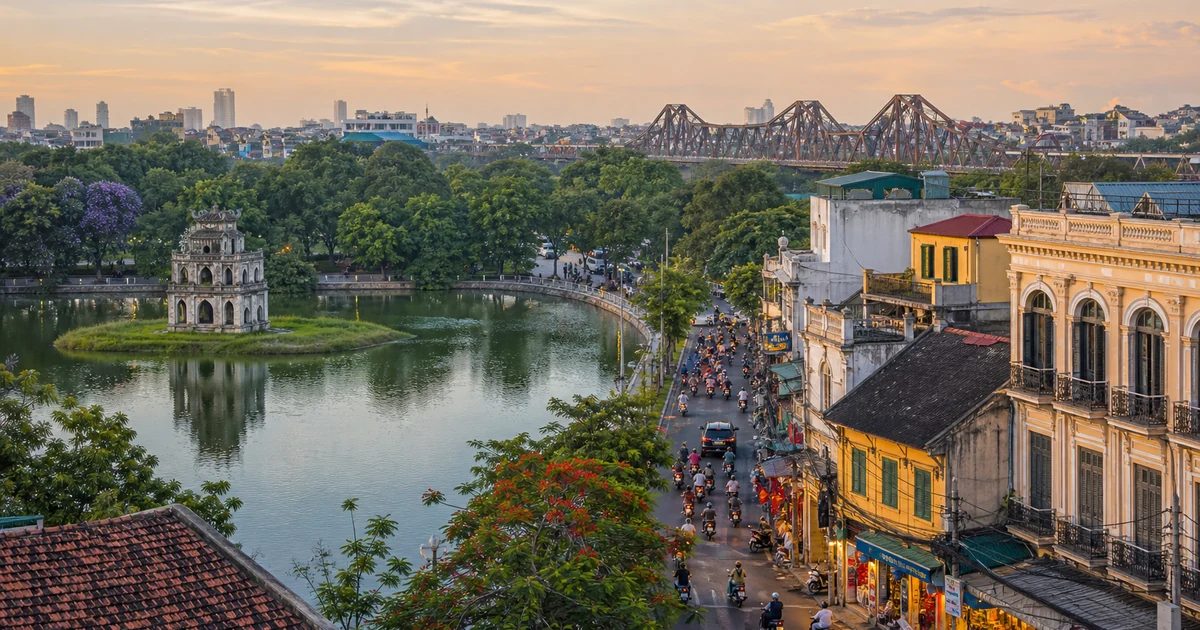
Hanoi works best as a base in Vietnam when you anchor days around Hoan Kiem Lake, Old Quarter Hanoi and Temple of Literature. Use those sights to understand the city's history, street life and visitor rhythm. Hanoi Noi Bai handles the main arrival flow, so hotel choice should balance the centre, transfer time and day-trip plans.
Worth seeing
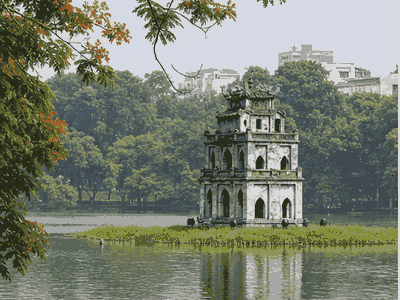
Hoan Kiem Lake
Hoan Kiem Lake adds outdoor time to a Hanoi stay, with open space, views or waterfront breathing room between denser city sights.
View on map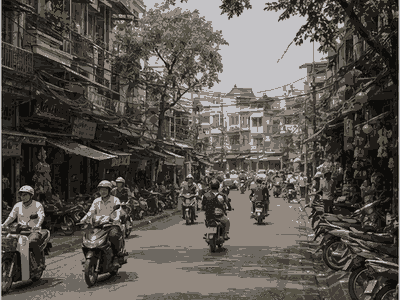
Old Quarter Hanoi
Old Quarter Hanoi gives Hanoi a strong culture stop for museums, exhibitions or local collections, and works best as an indoor anchor in the day's route.
View on map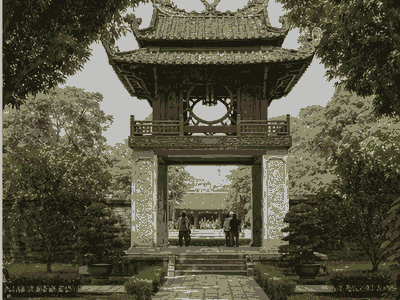
Temple of Literature
Temple of Literature anchors the historic and ceremonial side of Hanoi, making it a practical stop for architecture, local memory and orientation.
View on map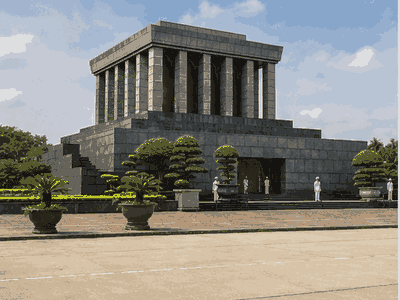
Ho Chi Minh Mausoleum
Ho Chi Minh Mausoleum is a named stop in Hanoi worth keeping on the route when it fits the day's transport, timing and neighborhood plan.
View on map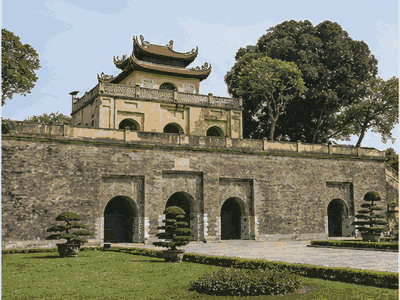
Imperial Citadel of Thang Long
Imperial Citadel of Thang Long is a clear heritage marker in Hanoi, best used as a fixed point when grouping nearby streets, monuments and viewpoints.
View on map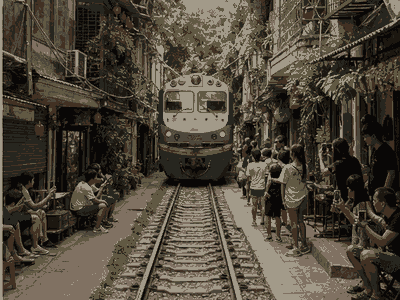
Train Street Hanoi
Train Street Hanoi is a named stop in Hanoi worth keeping on the route when it fits the day's transport, timing and neighborhood plan.
View on mapStay overview
Start with Old Quarter for the easiest first Hanoi stay, then compare Hoan Kiem and French Quarter when price, nightlife, quieter evenings or transfer timing matter more than being beside every major sight.
Hotels & areas
Hanoi hotel choice is mostly about repeat journeys: use Old Quarter for sightseeing, Hoan Kiem for a different local base, and French Quarter or Tay Ho when views, parking, airport timing or longer stays matter.
Old Quarter
Old Quarter is the most practical first base in Hanoi, keeping main sights, restaurants and short local transfers close.
Best for: first visits, sightseeing, restaurantsSee hotel optionsHoan Kiem
Hoan Kiem is useful when a Hanoi stay needs more local restaurants, apartment options or quieter nights outside the busiest core.
Best for: local stays, restaurants, quieter nightsSee hotel optionsFrench Quarter
French Quarter is useful when a Hanoi stay needs more local restaurants, apartment options or quieter nights outside the busiest core.
Best for: local stays, restaurants, quieter nightsSee hotel optionsTay Ho
Tay Ho is useful when a Hanoi stay needs more local restaurants, apartment options or quieter nights outside the busiest core.
Best for: local stays, restaurants, quieter nightsSee hotel optionsFlights & airports
Noi Bai International Airport (HAN) arrival plan
- Noi Bai International Airport (HAN)About 22 km from the centre
Compare airport access against hotel location, arrival time, rental car pickup, late flights and onward driving before choosing the first night base.
- Cat Bi International Airport (HPH)About 95 km from the centre
Compare airport access against hotel location, arrival time, rental car pickup, late flights and onward driving before choosing the first night base.
Rental cars
Hanoi day-trip car use
Do not rent a car for central Hanoi unless parking and traffic are part of the plan; use one mainly for regional day trips.
Compare rental carsTravel tips
Best base
Choose Old Quarter for a first stay because it keeps main sights, restaurants and practical local movement close.
Airport timing
Leave extra time for Hanoi Noi Bai, especially for early flights, late arrivals, traffic or unfamiliar transfer routes.
Local movement
Plan each day in clusters around Hoan Kiem Lake and Old Quarter Hanoi so transfers do not consume the best sightseeing hours.
Day trips
Keep one flexible slot for nearby routes from Hanoi, checking weather, transport and opening hours before committing.
Nearby ideas
Craft · about 40 min · bus 47A from Long Bien station
Bat Trang ceramic village
Seven centuries of pottery kilns; you can throw and paint your own piece in the workshops.
View on mapHeritage · about 1 h 15 min · bus from My Dinh station to Son Tay
Duong Lam ancient village
Laterite-walled houses and communal halls from a village that has kept its Red River Delta layout.
View on mapHeritage · about 1 h 15 min · bus from Giap Bat station to My Duc, then a rowing boat
Perfume Pagoda
A boat up the Yen stream then a cable car to a cave shrine; the pilgrimage festival runs February to April.
View on mapUpcoming events
No upcoming Hanoi events in the shared event index yet.
City history
It is believed that the region has been continuously inhabited for the last 4,000 years. Cổ Loa and Nanyue In around third century BC, a fortified citadel, later named as Cổ Loa, is constructed.
During 17th century, the population of Đông Kinh was estimated by Western diplomats as about 100,000. Nguyễn dynasty, and French colony When the Nguyễn dynasty was established in 1802, Gia Long moved the capital.
He built a wall around the city measuring 6,344 meters, with some sections reaching over eight meters in height. Đại La at the time had approximately 25,000 residents, including foreign communities of Persians, Arabs.
By the year 679, the Tang dynasty changed the region's name to Annan (Chinese: 安南; Vietnamese: An Nam; lit. 'pacified south'), with Songping as its capital.
Thăng Long remained the capital of Đại Việt until 1397, when it was moved to Thanh Hóa, then known as Tây Đô (西都), the "Western Capital".
As Hanoi, it was located in the protectorate of Tonkin and became the capital of French Indochina in 1902.
After the fall of the Empire of Vietnam, it became the capital of the Democratic Republic of Vietnam (DRV) when Ho Chi Minh proclaimed the independence of Vietnam on 2 September 1945.
After France recognized Vietnam's nominal and partial independence with the Élysée Accords on 14 June 1949, Hanoi became under the control of the State of Vietnam from 1949 to 1954, a unified associated state.
Following the end of the war with the fall of Saigon in 1975, Hanoi became the capital of the Socialist Republic of Vietnam when North and South Vietnam were reunited on 2 July 1976..
In 1998–1999, the Museum of Vietnamese History (later is National Museum of Vietnamese History) carried out the archaeological studies in the north of Đồng Mô Lake (Sơn Tây, Hanoi), finding relics and objects belonging.
By the middle of the fifth century, in the center of what later was Hanoi, a fortified settlement was founded by the Chinese Liu Song dynasty as the seat of a new district called.
In the latter half of the eighth century, Zhang Boyi, a viceroy from the Tang dynasty, built Luocheng (Chinese: 羅城; Vietnamese: La Thành) to suppress uprisings.
Over time, in the first half of the ninth century, this fortification was expanded and renamed as Jincheng (Vietnamese: Kim Thành).
After eight years of fighting between the French and DRV forces, Hanoi became the capital of North Vietnam when this territory became a sovereign country and Vietnam became divided at 17th parallel on 21.