Forecast
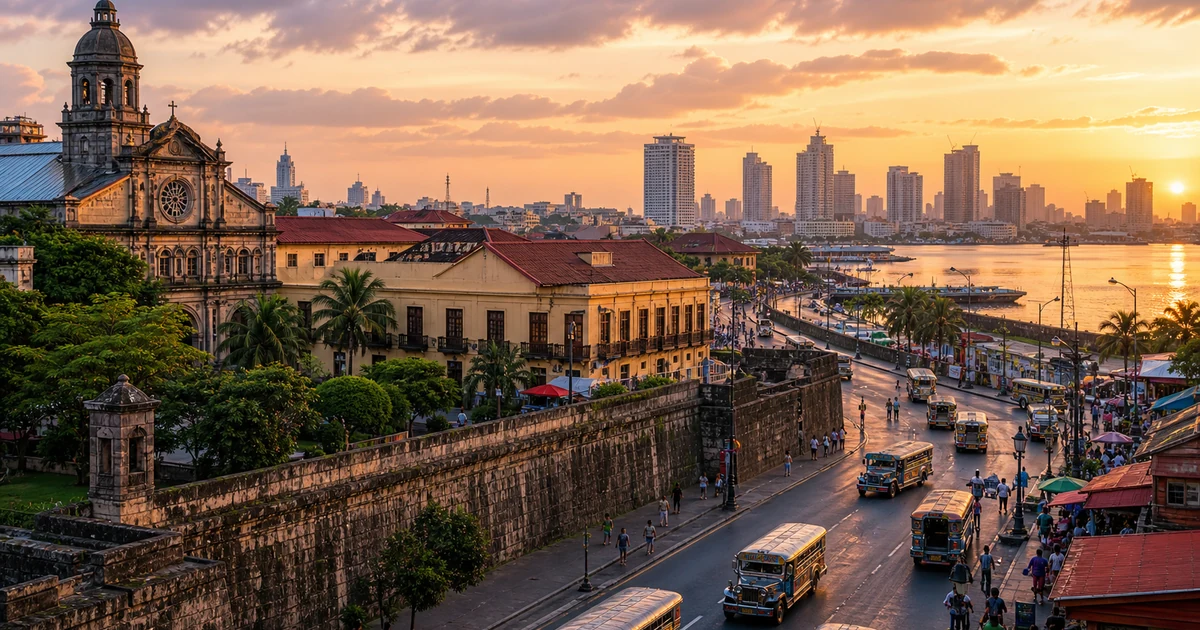
Manila
Local time--:--
Asia/ManilaWeather Forecast
Manila, PhilippinesOpen-Meteo forecast.
Manila city overview
Manila works best as a base in Philippines when you anchor days around Intramuros, Rizal Park and Fort Santiago. Use those sights to understand the city's history, street life and visitor rhythm. Manila Ninoy Aquino handles the main arrival flow, so hotel choice should balance the centre, transfer time and day-trip plans.
Worth seeing
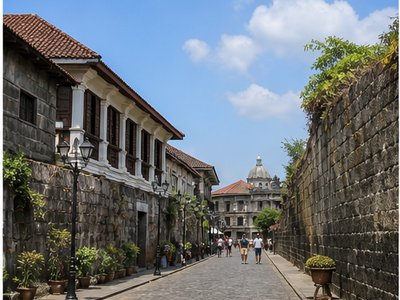
Intramuros
Intramuros is a named stop in Manila worth keeping on the route when it fits the day's transport, timing and neighborhood plan.
View on map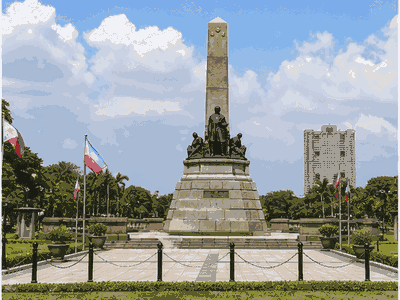
Rizal Park
Rizal Park adds outdoor time to a Manila stay, with open space, views or waterfront breathing room between denser city sights.
View on map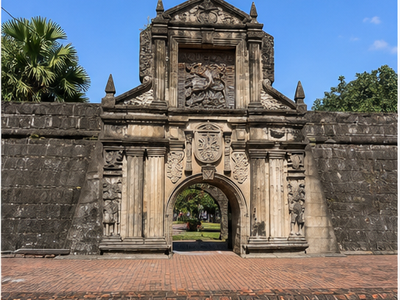
Fort Santiago
Fort Santiago is a clear heritage marker in Manila, best used as a fixed point when grouping nearby streets, monuments and viewpoints.
View on map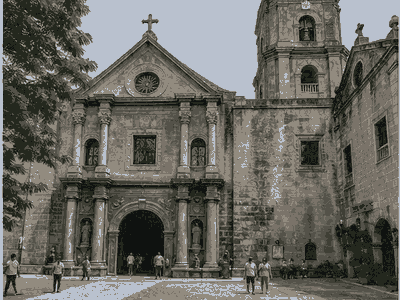
San Agustin Church
San Agustin Church anchors the historic and ceremonial side of Manila, making it a practical stop for architecture, local memory and orientation.
View on map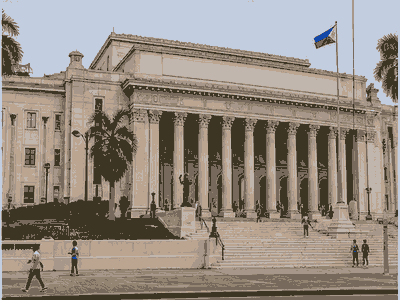
National Museum of Fine Arts
National Museum of Fine Arts is a key Manila culture stop, useful for understanding local history, collections and rainy-day planning near the main sightseeing route.
View on map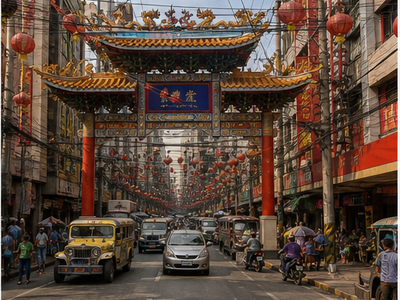
Binondo
Binondo is a named stop in Manila worth keeping on the route when it fits the day's transport, timing and neighborhood plan.
View on mapStay overview
Start with City centre for the easiest first Manila stay, then compare Old Town and Waterfront when price, nightlife, quieter evenings or transfer timing matter more than being beside every major sight.
Hotels & areas
Manila hotel choice is mostly about repeat journeys: use City centre for sightseeing, Old Town for a different local base, and Waterfront or Airport area when views, parking, airport timing or longer stays matter.
City centre
City centre is the most practical first base in Manila, keeping main sights, restaurants and short local transfers close.
Best for: first visits, sightseeing, restaurantsSee hotel optionsOld Town
Old Town is the most practical first base in Manila, keeping main sights, restaurants and short local transfers close.
Best for: first visits, sightseeing, restaurantsSee hotel optionsWaterfront
Waterfront suits travellers who want views, evening walks and a calmer base while still keeping central Manila reachable.
Best for: views, quieter evenings, walksSee hotel optionsAirport area
Airport area works mainly for early departures, late arrivals or car pickup, not for a first Manila sightseeing base.
Best for: early flights, late arrivals, car pickupSee hotel optionsFlights & airports
Ninoy Aquino International Airport (MNL) arrival plan
- Ninoy Aquino International Airport (MNL)About 11 km from the centre
Compare airport access against hotel location, arrival time, rental car pickup, late flights and onward driving before choosing the first night base.
- Clark International Airport / Clark Air Base (CRK)About 79 km from the centre
Compare airport access against hotel location, arrival time, rental car pickup, late flights and onward driving before choosing the first night base.
- Subic Bay International Airport / Naval Air Station Cubi Point (SFS)About 79 km from the centre
Compare airport access against hotel location, arrival time, rental car pickup, late flights and onward driving before choosing the first night base.
Rental cars
Manila day-trip car use
Do not rent a car for central Manila unless parking and traffic are part of the plan; use one mainly for regional day trips.
Compare rental carsTravel tips
Best base
Choose City centre for a first stay because it keeps main sights, restaurants and practical local movement close.
Airport timing
Leave extra time for Manila Ninoy Aquino, especially for early flights, late arrivals, traffic or unfamiliar transfer routes.
Local movement
Plan each day in clusters around Intramuros and Rizal Park so transfers do not consume the best sightseeing hours.
Day trips
Keep one flexible slot for nearby routes from Manila, checking weather, transport and opening hours before committing.
Nearby ideas
Mountain · about 1 h 15 min · bus from Buendia or Cubao terminals
Tagaytay and Taal Volcano
A ridge looking down on a volcano inside a lake inside a volcano, with cooler air and bulalo soup.
View on mapIsland · about 1 h 15 min · Sun Cruises ferry from the Esplanade Seaside Terminal
Corregidor Island
The fortified island that held out in 1942, left as ruined barracks and gun batteries.
View on mapHeritage · about 50 min · bus or car south along Alabang-Zapote Road
Las Piñas Bamboo Organ
An 1824 church organ with over 900 bamboo pipes, still played at daily mass.
View on mapCity history
The Chinese minority were punished for supporting the British, and the fortress city Intramuros, which was initially populated by 1,200 pure Spanish families and garrisoned by 400 Spanish troops, kept its cannons pointed at.
The city was founded by several European Spaniards and Mestizo Mexicans and even was garrisoned by 400 Native American Tlaxcalans who accompanied Salcedo from Cebu and were given pensions.
As a result of pacification campaigns, religious conversions, colonizations, and settlement by the Spanish in cooperation with the local natives, the proceedings of the Manila Synod of 1582 guaranteed native and Spanish rights and.
In 1606, upon the Spanish conquest of the Sultanate of Ternate, one of monopolizers of the growing of spice, the Spanish deported the ruler Sultan Said Din Burkat of Ternate, along with his clan.
This is in the city where all the buzz is. (Remesal, 1629: 680–1) After Mexico gained independence from Spain in 1821, the Spanish crown began to directly govern Manila.
Upon drafting a new charter for Manila in June 1901, the U.S. officially recognized that the city of Manila consisted of Intramuros and the surrounding areas.
In 1948, President Elpidio Quirino moved the seat of government of the Philippines to Quezon City, a new capital in the suburbs and fields northeast of Manila, which was created in 1939 during the.
During the 12th century, then-Hindu Brunei called "Pon-i", as reported in the Chinese annals Nanhai zhi, invaded Malilu 麻裏蘆 (claimed by various scholars to be the present-day Manila) as it also administered Sarawak and.
In the 13th century, Manila consisted of a fortified settlement and trading quarter on the shore of the Pasig River.
Indigo dye extraction only became an important economic activity in the area in the 18th century, several hundred years after Maynila settlement was founded and named.
It is thought that the name Maynilà was given due to the presence of such dye-producing plants in the area surrounding the early settlement, rather than because of an established trade in indigo.
Of Burnham's proposed government centers in Luneta, only three units—the Legislative Building, and the buildings of the Finance and Agricultural Departments—were completed before World War II began, with the war's onset, also destroying the.
At the end of the war, Manila had suffered from heavy bombardment and became the second-most-destroyed city of World War II.
Buildings like Manila City Hall, the Legislative Building (now the National Museum of Fine Arts), and Manila Post Office were rebuilt, and roads and other infrastructures were repaired.