Forecast
Muscat
Local time--:--
Asia/MuscatWeather Forecast
Muscat, OmanOpen-Meteo forecast.
Muscat city overview
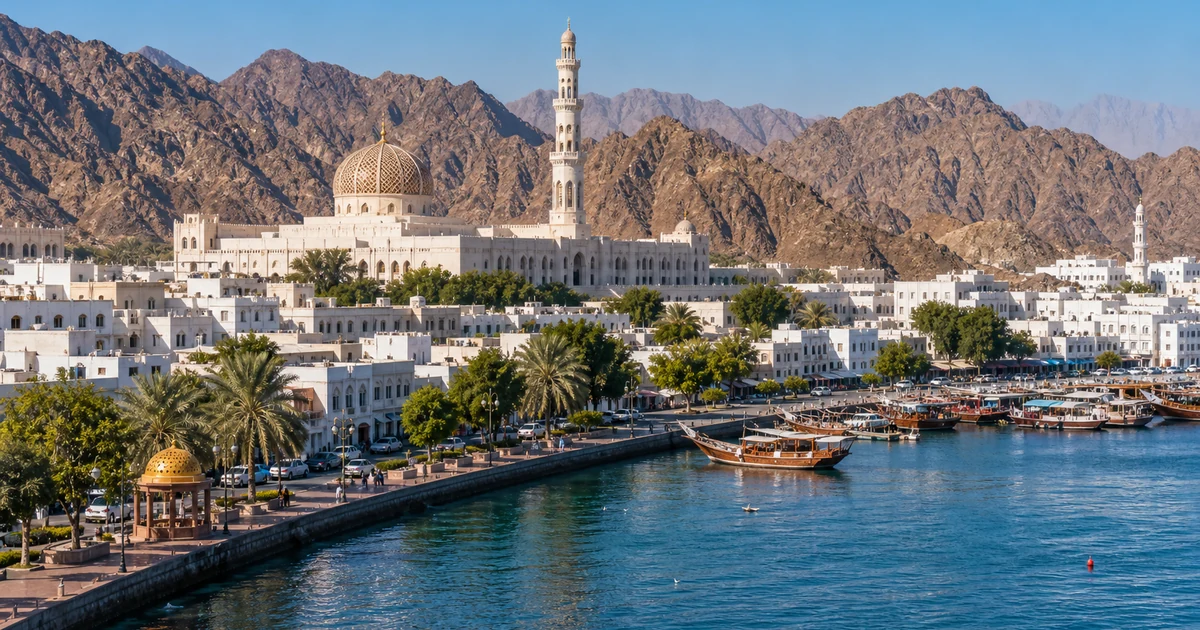
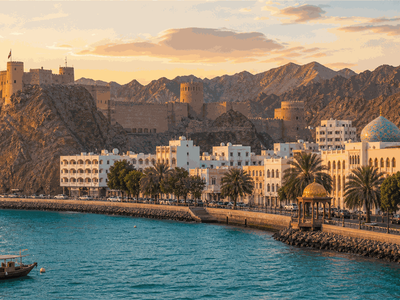
Muscat works best as a base in Oman when you anchor days around Sultan Qaboos Grand Mosque, Mutrah Souq and Al Alam Palace. Use those sights to understand the city's history, street life and visitor rhythm. Muscat International handles the main arrival flow, so hotel choice should balance the centre, transfer time and day-trip plans.
Worth seeing
Sultan Qaboos Grand Mosque
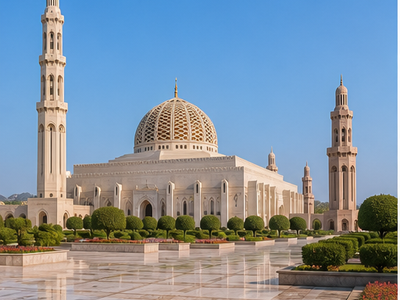
Sultan Qaboos Grand Mosque anchors the historic and ceremonial side of Muscat, making it a practical stop for architecture, local memory and orientation.
View on map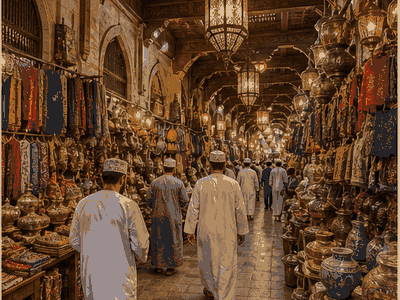
Mutrah Souq
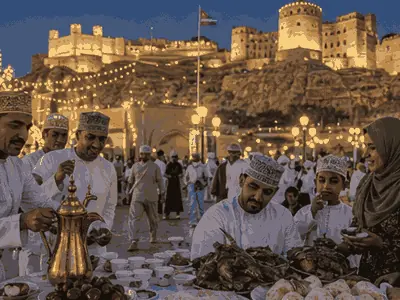
Mutrah Souq gives Muscat a concrete street-life stop, with food, everyday shopping and local movement that helps visitors read the city.
View on map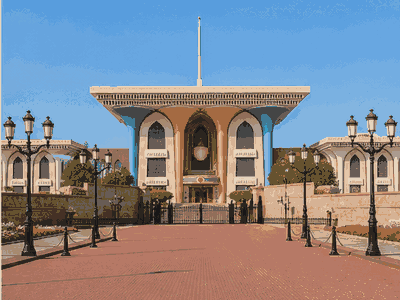
Al Alam Palace
Al Alam Palace anchors the historic and ceremonial side of Muscat, making it a practical stop for architecture, local memory and orientation.
View on map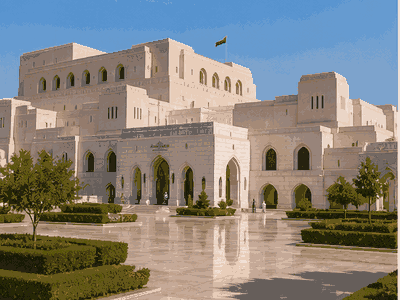
Royal Opera House Muscat
Royal Opera House Muscat is a named stop in Muscat worth keeping on the route when it fits the day's transport, timing and neighborhood plan.
View on map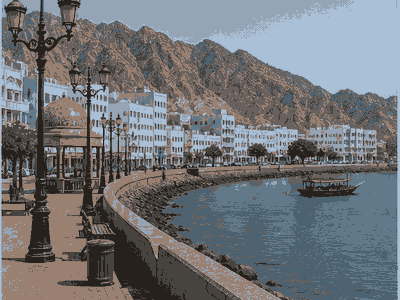
Mutrah Corniche
Mutrah Corniche adds the water-facing side of Muscat, making it a good break from museums, traffic and dense historic streets.
View on map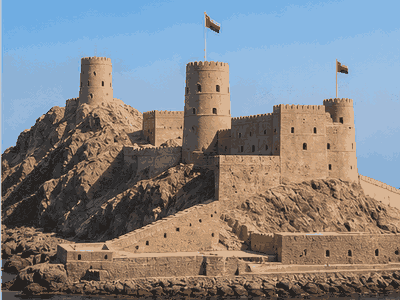
Al Jalali Fort
Al Jalali Fort is a clear heritage marker in Muscat, best used as a fixed point when grouping nearby streets, monuments and viewpoints.
View on mapStay overview
Start with Mutrah for the easiest first Muscat stay, then compare Qurum and Al Khuwair when price, nightlife, quieter evenings or transfer timing matter more than being beside every major sight.
Hotels & areas
Muscat hotel choice is mostly about repeat journeys: use Mutrah for sightseeing, Qurum for a different local base, and Al Khuwair or Ruwi when views, parking, airport timing or longer stays matter.
Mutrah
Mutrah is useful when a Muscat stay needs more local restaurants, apartment options or quieter nights outside the busiest core.
Best for: local stays, restaurants, quieter nightsSee hotel optionsQurum
Qurum is useful when a Muscat stay needs more local restaurants, apartment options or quieter nights outside the busiest core.
Best for: local stays, restaurants, quieter nightsSee hotel optionsAl Khuwair
Al Khuwair is useful when a Muscat stay needs more local restaurants, apartment options or quieter nights outside the busiest core.
Best for: local stays, restaurants, quieter nightsSee hotel optionsRuwi
Ruwi is useful when a Muscat stay needs more local restaurants, apartment options or quieter nights outside the busiest core.
Best for: local stays, restaurants, quieter nightsSee hotel optionsFlights & airports
Muscat International Airport (MCT) arrival plan
- Muscat International Airport (MCT)About 13 km from the centre
Compare airport access against hotel location, arrival time, rental car pickup, late flights and onward driving before choosing the first night base.
Rental cars
Muscat day-trip car use
Do not rent a car for central Muscat unless parking and traffic are part of the plan; use one mainly for regional day trips.
Compare rental carsTravel tips
Best base
Choose Mutrah for a first stay because it keeps main sights, restaurants and practical local movement close.
Airport timing
Leave extra time for Muscat International, especially for early flights, late arrivals, traffic or unfamiliar transfer routes.
Local movement
Plan each day in clusters around Sultan Qaboos Grand Mosque and Mutrah Souq so transfers do not consume the best sightseeing hours.
Day trips
Keep one flexible slot for nearby routes from Muscat, checking weather, transport and opening hours before committing.
Upcoming events
City history
The Portuguese admiral Afonso de Albuquerque sailed to Muscat in 1507, in an attempt to establish trade relations.
The Portuguese maintained a hold on Muscat for over a century, despite challenges from Persia and a bombardment of the town by the Ottoman Turks in 1546.
The Turks twice captured Muscat from the Portuguese, in the Capture of Muscat (1552) and 1581–88.
The election of Nasir bin Murshid Al-Ya'rubi as Imam of Oman in 1624 changed the balance of power again in the region, from the Persians and the Portuguese to local Omanis.
On August 16, 1648, the Imam dispatched an army to Muscat, which captured and demolished the high towers of the Portuguese, weakening their grip over the town.
The merchant community played an important role in expelling the Europeans in 1650.
Having gained control over Zanzibar, in 1840 Said moved his capital to Stone Town, the ancient quarter of Zanzibar City; however, after his death in 1856, control over Zanzibar was lost when it became.
The failed assassination attempt of April 26, 1966 on Said bin Taimur led to the further isolation of the Sultan, who had moved his residence from Muscat to Salalah amidst the conflict.
Muscat's notability as a port was acknowledged as early as the 1st century AD by the Greek geographer Ptolemy, who referred to it as Cryptus Portus (the Hidden Port), and by Pliny the Elder.
The port fell to a Sassanid invasion in the 3rd century AD, under the rule of Shapur I.
Muscat's naval and military supremacy was re-established in the 19th century by Said bin Sultan, who signed a treaty with U.S.
Among the most important castles and forts in Muscat, the Al Jalali Fort and the Al-Mirani Fort are the most prominent buildings left by the Portuguese.
It is argued that their settlement began in the fifteenth century; the Portuguese relied heavily on them to secure a trade monopoly in the Indian Ocean and Persian Gulf area.
Similarly, a new international airport was developed in Muscat's Seeb district.