Forecast
Nagoya
Local time--:--
Asia/TokyoWeather Forecast
Nagoya, JapanOpen-Meteo forecast.
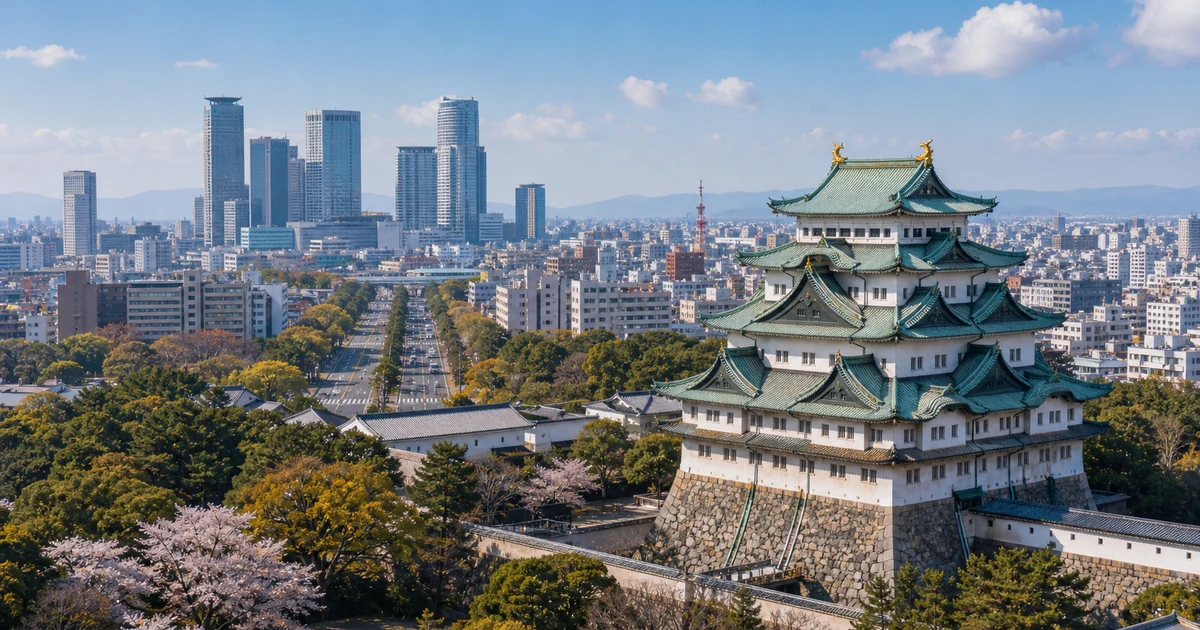
Nagoya city overview
Nagoya works best as a base in Japan when you anchor days around Nagoya Castle, Atsuta Shrine and Toyota Commemorative Museum. Use those sights to understand the city's history, street life and visitor rhythm. Nagoya Chubu handles the main arrival flow, so hotel choice should balance the centre, transfer time and day-trip plans.
Worth seeing
Nagoya Castle
Nagoya Castle is a clear heritage marker in Nagoya, best used as a fixed point when grouping nearby streets, monuments and viewpoints.
View on map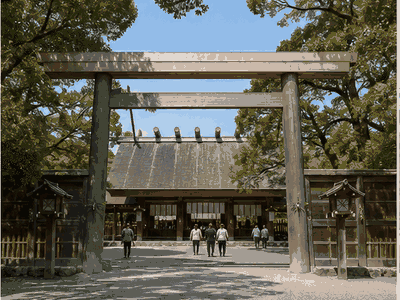
Atsuta Shrine
Atsuta Shrine anchors the historic and ceremonial side of Nagoya, making it a practical stop for architecture, local memory and orientation.
View on map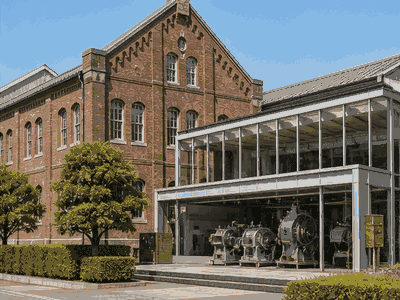
Toyota Commemorative Museum
Toyota Commemorative Museum is a key Nagoya culture stop, useful for understanding local history, collections and rainy-day planning near the main sightseeing route.
View on map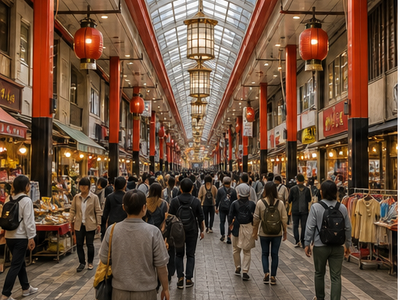
Osu Shopping District
Osu Shopping District is useful for reading Nagoya's daily rhythm through food stalls, craft sellers, local errands and short stops between bigger sights.
View on map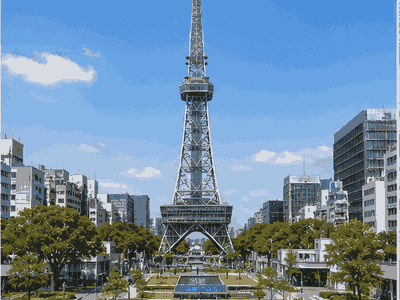
Nagoya TV Tower
Nagoya TV Tower is a clear heritage marker in Nagoya, best used as a fixed point when grouping nearby streets, monuments and viewpoints.
View on map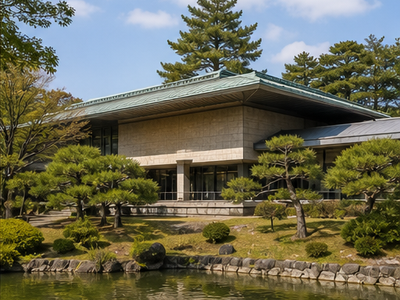
Tokugawa Art Museum
Tokugawa Art Museum is a key Nagoya culture stop, useful for understanding local history, collections and rainy-day planning near the main sightseeing route.
View on mapStay overview
Start with City centre for the easiest first Nagoya stay, then compare Old Town and Waterfront when price, nightlife, quieter evenings or transfer timing matter more than being beside every major sight.
Hotels & areas
Nagoya hotel choice is mostly about repeat journeys: use City centre for sightseeing, Old Town for a different local base, and Waterfront or Airport area when views, parking, airport timing or longer stays matter.
City centre
City centre is the most practical first base in Nagoya, keeping main sights, restaurants and short local transfers close.
Best for: first visits, sightseeing, restaurantsSee hotel optionsOld Town
Old Town is the most practical first base in Nagoya, keeping main sights, restaurants and short local transfers close.
Best for: first visits, sightseeing, restaurantsSee hotel optionsWaterfront
Waterfront suits travellers who want views, evening walks and a calmer base while still keeping central Nagoya reachable.
Best for: views, quieter evenings, walksSee hotel optionsAirport area
Airport area works mainly for early departures, late arrivals or car pickup, not for a first Nagoya sightseeing base.
Best for: early flights, late arrivals, car pickupSee hotel optionsFlights & airports
Chubu Centrair International Airport (NGO) arrival plan
- Chubu Centrair International Airport (NGO)About 37 km from the centre
Compare airport access against hotel location, arrival time, rental car pickup, late flights and onward driving before choosing the first night base.
Rental cars
Nagoya day-trip car use
Do not rent a car for central Nagoya unless parking and traffic are part of the plan; use one mainly for regional day trips.
Compare rental carsTravel tips
Best base
Choose City centre for a first stay because it keeps main sights, restaurants and practical local movement close.
Airport timing
Leave extra time for Nagoya Chubu, especially for early flights, late arrivals, traffic or unfamiliar transfer routes.
Local movement
Plan each day in clusters around Nagoya Castle and Atsuta Shrine so transfers do not consume the best sightseeing hours.
Day trips
Keep one flexible slot for nearby routes from Nagoya, checking weather, transport and opening hours before committing.
Nearby ideas
Heritage · about 30 min · Meitetsu line from Nagoya to Inuyama-yuen
Inuyama
One of twelve original castle keeps left in Japan, with cormorant fishing on the river below in summer.
View on mapSpa · about 1 h 15 min · JR Hida limited express from Nagoya
Gero Onsen
One of Japan's three great hot springs, with a pass letting you use three different baths.
View on mapHeritage · about 1 h 15 min · Kintetsu limited express from Nagoya to Iseshi
Ise Grand Shrine
Shinto's holiest site, rebuilt from scratch every twenty years, approached through cedar forest.
View on mapCraft · about 40 min · Meitetsu Tokoname line from Nagoya
Tokoname
A pottery town of brick chimneys and a walking path walled with old kiln pipes.
View on mapUpcoming events
City history
According to traditional sources, Yamato Takeru died in 113 AD.
In May–June 1560, the Battle of Okehazama took place in Dengakuhazama, Owari Province which was just outside of what would become Nagoya city.
In 1610, Tokugawa Ieyasu moved the capital of Owari Province from Kiyosu, about seven kilometres (4+1⁄2 miles) away, to a more strategic location in present-day Nagoya.
Nagoya was proclaimed a city on October 1, 1889, and designated a city on 1 September 1956 by government ordinance.
Taisho period Mitsubishi Aircraft Company was established in 1920 in Nagoya and became one of the largest aircraft manufacturers in Japan.
Nagoya Castle, which was being used as a military command post, was hit and mostly destroyed on May 14, 1945, followed by the Yokkaichi bombing in June 1945.
In 1959, the city was flooded and severely damaged by the Ise-wan Typhoon. Contemporary period After the war Nagoya was able to rebuild and take up its role again as one of Japan's leading.
Important Japanese aircraft targets (numbers 193, 194, 198, 2010, and 1729) were within Nagoya.
Jōmon period & Kofun period In the Jomon and Yayoi period, the Ōguruwa Shell Midden was discovered before the settlement of Nagoya.
In the Kofun period, Nagoya was settled and the Danpusan Kofun and Shiratori Kofun was built in this area.
Heian period The Seigan-ji was built by the Fujiwara clan in the late Heian period.
In this battle, Oda Nobunaga defeated Imagawa Yoshimoto and established himself as one of the leading warlords in the Sengoku period. Early modern period During this period Nagoya Castle was constructed, built partly from.
Around the same time, the nearby ancient Atsuta Shrine was designated as a waystation, called Miya (the Shrine), on the important Tōkaidō road, which linked the two capitals of Kyoto and Edo (now Tokyo).
The Nagoya area also produced machine tools, bearings, railway equipment, metal alloys, tanks, motor vehicles and processed foods during the war.