Forecast
Baghdad
Local time--:--
Asia/BaghdadWeather Forecast
Baghdad, IraqOpen-Meteo forecast.
Baghdad city overview
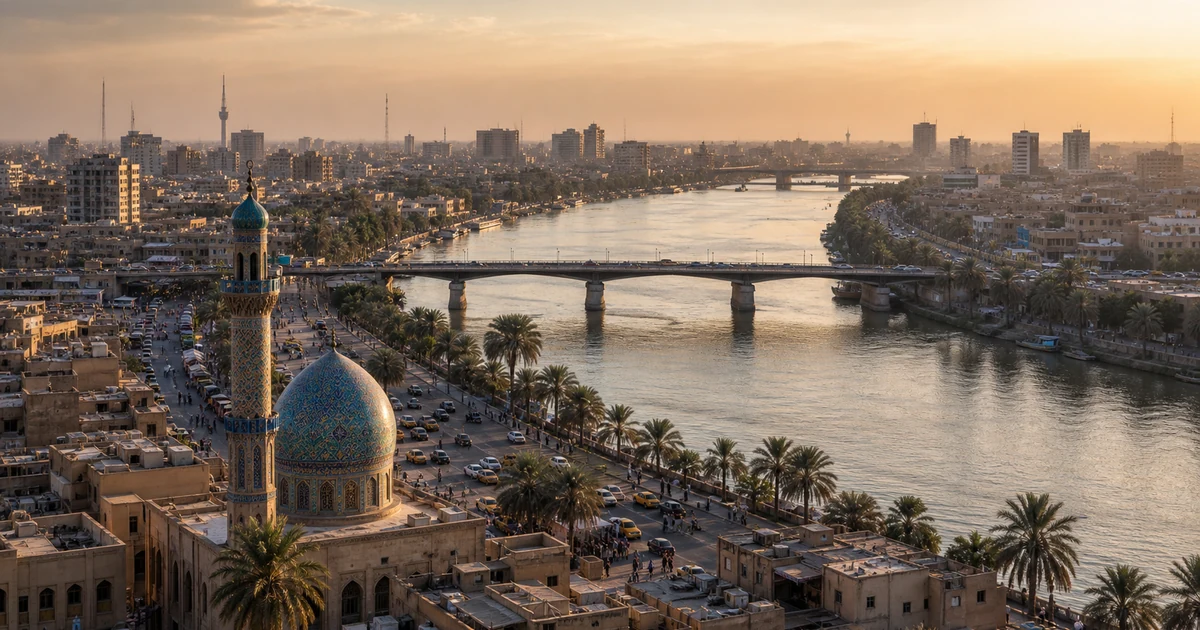
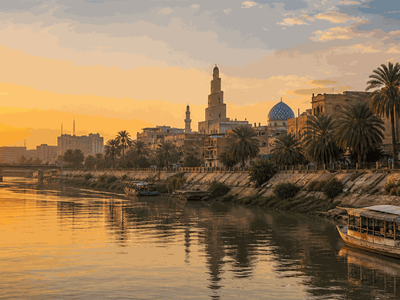
Baghdad works best as a base in Iraq when you anchor days around Al-Mutanabbi Street, National Museum of Iraq and Al-Shaheed Monument. Use those sights to understand the city's history, street life and visitor rhythm. Baghdad International handles the main arrival flow, so hotel choice should balance the centre, transfer time and day-trip plans.
Worth seeing
Al-Mutanabbi Street
Al-Mutanabbi Street is a named stop in Baghdad worth keeping on the route when it fits the day's transport, timing and neighborhood plan.
View on map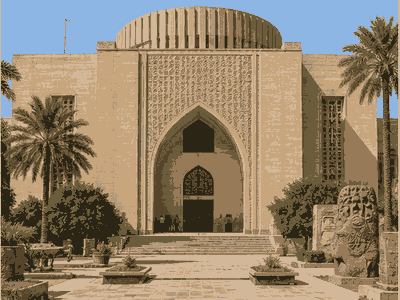
National Museum of Iraq
National Museum of Iraq is a key Baghdad culture stop, useful for understanding local history, collections and rainy-day planning near the main sightseeing route.
View on map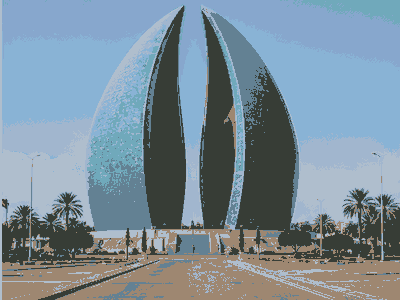
Al-Shaheed Monument
Al-Shaheed Monument is a clear heritage marker in Baghdad, best used as a fixed point when grouping nearby streets, monuments and viewpoints.
View on map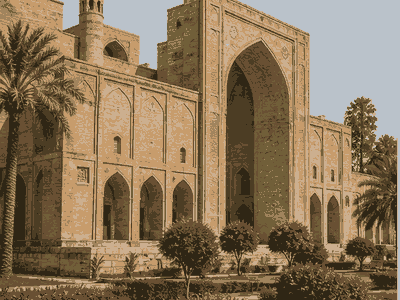
Abbasid Palace
Abbasid Palace anchors the historic and ceremonial side of Baghdad, making it a practical stop for architecture, local memory and orientation.
View on map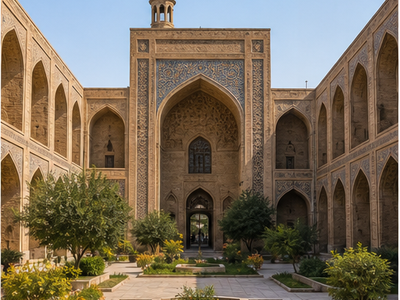
Mustansiriya Madrasa
Mustansiriya Madrasa is a named stop in Baghdad worth keeping on the route when it fits the day's transport, timing and neighborhood plan.
View on map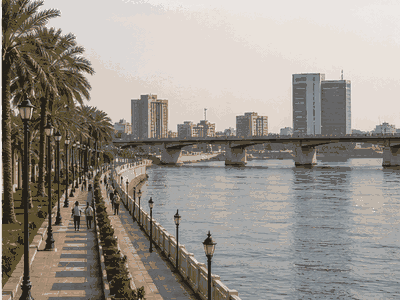
Tigris River Corniche
Tigris River Corniche adds outdoor time to a Baghdad stay, with open space, views or waterfront breathing room between denser city sights.
View on mapStay overview
Start with City centre for the easiest first Baghdad stay, then compare Old Town and Waterfront when price, nightlife, quieter evenings or transfer timing matter more than being beside every major sight.
Hotels & areas
Baghdad hotel choice is mostly about repeat journeys: use City centre for sightseeing, Old Town for a different local base, and Waterfront or Airport area when views, parking, airport timing or longer stays matter.
City centre
City centre is the most practical first base in Baghdad, keeping main sights, restaurants and short local transfers close.
Best for: first visits, sightseeing, restaurantsSee hotel optionsOld Town
Old Town is the most practical first base in Baghdad, keeping main sights, restaurants and short local transfers close.
Best for: first visits, sightseeing, restaurantsSee hotel optionsWaterfront
Waterfront suits travellers who want views, evening walks and a calmer base while still keeping central Baghdad reachable.
Best for: views, quieter evenings, walksSee hotel optionsAirport area
Airport area works mainly for early departures, late arrivals or car pickup, not for a first Baghdad sightseeing base.
Best for: early flights, late arrivals, car pickupSee hotel optionsFlights & airports
Baghdad International Airport / New Al Muthana Air Base (BGW) arrival plan
- Baghdad International Airport / New Al Muthana Air Base (BGW)About 18 km from the centre
Compare airport access against hotel location, arrival time, rental car pickup, late flights and onward driving before choosing the first night base.
Rental cars
Baghdad day-trip car use
Do not rent a car for central Baghdad unless parking and traffic are part of the plan; use one mainly for regional day trips.
Compare rental carsTravel tips
Best base
Choose City centre for a first stay because it keeps main sights, restaurants and practical local movement close.
Airport timing
Leave extra time for Baghdad International, especially for early flights, late arrivals, traffic or unfamiliar transfer routes.
Local movement
Plan each day in clusters around Al-Mutanabbi Street and National Museum of Iraq so transfers do not consume the best sightseeing hours.
Day trips
Keep one flexible slot for nearby routes from Baghdad, checking weather, transport and opening hours before committing.
Upcoming events
No upcoming Baghdad events in the shared event index yet.
City history
In what became known as the Farhud, over 180 Jews were killed and 1,000 injured, 900 Jewish homes were destroyed, and hundreds of Jewish properties were ransacked.
The plan proposed to build a cultural hub on an island on the river, with an opera house, museums, a university, shopping malls, and a 300-foot statue of the fifth Abbasid caliph Harun al-Rashid.
Baghdad's early meteoric growth eventually slowed due to troubles within the Caliphate, including relocations of the capital to Samarra (during 808–819 and 836–892), the loss of the western and easternmost provinces, and periods of.
After Caliph Al-Amin's death in 813, the palace ceased to be the caliph's residence.
Another was established by Sabur ibn Ardashir in 991 or 993 for the literary men and scholars who frequented his academy.
In 1040, they destroyed the Ghaznavids, taking over their land and in 1055, Tughril Beg, the leader of the Seljuks, took over Baghdad.
The Mustansiriyya Madrasa, which owned an exceedingly rich library, was founded by al-Mustansir, the second last Abbasid caliph, who died in 1242.
Baghdad became a provincial capital controlled by the Mongol Jalayirid (1400–1411), Turkic Kara Koyunlu (1411–1469), Turkic Ak Koyunlu (1469–1508), and the Iranian Safavid (1508–1534) dynasties. Ottoman and Mamluks (16th–19th centuries) The Safavids took control.
In 1534, Baghdad was captured by the Ottoman Empire, becoming the administrative capital of Ottoman Iraq.
In 1921, under the Mandate of Mesopotamia, Baghdad became the capital of the British-protected monarchy.
In 1960, Baghdad hosted an international conference with dignitaries from Iran, Venezuela and Saudi Arabia, that founded Organization of Petroleum Exporting Countries (OPEC).During the 1970s, Baghdad experienced a period of prosperity and growth because.
The city attracted global media attention on 3 January 2020, when Iranian general Qasem Soleimani was assassinated in a U.S. drone strike near Baghdad Airport.
The National Museum of Iraq and the University of Baghdad were built by King Faisal, who laid foundation for the modern Iraqi state.
The airport was reopened with flights from Lebanon, Syria and Jordan.