Forecast
Tehran
Local time--:--
Asia/TehranWeather Forecast
Tehran, IranOpen-Meteo forecast.
Tehran city overview
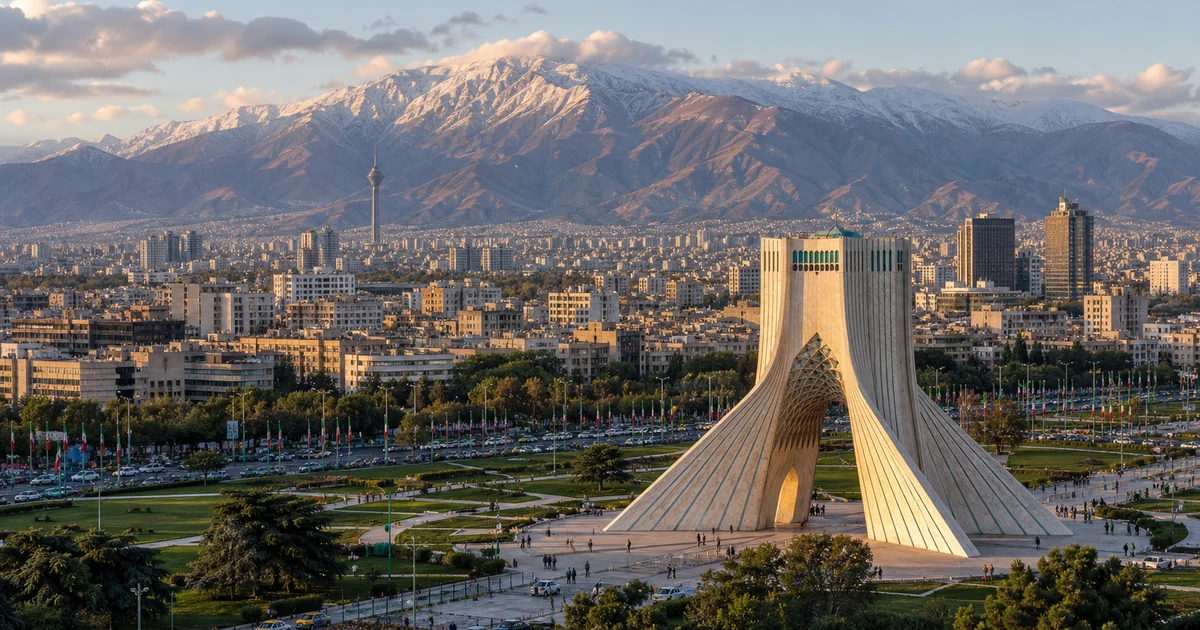
Tehran works best as a base in Iran when you anchor days around Golestan Palace, Azadi Tower and Milad Tower. Use those sights to understand the city's history, street life and visitor rhythm. Tehran Imam Khomeini handles the main arrival flow, so hotel choice should balance the centre, transfer time and day-trip plans.
Worth seeing
Golestan Palace
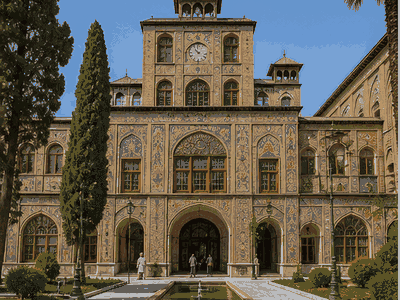
Golestan Palace anchors the historic and ceremonial side of Tehran, making it a practical stop for architecture, local memory and orientation.
View on map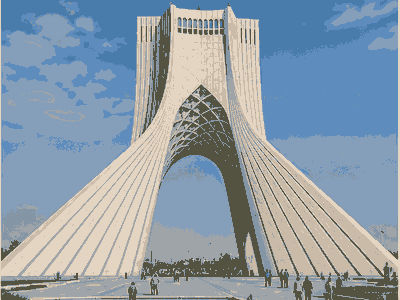
Azadi Tower
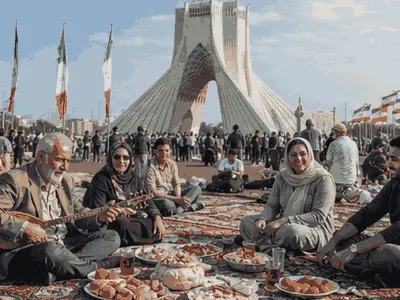
Azadi Tower is a clear heritage marker in Tehran, best used as a fixed point when grouping nearby streets, monuments and viewpoints.
View on map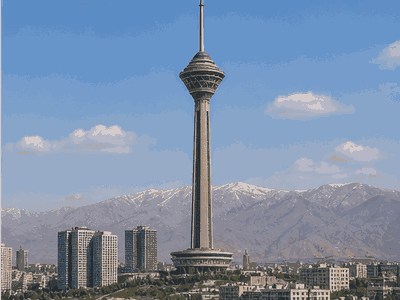
Milad Tower
Milad Tower is a clear heritage marker in Tehran, best used as a fixed point when grouping nearby streets, monuments and viewpoints.
View on map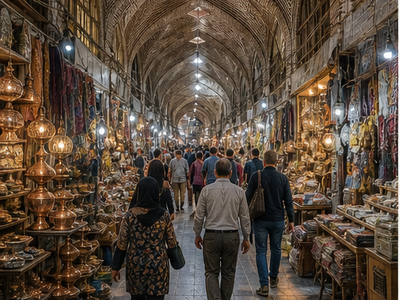
Grand Bazaar Tehran
Grand Bazaar Tehran gives Tehran a concrete street-life stop, with food, everyday shopping and local movement that helps visitors read the city.
View on map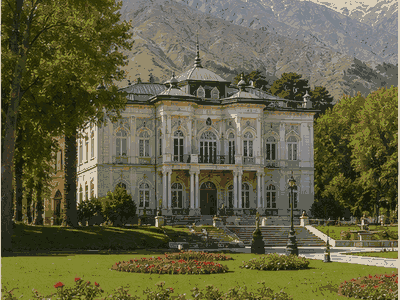
Sa'dabad Complex
Sa'dabad Complex is a named stop in Tehran worth keeping on the route when it fits the day's transport, timing and neighborhood plan.
View on map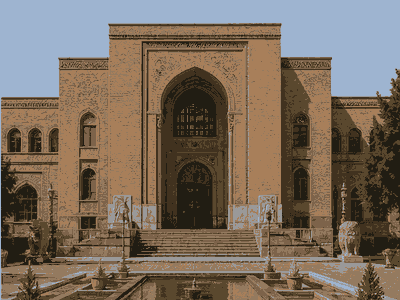
National Museum of Iran
National Museum of Iran is a key Tehran culture stop, useful for understanding local history, collections and rainy-day planning near the main sightseeing route.
View on mapStay overview
Start with City centre for the easiest first Tehran stay, then compare Old Town and Waterfront when price, nightlife, quieter evenings or transfer timing matter more than being beside every major sight.
Hotels & areas
Tehran hotel choice is mostly about repeat journeys: use City centre for sightseeing, Old Town for a different local base, and Waterfront or Airport area when views, parking, airport timing or longer stays matter.
City centre
City centre is the most practical first base in Tehran, keeping main sights, restaurants and short local transfers close.
Best for: first visits, sightseeing, restaurantsSee hotel optionsOld Town
Old Town is the most practical first base in Tehran, keeping main sights, restaurants and short local transfers close.
Best for: first visits, sightseeing, restaurantsSee hotel optionsWaterfront
Waterfront suits travellers who want views, evening walks and a calmer base while still keeping central Tehran reachable.
Best for: views, quieter evenings, walksSee hotel optionsAirport area
Airport area works mainly for early departures, late arrivals or car pickup, not for a first Tehran sightseeing base.
Best for: early flights, late arrivals, car pickupSee hotel optionsFlights & airports
Mehrabad International Airport (THR) arrival plan
- Mehrabad International Airport (THR)About 10 km from the centre
Compare airport access against hotel location, arrival time, rental car pickup, late flights and onward driving before choosing the first night base.
- Imam Khomeini International Airport (IKA)About 39 km from the centre
Compare airport access against hotel location, arrival time, rental car pickup, late flights and onward driving before choosing the first night base.
- Payam International Airport (PYK)About 54 km from the centre
Compare airport access against hotel location, arrival time, rental car pickup, late flights and onward driving before choosing the first night base.
Rental cars
Tehran day-trip car use
Do not rent a car for central Tehran unless parking and traffic are part of the plan; use one mainly for regional day trips.
Compare rental carsTravel tips
Best base
Choose City centre for a first stay because it keeps main sights, restaurants and practical local movement close.
Airport timing
Leave extra time for Tehran Imam Khomeini, especially for early flights, late arrivals, traffic or unfamiliar transfer routes.
Local movement
Plan each day in clusters around Golestan Palace and Azadi Tower so transfers do not consume the best sightseeing hours.
Day trips
Keep one flexible slot for nearby routes from Tehran, checking weather, transport and opening hours before committing.
Upcoming events
City history
Archaeological remains from the ancient city of Ray suggest that settlement in Tehran dates back over 6,000 years. Classical era Tehran is in the historical Media region (Old Persian: 𐎶𐎠𐎭 Māda) in northwestern Iran.
An analysis by the American agency of the Iranian capital estimates that 2,816 buildings were destroyed there: about 32% were linked to military activities, 25% to industry, 21% to civilian uses, while 19% belonged.
In July 1404, Castilian ambassador Ruy González de Clavijo visited Tehran on a journey to Samarkand, the capital of Turco-Mongol conqueror Timur, the ruler of Iran at the time.
Eventually, Qajar king Agha Mohammad Khan chose Tehran as the capital of Iran in 1786.
During the long reign of Naser al-Din Shah (1848-1896), Tehran witnessed Iran's first institute of higher learning, bank, railway line and museum.
The Golestan Palace was significantly rebuilt and expanded in 1865 by Haji Ab ol Hasan Mimar Navai, including the Brilliant Hall, the Mirror Hall and the Edifice of the Sun.
As an attempt to create a network for easy transportation within the city, the old citadel and city walls were demolished in 1937, replaced by wide streets cutting through the urban fabric.
Tehran's most famous landmark, the Azadi Tower, was built by the order of the Shah in 1971.
Formerly known as the Shahyad Tower, it was built to commemorate the 2,500th anniversary of the Imperial State of Iran. Islamic Republic Following the 1979 Iranian Revolution, Tehran underwent profound transformations in its urban.
In the early 18th century, Karim Khan of the Zand dynasty ordered a palace and a government office built in Tehran, possibly to declare the city his capital; but he later moved his government.
From the 1920s to the 1930s, under the rule of Reza Shah, the city was rebuilt.
Because of this resistance, when the Arabs captured Rhages, they ordered the town destroyed and rebuilt anew by the aristocrat Farrukhzad.
This also allowed government functions to be moved to Qom and then to Isfahan, while the monarchy remained in Tehran. Pahlavi era After World War I, the constituent assembly elected Reza Shah of the.
After the ceasefire, Bloomberg reports that Tehran has suffered extensive destruction: buildings torn open, piles of rubble, and neighborhoods partially devastated.